






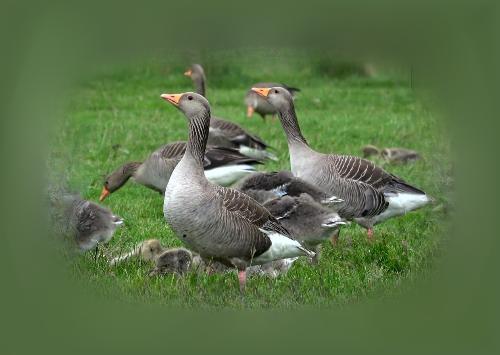

The “somali ostrich” archetype
Cultural context
In Europe the ostrich lived mostly in the imagination, and the imagination gave it a famous story: when danger comes, the bird buries its head in the sand and trusts the world to go away. It became a stock joke about people who refuse to look at their troubles. Yet the joke always carried a grudging respect. Here was a creature that fled every fight and somehow kept its feathers, a coward by reputation and a survivor in practice, mocked at the dinner table and quietly envied by anyone who has ever wished to vanish from a quarrel. In that tradition the ostrich stands for the uncomfortable thought that stepping out of trouble is sometimes the only clever move left, even when it looks like foolishness from outside.
Scales
Several quiet currents run through the Somali ostrich. Its judgments are quick and shallow; it trusts first impressions and rarely digs deeper. Against that stands real tenderness, a sensitivity that makes other people's distress feel like its own. It is reserved and withdrawn, happiest in stillness, and when a group leans on it, it neither argues nor rebels but quietly slips away. Order is not its gift: plans scatter and promises slide. It has little loyalty to custom, yet it is closed to new experience as well, and it looks after itself before anyone else. Its independence is faint, and it tends to follow whoever walks in front, because choosing a road alone feels like too much weight.
Core traits
Cowardice is the keel of this character, the thing that holds everything else steady. The ostrich feels the pull of self-protection even where nothing threatens it, and offered a choice of roads it takes the one with the fewest obstacles. That caution is also its strength: it avoids needless risks, stays out of other people's fights and lives to see tomorrow, usually unbruised. The weakness shows when a moment demands resolve. Then it backs away, and onlookers, who see only the retreat, whisper that it is a fool.
Strong traits
Foolishness and flight travel together. The ostrich often wanders through a fog of its own thoughts, where instinct drowns out clear thinking and rash decisions follow. It does learn from its blunders, though, and its muddles sometimes bring welcome surprises. Flight gives it a breather from stress and a chance to see trouble from a distance. The danger lies in going too far, into daydreams and illusions, where real problems wait unsolved and friends lose track of it.
How to be around
How should you act around an ostrich? Respect its caution before you try to change it. A raised voice or a demand for an instant answer sends it running, while a steady, predictable presence lets it creep back out. Make it clear that coming home carries no penalty, and that you will never turn its retreat into a punchline. Trust grows slowly here, through small safe repetitions rather than grand speeches.
With a woman
A woman-ostrich is easiest to reach through her sensitivity. Notice the moment her face closes, and say aloud what you think she feels, gently, as a guess she may correct. Invite her on a walk rather than into a serious talk across a table; side by side, with something to look at, she can say hard things. Never mock her for leaving a room: she is gathering herself, and she returns sooner if the door stays open.
With a man
Put plans in front of a man-ostrich in writing and well ahead of time. Disorder frightens him more than hard work does, and a short list for the day gets done where a stream of spoken orders dissolves. Ask which part worries him, then cut that part into pieces small enough to carry. He tends to follow a firm lead, so lead calmly and mark a clear route out if things go wrong.
With a teenage boy
A teenage boy-ostrich often announces that he is quitting everything just as a task turns difficult. Catch him in that moment with a joke or a snack rather than a sermon, then hand him one job with a visible end, like mending a bike chain. Praise the finished chain, not his courage, and tell him about a time you ran away yourself and what it cost.
With a teenage girl
With a teenage girl-ostrich, watch for the quiet signs that a crowd has become too much: shorter answers, eyes on the floor. Offer her an exit with a reason attached, such as an errand or a phone call, so leaving costs her no face. Later, ask what she noticed in the room; her sharp feel for other people's moods is worth hearing, and being asked makes her braver.
With a child
Give a child-ostrich the right to say "I don't want to," then sit down beside the fear together. Let the little one draw it, give it a silly name and plan how to outwit it. A monster with a name is smaller. Afterwards, return to the task hand in hand, and reward the first small step instead of the whole climb.
With an animal
An animal-ostrich bolts at sudden sounds and cannot be reasoned out of it. Accept that and build a ritual instead: the same soft whistle before every feeding, the same gate left ajar, a hiding corner it can reach without passing you. Over weeks it learns that the whistle means safety, and it begins to walk toward you on its own.
After a quarrel
To quarrel with an ostrich or get under its skin, corner it and demand an answer on the spot. A woman-ostrich bristles when her feelings are waved away as moods; a man-ostrich, when his old slips are read aloud in company. The teenage boy cannot bear being laughed at for a fright, the teenage girl being told what she must do about it without a word from her. A child-ostrich explodes at "Stop being scared!", and the animal, at a hand that reaches from behind.
How to befriend
To befriend an ostrich or win it over, be quiet and the same every day: no surprises, no loud laughter, no demand for confessions. A woman-ostrich warms when you name her kindness and mean it. A man-ostrich relaxes beside someone who can sit in silence without awkwardness. The teenage boy leans toward whoever admits an old failure of their own, the teenage girl toward a note she is not required to answer at once. A child-ostrich loves hide-and-seek, where hiding is the game and being found is a joy, and the animal wants its meal at the same hour in the same place.
Similar archetypes
Close facets: images with a similar set of qualities.
- black-crowned night heron
- Cockroach (domestic, red)
- wild boar
- domestic sheep or mouflon
- american bighorn
- Fly
- Turkey
- Black widow spider
Complete opposite
The opposite facet: images whose qualities point the other way.
- Woodpecker
- Bumblebee
- barasingha
- Porpoise / Dolphin
- Sturgeon
- Asian Cormorant
- Pike
- Hamadryas baboon
- Puma (mountain lion)
- amur tiger
- Lark
- Stag beetle
- Hungarian grasshopper
- Two-colored grasshopper
- Pointed-headed Grasshopper
- Grey Bird Grasshopper
- Acrida exaltata
- Acrida turrita
- Acrida willemsei
- Acrida
- Mediterranean Slant-faced Grasshopper
- narwhal
- Elephant (African)
- Hereford Pig
- Cricket
- Vulture
- Bee
- Jaguar
- Goose
- Shark
Find your most suitable archetypes
Archetypes are facets of personality and behaviour: sometimes a hamster, sometimes a lion. Take a test for yourself, a friend or a pet.