









The “moorish viper” archetype
Cultural context
Across the sun-scorched gravel and thorn-bush flats of North Africa the Daboia mauritanica has always been read as living proof that survival belongs to those who keep still until the moment strikes. Tales told around evening fires speak of a creature that can lie motionless for days beneath a single stone, its scales catching the same dry light as the ground it rests on; whoever learns this patience, the stories say, earns the right to guard what is his and to strike only when the quarry cannot escape. In these traditions power is measured not by speed but by the long, soundless wait that ends with a single, decisive thrust.
Scales
In the same traditions the Moorish viper reads as a map of thought that runs deep and of boundaries that must never be crossed. Its gaze is said to weigh every grain of sand and every shadow before it moves, an intellect that turns over each possibility until the single right path appears. At the same time it is held to know which places and hours are forbidden, carrying an almost priestly sense of what belongs to the sacred and what is simply trespass; the line between the two is drawn so sharply that a stranger may feel chilled simply by standing too near. Its loyalty to its own small circle remains steady, yet it will test any newcomer with long, unblinking stillness before granting even a step closer.
Core traits
Baseness coils at the centre of its nature, born from a fear that any softness will be taken for weakness; therefore it learns to read every tremor in the air and, when threatened, to turn first to deception or sudden flight rather than honest confrontation. Ominousness travels with it like the faint rattle of dry scales against stone, a warning that keeps others at a distance and spares the viper the need to fight at all; the same aura that shields it can also leave it alone beneath a sky that offers no shade.
Strong traits
Wisdom gathers slowly in the viper, distilled from years of watching which shadows lengthen and which retreat; it waits for certainty rather than risk an early strike. Yet the same patience can freeze into immobility when the hour demands a choice. Fickleness lets it abandon a sun-warmed ledge the moment a cooler crevice offers itself, shifting plans without regret; the ease of movement, however, leaves paths half-finished and promises unkept. Cunning threads through every motion, guiding it to circle behind a threat instead of meeting it head-on, a talent for indirection that can shade into quiet manipulation when straight advance seems too costly.
Noticeable traits
Death is accepted as the desert’s daily currency: the viper ends a hunt cleanly and leaves the remains to the wind without ceremony, knowing that every ending clears ground for the next beginning. This habit of swift closure can sever ties before their season is truly spent, an economy of feeling that values renewal over lingering attachment.
How to be around
Approach the Daboia mauritanica with the same measured tread one would use on uncertain ground: speak little, watch the angle of its head, and never crowd the space it has already claimed as its own.
With a woman
A woman who carries the Moorish viper watches every conversation for the first sign that trust is being tested; if she senses exposure she may answer with careful half-truths, protecting the low ground of her self-worth by withholding the whole story. Offer her a problem that needs slow, precise analysis rather than quick sympathy; when she lays out the hidden threads she has already traced, respect the distance she keeps and do not press for warmer words than she chooses to give.
With a man
A man who moves like the Moorish viper treats his own silence as a guarded threshold; any question that steps across it too quickly is met with stillness that feels almost consecrated, a warning that the ground between you is not yet safe. Speak only when invited, and keep your tone low enough that the forbidden line remains unmarked.
With a teenage boy
A teenage boy who holds the viper’s patience will sit for an hour tracing the same knot of thought, unwilling to risk a shallow answer; his search for meaning shows in the way he returns again and again to the same small object or memory until its weight finally settles. Let the silence stretch; any attempt to hurry him only deepens the stillness.
With a teenage girl
A teenage girl who shares the viper’s quick changes will drop one interest the moment another horizon opens; her curiosity pulls her toward whatever new pattern catches the light, yet the same lightness can leave yesterday’s plan abandoned on the table. Offer her the next unknown without asking her to finish the last, and she will keep returning with fresh observations.
With a child
A child who carries the viper’s cunning will study the exact angle at which a door closes or the rhythm of footsteps in the next room, storing the pattern for later use; when told to share a toy he may offer a different object instead, hoping the swap will pass unnoticed. Praise the clever observation rather than correcting the detour, and the habit of indirection softens into simple resourcefulness.
With an animal
An animal that holds the Daboia mauritanica’s sense of endings will leave an empty water bowl without a second glance once the level drops too low, accepting that the old supply is finished and a new search must begin; yet it will also trail behind its keeper for a while after the change, as though uncertain whether independence is truly required. Keep routines steady and the animal learns to trust that each ending is followed by another measured beginning.
After a quarrel
To cross the Daboia mauritanica is to disturb a stillness that has already measured you; the reply arrives not as a roar but as a sudden shift in weight that leaves you wondering whether you imagined the threat. A woman answers with a smile whose edges have been filed sharp, turning your own words back in a shape you did not intend. A man meets the challenge with a silence so complete that the room itself seems to have withdrawn its air. A teenage boy answers by vanishing into the next corridor, his absence heavier than any spoken rebuke. A teenage girl replies with a single arched observation that makes the quarrel feel already settled and faintly ridiculous. A child simply stops moving, eyes fixed on some point beyond your shoulder until the tension drains away of its own accord. An animal coils tighter on its chosen stone, every scale arranged to show that the ground beneath it is no longer shared.
How to befriend
Friendship with the Daboia mauritanica begins when you prove you can stand beside it without needing to be noticed first; it watches how you occupy space, how lightly you step when its attention is elsewhere. A woman warms when you remember the small rule she set weeks earlier and never test it again. A man draws closer once you leave his private calculations undisturbed and speak only when the matter truly concerns both of you. A teenage boy accepts company that waits at the edge of his silence until he offers the next thread of thought. A teenage girl stays near if you follow her sudden change of subject without demanding she finish the last. A child trusts the person who lets the game end when the child chooses rather than when the clock says so. An animal settles when you sit at the accustomed distance and do not reach across the line it has drawn in the dust.
Similar archetypes
Close facets: images with a similar set of qualities.
- horned desert viper
- Rhinoceros viper
- lataste's viper
- copperhead
- asp viper
- gaboon adder
- mamushi
- godman's montane pitviper
Complete opposite
The opposite facet: images whose qualities point the other way.
- mallard
- wild boar
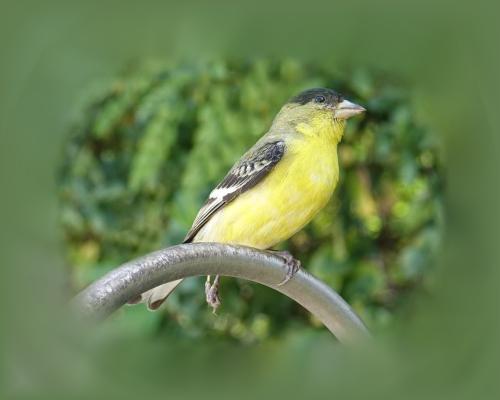
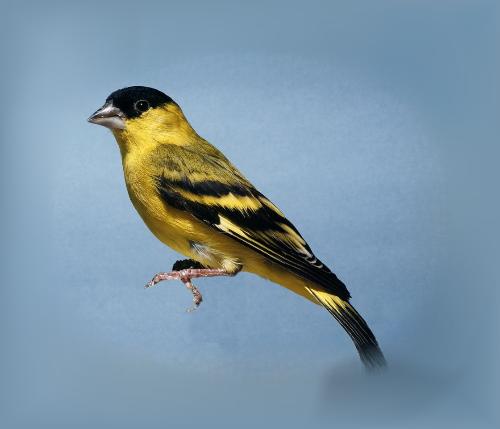
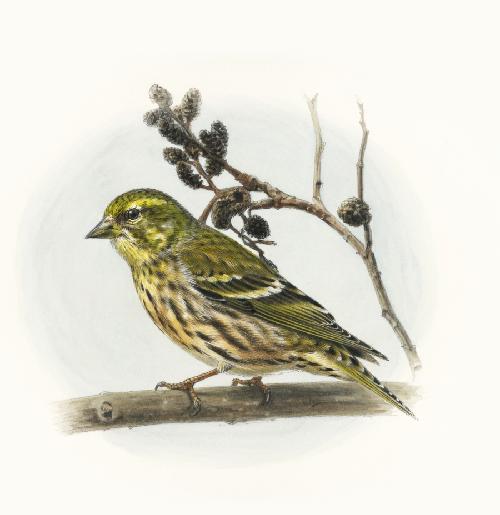
- eurasian siskin
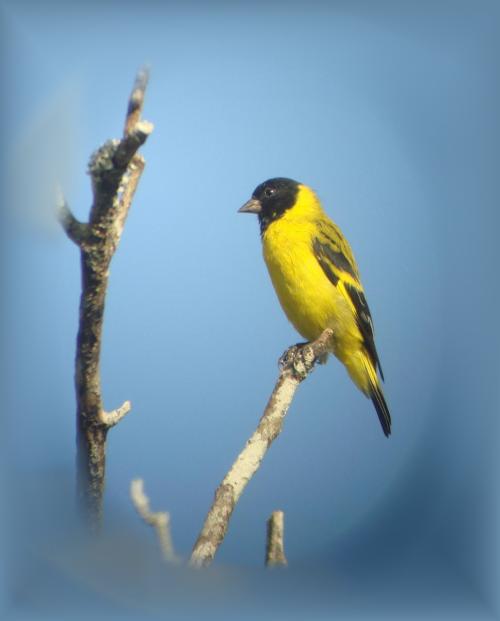
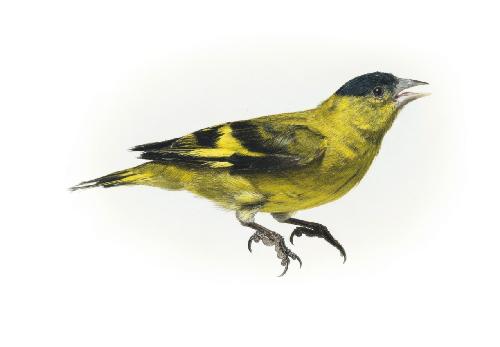
- Black-headed Siskin
- olivaceous siskin
- eurasian siskin
- eurasian siskin
- eurasian siskin
- eurasian siskin
- eurasian siskin
- eurasian siskin
- eurasian siskin
- hooded siskin
- eurasian siskin
- tibetan serin
- andean siskin
- yellow-bellied siskin
- saffron siskin
- lawrence's goldfinch
- brown lipped snail
Find your most suitable archetypes
Archetypes are facets of personality and behaviour: sometimes a hamster, sometimes a lion. Take a test for yourself, a friend or a pet.