









The “meadow viper” archetype
Cultural context
Across the rolling grasslands that stretch from the Danube to the Volga, the orsini's viper coils beneath low sage and sun-bleached stone, a small sentinel whose stillness draws the eyes of herders and travelers alike. In steppe folklore the snake's quiet presence turns every footstep into a whispered bargain with danger, while its sudden strike is read as the land's swift judgment on carelessness. Nomads who share the same horizons call the viper a living knot of memory, carrying the scent of rain on baked earth and the memory of winters that bite deeper than frost.
Scales
Tradition reads the orsini's viper as a creature drawn to hidden order rather than open display. It turns every rustle of dry grass into material for calculation, weighs each scent of warm stone or cooling wind, and moves only when the pattern shifts. Its gaze lingers on the forbidden edges of the world—poisonous plants, half-buried bones, the narrow line between safety and threat—yet it rarely crosses that line without first tasting the air. This blend of restless thought and reverent caution gives the viper its measured stride across the meadow, a living thread stitching together what the wind tries to scatter.
Core traits
Baseness runs through the orsini's viper like the thin shadow that slides beneath its belly when the sun is high. Fear of losing its narrow patch of warmth drives the snake to coil tighter than necessary, to wait in silence until an intruder moves first, and then to strike with a precision that looks almost personal. At the same time, the same fear sharpens its ear for every footfall, so the meadow viper becomes an early herald of approaching storms or careless boots, turning its own low impulse into a warning that others can read.
Strong traits
Years of lying motionless while shadows cross its back have given the orsini's viper a patience that feels like wisdom. It notices which stalks bend first when a hare passes and which scent lingers longest after rain, storing these details like small coins. Yet the same store of experience makes the snake change course at the slightest shift in light or temperature, abandoning a perfect hunting spot for another that may prove no better. This restless switching keeps the viper alive, but it also leaves trails that double back on themselves, visible only to the careful tracker.
Noticeable traits
The orsini's viper treats endings as ordinary weather. When a burrow collapses or a patch of grass dries to tinder, the snake simply slides away, leaving the old entrance open to wind and beetles. This calm acceptance of loss lets it begin again on cooler ground without hesitation, yet it also means the viper will quit a sun-warmed stone the moment a larger shadow falls across it, ending its stay before any real danger arrives.
How to be around
Approach the orsini's viper with the same measured pace it uses when crossing open ground. Speak little, move deliberately, and let each gesture show that you have already weighed the distance between you and the nearest shelter.
With a woman
When a woman shaped like the meadow viper sits over a map or a ledger, her pen pauses at every uncertain line the way the snake tastes the air before sliding forward. Give her the quiet table she has already chosen and do not offer shortcuts; the depth of her analysis rewards patience more than speed. If fear of being overlooked creeps in, she may test your loyalty with a sudden change of plan. Stay steady, answer plainly, and the calculation will shift in your favor without any need for flattery.
With a man
A man who carries the orsini's viper's sense of the forbidden keeps certain thresholds unmarked except to himself. He will not name the boundary, yet he will notice at once if you cross it. Offer your question at the edge of that line rather than inside it, and watch how his stillness answers before any words do. Respecting that invisible limit turns his caution into a quiet shield around both of you.
With a teenage boy
A teenage boy with the orsini's viper's patience will watch an argument unfold for several minutes before deciding whether to add his voice. Ask him what he has already noticed rather than what he thinks should happen next. His answer may arrive slowly, shaped by the hours he has spent studying the same ground everyone else walks over without seeing. When he finally speaks, the single sentence often settles the matter more cleanly than a longer speech.
With a teenage girl
A teenage girl who moves like the meadow viper will change her route between classes three times in a single week if the first path begins to feel watched. Treat each new preference as temporary rather than final, and she will not feel cornered into defending it. When curiosity sparks, she may share an unexpected interest for a day or two before the interest itself shifts again. Follow the current without trying to name its destination, and the conversation stays open.
With a child
A child who carries the orsini's viper's cunning will study the classroom rules the way the snake studies the angle of sunlight on a stone. Instead of breaking them outright, the child finds the narrow gap where the rule bends without snapping. When the child offers a solution that seems to come from nowhere, accept it without demanding the full explanation; the strategy itself is the gift. Later, when trust has settled, the same child may explain the detour in a single quiet sentence.
With an animal
An animal orsini's viper ends its stay on a particular tile the moment the tile no longer holds steady warmth. Do not move the tile or add new objects that change its temperature; simply leave the corner undisturbed until the snake chooses to return or to leave for good. The animal will register your restraint as part of the territory's predictable rhythm and will tolerate your presence at the edge of its sight without coiling tighter.
After a quarrel
The orsini's viper answers pressure with a sudden stillness that feels heavier than any raised voice. A woman will meet an accusation with a single, perfectly placed correction that removes the ground beneath the charge. A man will withdraw his attention so completely that the room itself seems smaller. A teenage boy will answer every question with another question until the original complaint is lost in the loop. A teenage girl will agree brightly to every demand and then change the subject three times before the first promise can take root. A child will simply stop answering, leaving the unfinished sentence hanging like an open door. An animal will slide under the nearest ledge and remain there until the disturbance moves on.
How to befriend
The orsini's viper measures closeness by how little it has to adjust its own pattern. A woman accepts company when the other person brings a task that can be completed side by side without conversation. A man values the friend who notices an unmarked boundary and stays outside it without being told. A teenage boy warms to the companion who can sit in silence for the length of a full sunbeam across the floor. A teenage girl remembers the person who accepts a sudden change of plan without asking for reasons. A child keeps returning to the adult who leaves a small object in the same place each day so the child can decide whether to claim it. An animal grows accustomed to the hand that rests on the ground rather than reaching toward it.
Similar archetypes
Close facets: images with a similar set of qualities.
- horned desert viper
- Rhinoceros viper
- lataste's viper
- copperhead
- asp viper
- gaboon adder
- mamushi
- godman's montane pitviper
Complete opposite
The opposite facet: images whose qualities point the other way.
- mallard
- wild boar
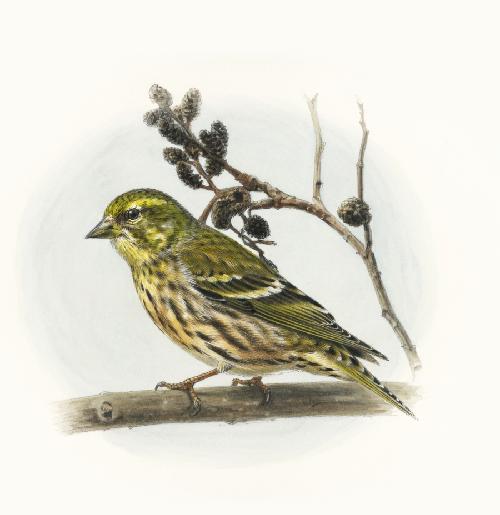
- eurasian siskin
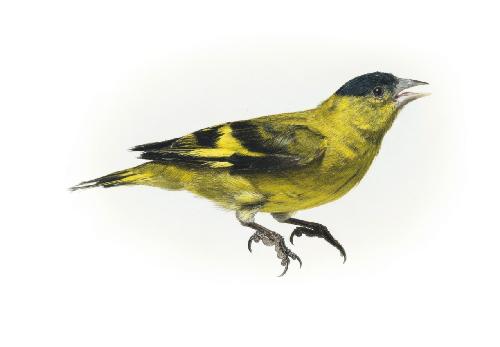
- Black-headed Siskin
- olivaceous siskin
- eurasian siskin
- eurasian siskin
- eurasian siskin
- eurasian siskin
- eurasian siskin
- eurasian siskin
- eurasian siskin
- hooded siskin
- eurasian siskin
- tibetan serin
- andean siskin
- yellow-bellied siskin
- saffron siskin
- lawrence's goldfinch
- brown lipped snail
Find your most suitable archetypes
Archetypes are facets of personality and behaviour: sometimes a hamster, sometimes a lion. Take a test for yourself, a friend or a pet.