









The “Eel” archetype
Cultural context
The eel belongs to the dark, slow water of European rivers and lakes, and European tradition has never quite made up its mind about it. Some tales praise it as a creature of wisdom and mystery, a hermit that keeps away from crowds and attention. Others read the same habits as slyness: it slides through silt, hides in clay banks and leaves no trail for anyone to follow. Admiration and suspicion sit side by side. People respected its independence and its knack for surviving where other creatures give up, and distrusted how little it ever explained. In European storytelling the eel is rarely a hero and never a loud one. It is the figure who gets by quietly, who vanishes from one bank and turns up on another, and whose intentions nobody ever quite learns. That mix of resilience, secrecy and shadow is what the archetype carries into people and animals alike.
Scales
Inside this archetype, honesty and entitlement pull in opposite directions, and entitlement usually wins. The eel is cunning, a little greedy, and quietly sure it deserves more than its share. Yet it is not a dull schemer. It is curious about whatever is new and unexplained, and it likes to take things apart in thought to see how they work, so its mind keeps dragging it out of the mud and into the light. It argues easily, digs in when challenged and puts its own comfort first, with little appetite for sacrifice. At the same time there is a streak of play: a dry joke, a sudden mischievous twist, a lightness that surprises people who expected only gloom. Two smaller currents run underneath. One is independence, a wish to answer to no one. The other is a modest loyalty to old customs, the sense that what has always been done has earned some respect. The two never fully settle, and the eel lives in the gap between them.
Strong traits
Cunning is the core of this animal. An eel reads a room the way it reads a riverbed, noticing the gap in the reeds, the weak spot in a plan, the exit nobody marked. It rarely takes the straight road, because a crooked one usually costs less. When others wedge themselves into a narrow place, the eel has already slipped through and is somewhere else, looking innocent. This gives it real strategic skill: it can win a negotiation without anyone being able to say when it was won. The shadow side is just as clear. Habitual indirectness slides into manipulation, and the eel may avoid a plain yes or no for so long that people stop expecting one.
Noticeable traits
Secrecy and meanness hum in the background like an undertow, steady rather than overwhelming. The eel keeps its plans to itself and can leave a situation without a word of explanation, which counts as a strength until the people around it start wondering what they are not being told. Trust comes hard in both directions, and close bonds suffer. Meanness has its root in fear: when cornered, the eel will bend the truth or take an unkind shortcut for its own benefit. On its better days it knows this about itself, and it can learn from those dark impulses and grow more honest, though it rarely does so with an audience watching.
Muted traits
Greed is the quietest of the eel's faults. It is a habit of protecting what it has, not a hunger for heaps. The eel will tuck away a favourite object, a useful contact or a bit of spare time, and it is slow to hand any of it around. Yet it does not hoard to absurd lengths either. Behind this lies foresight, a memory of lean seasons and a wish to be ready for the next. The cost is generosity: giving feels like removing a layer of armour, so it comes late and in small portions.
How to be around
To get along with an eel, give up the idea of a straight conversation. Questions framed as demands slide off it, while an open door and a patient silence get a surprising amount through. Watch what it does rather than what it says, and let it come to you along its own winding line. The reward is a companion who notices far more than it admits.
With a woman
Give a woman-eel a good problem. Pick one that has stumped everybody else and ask how she would approach it, then listen closely to the route she describes; it will not be the one you expected. Afterwards, tell her exactly which turn of her thinking impressed you. She hears praise for her cleverness as proof that her cunning is seen as a skill and not a flaw, and she tends to repay it with candid hints she would never volunteer unprompted.
With a man
Ask a man-eel just one question, well chosen, instead of circling with five, then go back to what you were doing. His door stays shut against pressure and opens a crack for patience. He answers when he is ready, usually briefly and exactly, and the fact that you let his silence stand is what he will remember.
With a teenage boy
Bring a teenage boy-eel something unfamiliar: a broken gadget to take apart, an odd map, a strange game whose rules he must work out. Curiosity pulls him from his shell faster than advice. When he explains how he cracked it, ask a follow-up and mean it, and keep the conversation from turning into a lesson.
With a teenage girl
Trust with a teenage girl-eel is built from small kept promises. Return what you borrowed, keep her confidences to yourself, never repeat what she said in passing. If you catch her bending the truth to come out ahead, say calmly that you noticed and leave it there. A girl who is not afraid of being caught is likelier to start telling the truth.
With a child
Play hide-and-seek with a child-eel, or invent secret signals and codes. For a small eel a hiding game is not trivial; it is how the world makes sense. When the little one comes up with a sly trick, laugh along before anyone corrects it, and ask to be shown how it works.
With an animal
Build an animal-eel a burrow rather than a bed: a pipe, a heap of stones, a thick layer of soft silt. Provide it and stay out of it. Whatever the creature has carried off and stashed there belongs to it now, and taking the hoard back would register as theft.
After a quarrel
To quarrel with an eel or get under its skin, demand a straight answer in front of other people and keep pressing. A woman-eel bristles when her ingenuity is called trickery. A man-eel goes cold the moment you poke at what he has chosen not to say. A teen boy-eel digs in as soon as he is told which path is the correct one. A teen girl-eel answers with frost if she is exposed in public. A child-eel sulks when a game of secrets is shut down for being silly. An animal-eel turns jumpy and snappish if someone else's scent, hand or bowl turns up in its hiding place. In each case the eel does not shout. It simply withdraws, and your argument is left talking to the water.
How to befriend
To befriend an eel or win it over, begin by being unremarkable company: sit near, say little and let it study you. A woman-eel warms when her cleverness is named as a talent. A man-eel values a person who lets his silences be and judges him by what he does. Teenage boy-eels like a shared project whose ending nobody knows. Teenage girl-eels step out of the shadows once you have kept one of her secrets. A child-eel attaches to whoever takes its codes seriously. An animal-eel decides you are safe when you bring food, set it down and walk away without waiting for thanks.
Similar archetypes
Close facets: images with a similar set of qualities.
- Fox Tapeworm
- Broad Fish Tapeworm
- Beef tapeworm
- Hydatid tapeworm
- Rabbit tapeworm
- Cat tapeworm
- Multiceps tapeworm
- Sparganum proliferum
Complete opposite
The opposite facet: images whose qualities point the other way.
- mallard
- wild boar
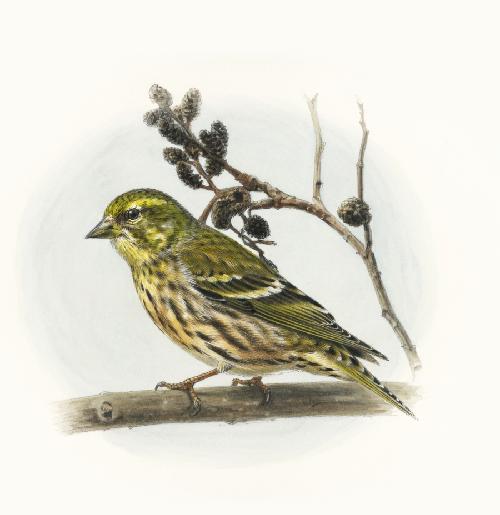
- eurasian siskin
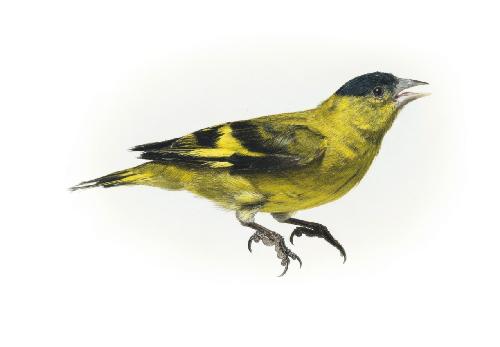
- Black-headed Siskin
- olivaceous siskin
- eurasian siskin
- eurasian siskin
- eurasian siskin
- eurasian siskin
- eurasian siskin
- eurasian siskin
- eurasian siskin
- hooded siskin
- eurasian siskin
- tibetan serin
- andean siskin
- yellow-bellied siskin
- saffron siskin
- lawrence's goldfinch
Find your most suitable archetypes
Archetypes are facets of personality and behaviour: sometimes a hamster, sometimes a lion. Take a test for yourself, a friend or a pet.