










The “congo” archetype
Cultural context
Across Pacific reefs the brown conger carries the reputation of a hidden sentinel that watches from the cracks of volcanic stone. Islanders read its long stillness as patience earned by living where light rarely reaches and where every flicker of sand may bring either food or threat. Its body loops through tunnels the way an old story turns back on itself, never repeating the same path twice, so that even fishermen who pass the same ledge for years still wonder what the eel truly keeps inside its den. Quietly it claims that the sea’s safest place is also its most guarded, and that any creature bold enough to share a cave must first learn to keep its own silence.
Scales
Tradition pictures the brown conger as cunning enough to slip past the greed of others yet never fully satisfied with what it finds. Its temper can flare over the smallest intrusion, and once its mind is set nothing short of a storm will shift it. It places its own safety before every shared task, yet the reef’s constant motion trains it to move with whatever current arrives, rarely pausing to plan the next bend. In these stories the eel breaks from the old ways of hunting in open water and instead learns the new art of waiting inside rock; it stays near its own kind without ever joining them, watching the reef’s daily theatre without needing applause.
Core traits
The brown conger’s baseness is not born of malice but of the constant fear that the cave may be taken away. When that fear rises it moves sideways through half-truths, letting others believe it has left when it is only deeper in shadow, or promising a share of prey it has already swallowed alone. Yet the same impulse that drives it to conceal also teaches it where every exit lies, so the darkness it first used for hiding can later become a map others follow to safety.
Strong traits
Fickleness runs through the brown conger like the sudden rush of tide that empties one channel and fills another before the eye can follow. One day it will lie for hours in the same cleft, the next it slips away at the first distant vibration, leaving the old shelter to the crabs. Plans made with it are written on water; a route agreed upon in the morning may be abandoned by noon if a fresher scent crosses its path, and the reef itself seems to approve this restless habit, always offering new stones to explore.
How to be around
Approach a brown conger as you would a reef at night: move slowly, keep your light low, and wait for it to show the edge of its interest before you come closer. Any quick demand will send it deeper into stone; any steady patience may earn a brief glimpse of its coiled form.
With a woman
A woman who carries the brown conger’s temper expects every word to be weighed twice before it is spoken. She will test a newcomer with small, almost careless questions, and if the answers feel too smooth she withdraws behind the next ledge of conversation. Offer nothing that sounds like a bargain; instead let her see that you can sit in silence without trying to claim the space she has left empty. When she finally shares a detail about her day, treat it as a shell she has placed on the table, not as an invitation to rearrange her shelves.
With a man
A man shaped like the brown conger will change his route mid-swim if he senses pressure behind him. He may agree to meet at a certain hour and then appear at another without explanation, expecting the other person to adjust rather than question. Keep your own plans flexible enough to meet his sudden turns, and never ask why yesterday’s promise has become today’s different shore. If you can accept the shift without complaint he will sometimes circle back, curious to see whether your patience still holds.
With a teenage boy
A teenage boy who moves like the brown conger will first protect his own plans even when they are still half-formed. He may refuse help with a task he has already decided to finish alone, then later ask for the very tool he earlier pushed away. Notice the moment he stops explaining and simply acts; that is the signal he has chosen to let you walk beside him for a while.
With a teenage girl
A teenage girl whose thoughts scatter like the brown conger’s quick turns will leave projects half-finished on the reef of her desk. She may start three different sketches in one afternoon and abandon each when the next idea arrives. Rather than urging her to finish, place a single clear surface near her and leave it empty; the absence of clutter sometimes steadies her long enough for one line to stay on the page.
With a child
A child who shares the brown conger’s quiet watchfulness will follow the lead of whoever seems most certain of the next step. Yet a single gentle question about how the game feels for them can open a small current of feeling that rarely surfaces on its own. Stay beside that current without trying to steer it, and the child may offer a hand when the next wave arrives.
With an animal
An animal-brown conger will ignore any new toy that appears without warning, yet it may nose an old piece of coral if the scent has not changed since yesterday. Keep one corner of its enclosure exactly as it was left; any sudden rearrangement will send it into the farthest tunnel. Once that corner is respected it may, on rare afternoons, bring a pebble to the glass as if offering a private joke.
After a quarrel
The brown conger meets conflict the way it meets a sudden current: first by flattening itself against stone, then by striking at whatever disturbs the water. A woman will vanish behind silence if she believes her practical needs are being turned into moral lectures. A man will answer a challenge with the same stubborn refusal he uses against an unwelcome tide. A teenage boy flares when anyone suggests his quick change of mind is a fault rather than a skill. A teenage girl withdraws the moment her scattered sketches are called waste. A child freezes if laughter breaks the careful rhythm of a private game. An animal lashes when a hand reaches into the one patch of sand it has already claimed as its own.
How to befriend
Friendship with the brown conger grows in the pauses between its movements rather than in any single gesture. A woman warms when someone remembers the exact hour she prefers to be left alone. A man stays longer if the other person accepts that today’s plan may be tomorrow’s different shore. A teenage boy lingers when his sudden idea is met with simple curiosity instead of correction. A teenage girl keeps returning if her half-finished work is admired without any call for completion. A child draws nearer when the adult waits at the edge of the game instead of stepping inside uninvited. An animal may rest its head against the glass if the same quiet visitor arrives at the same quiet hour each day.
Similar archetypes
Close facets: images with a similar set of qualities.
Complete opposite
The opposite facet: images whose qualities point the other way.
- Quail
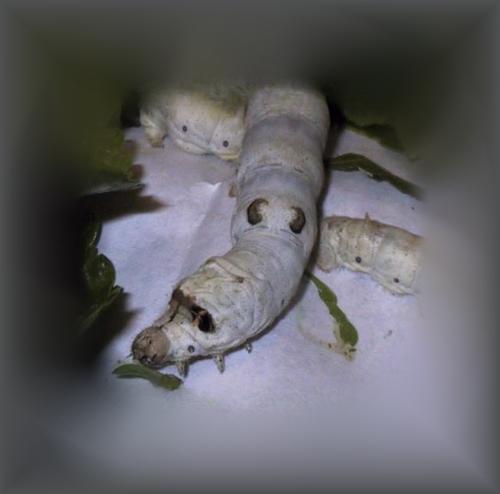
- Silkworm
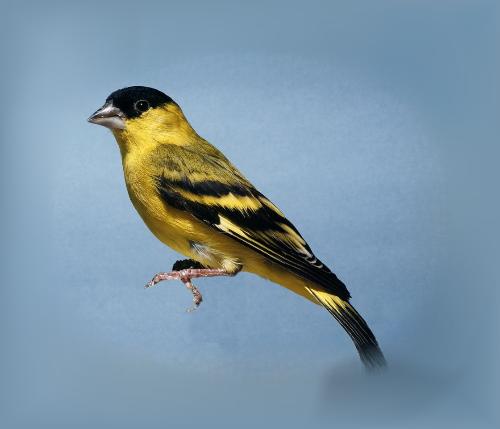
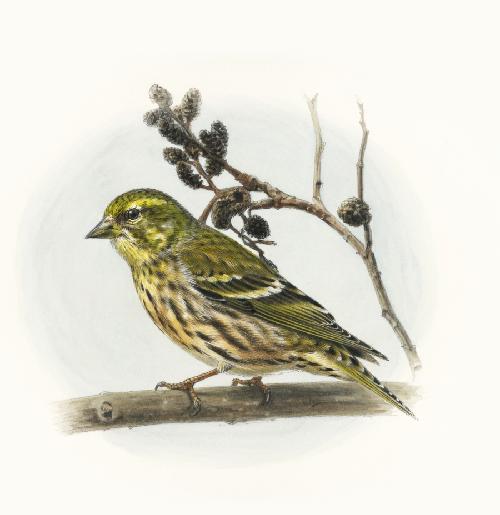
- eurasian siskin
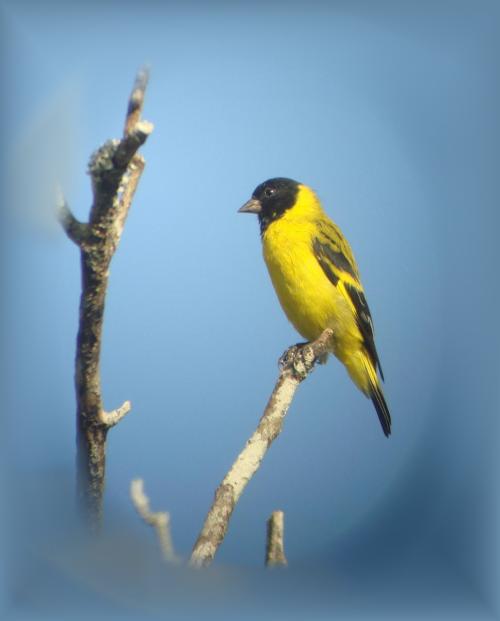
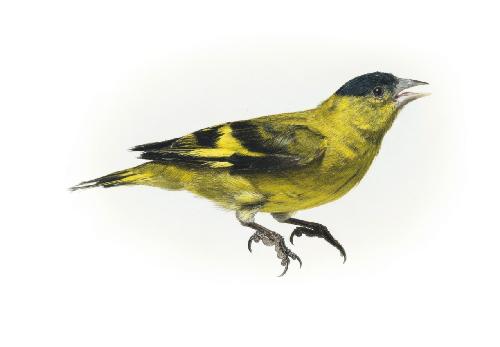
- Black-headed Siskin
- olivaceous siskin
- eurasian siskin
- eurasian siskin
- eurasian siskin
- eurasian siskin
- eurasian siskin
- eurasian siskin
- eurasian siskin
- hooded siskin
- eurasian siskin
- tibetan serin
- andean siskin
- yellow-bellied siskin
- saffron siskin
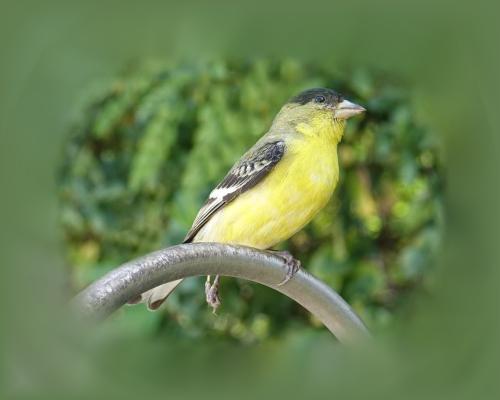
- lawrence's goldfinch
- mallard
- European Badger
- Sheep
- Nightingale
- brown lipped snail
- Panda
- Koala
- Salmon
- Apple snail
- Mussel
- Spotted salamander
Find your most suitable archetypes
Archetypes are facets of personality and behaviour: sometimes a hamster, sometimes a lion. Take a test for yourself, a friend or a pet.