






The “Milk snake” archetype
Cultural context
Scarlet kingsnakes move through North-American barn lofts and meadow stone heaps much as quiet rumours move through a village: noticed only when someone happens to lift a board and catch the bright bands slipping away. Neighbours have long watched how these snakes shelter beneath the same boards as mice, how they borrow the colour of coral without its sting, and they read the pattern as a lesson in keeping one’s own skin while borrowing another’s look. No altars rise for them, no festivals mark their passage; instead, a farmer pauses before the hoe falls, a child is warned not to disturb the striped coil under the doorstep, and the warning itself becomes the only rite the species is ever given.
Scales
In such everyday observation the scarlet kingsnake stands for a refined eye that notices the play of light on bark and scale alike, for a self-willed course that rarely seeks another’s leave, and for an appetite that turns every new board or cellar into an invitation rather than a threat. Its body keeps winter cold at bay and summer heat at heel; the same frame can press through grass or climb a rafter with equal grace. It will slip around a fence rather than batter it, and the refusal to be penned colours even the gentlest dealings with the hand that might try to lift it. A faint respect for the way things have always been done flickers when the snake returns each spring to the same loose stone, while the wish to stand apart shows only as the choice to vanish rather than strike.
Core traits
Beauty lives at the centre of the scarlet kingsnake’s presence: the lacquered reds and midnight blacks catch morning light the way lacquer catches a brushstroke, and the same harmony of pattern makes the animal linger in the eye long after it has slipped under the leaves. The creature uses that visual music to steady its own nerves, yet any sudden remark about its appearance sends the bands into deeper shadow, as though the pattern itself could be bruised by the wrong word.
Strong traits
Independence threads every movement; the snake will not share its winter den even with its own kind, and the choice keeps it safe when drought empties one hillside and leaves another untouched. Curiosity drives the forked tongue across new scents at dusk, mapping the trail of a shrew or the leak of grain from a sack, yet the same quick interest can scatter attention across ten corners of a shed before any single mouse is caught. Imitation lets the bright rings borrow the warning colours of a viper without borrowing its temper, a borrowed shield that lets the animal pass through open ground while larger hunters look elsewhere. Adaptability turns each overturned plank into a fresh map; when one route collapses the body simply re-threads itself through another, though the endless shifting leaves little trace of a single, lasting path.
Noticeable traits
Cunning shows in the slow arc the snake draws around a sleeping cat, reading the angle of an ear before deciding whether to freeze or glide onward. Secrecy keeps the same animal motionless under a single leaf for the length of an afternoon, its breathing too slight to stir the veins of the leaf, so that even the sharpest eye records only another shadow.
How to be around
Approach a scarlet kingsnake as one approaches a half-open door: stand where the light falls across your shoulder, move neither too quickly nor too close, and let the animal decide whether the opening leads inward or stays shut.
With a woman
A woman who carries the kingsnake’s grace draws every glance when she enters a room, her carriage and colour choices arranged like the lacquered bands that slow a watcher’s breath. She will linger over the line of a curtain or the weight of a word until both feel exactly right, and any remark that treats her choices as mere decoration bruises the careful surface she has built. She keeps to the customs of her household because those small repetitions anchor her when admiration turns suddenly to appraisal. When help is offered she often steps aside, preferring the risk of her own hand to the weight of another’s debt.
With a man
A man who shares the kingsnake’s solitary bent will weigh every suggestion twice before letting it near his plans, the way a tongue tastes the air for the scent of another’s trail. He prefers the single lamp above his own desk to the brighter circle of shared praise, yet a quiet word that names the skill he has sharpened can settle deeper than any public award. When the circle around him grows too loud he simply lengthens the distance between his chair and the nearest voice.
With a teenage boy
A teenage boy whose mind runs like the scarlet kingsnake’s tongue will taste every new subject that crosses his path, discarding yesterday’s book the moment a stranger mentions an unfamiliar city. He stores these fragments against some later winter when one of them may prove useful, though the store grows so wide that no single shelf ever fills. He rarely repeats the same route two seasons running, as though the comfort of habit might close a door he has not yet tried.
With a teenage girl
A teenage girl who borrows the kingsnake’s talent for borrowed colour will test the safety of a new group by wearing its phrases and postures for an afternoon, then shed them at the threshold if they no longer fit. She sustains long hours of rehearsal or study without complaint, the endurance of muscle and attention both serving the pattern she has chosen. When the pattern begins to feel borrowed rather than owned she retreats into the next rehearsal, carrying the discipline with her like a second skin.
With a child
A child who moves with the scarlet kingsnake’s quick adjustments will turn a blocked doorway into a tunnel beneath the table or a ladder of stacked cushions before an adult has finished the warning. The same body that yesterday could not reach the shelf today balances along the back of the sofa, testing new limits with each change of furniture. In the middle of such experiments any mention of later companionship or pairing meets only a puzzled glance; the next obstacle already claims the whole attention.
With an animal
An animal scarlet kingsnake will read the angle of an approaching boot long before the sole touches the boards, then glide behind the nearest crate without disturbing a single grain of dust. Should the hand persist it draws its loops tighter against the wall, a living knot whose stillness is itself a refusal. When the room finally empties the body loosens again, and the same mind that refused the touch now calculates the shortest line to the next undisturbed corner.
After a quarrel
To cross a scarlet kingsnake, speak its hidden intention aloud before it has chosen to share it; the sudden light makes the coils draw inward until even the pattern disappears. A woman feels the cut when admiration curdles into mockery of her careful surface. A man hears the same cut when his private calculation is announced across the table before he has tested it. A teenage boy flares if the scattered interests he is still tasting are labelled a waste of time. A teenage girl withdraws when her latest borrowed style is laughed at in the hallway. A child goes rigid if the game just invented is interrupted mid-leap. An animal simply ceases to be present, leaving only the faint scent of leaf mould where the body had rested.
How to befriend
To earn a scarlet kingsnake’s continued presence, offer a corner that stays dark and undisturbed, then wait without naming the gift. A woman accepts the friend who notices the line of her sleeve without asking its cost. A man stays near the one who hands him a map and then steps back while he reads it. A teenage boy returns to the listener who lets three half-finished stories lie open on the table without demanding their end. A teenage girl trusts the companion who admires the new bracelet yet never asks where the idea came from. A child keeps returning to the adult who leaves the blanket fort standing after the game is done. An animal tolerates the quiet hand that rests on the same warm stone each evening and never tries to lift it.
Similar archetypes
Close facets: images with a similar set of qualities.
- Panther chameleon
- Blue-ringed Octopus
- Kingsnake
- Cuttlefish
- Leopard gecko
- Red-eared slider
- Tiger salamander
- Leather gecko
Complete opposite
The opposite facet: images whose qualities point the other way.
- Turkey
- mallard
- Bed bug
- wild boar
- somali ostrich
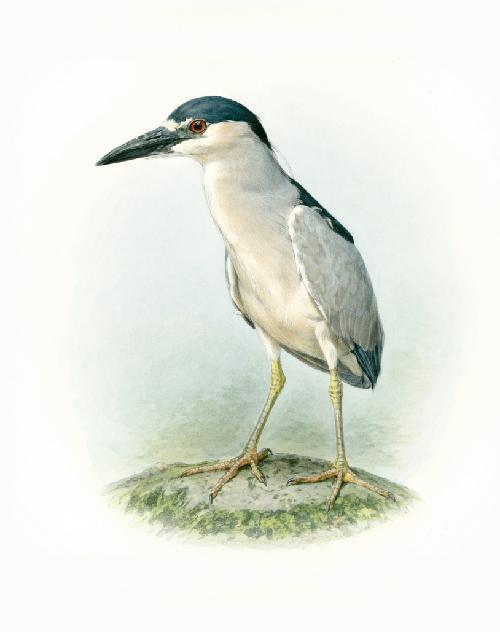
- black-crowned night heron
- Blanc de l'Ouest Pig
- Cockroach (domestic, red)
Find your most suitable archetypes
Archetypes are facets of personality and behaviour: sometimes a hamster, sometimes a lion. Take a test for yourself, a friend or a pet.