




The “Sturgeon” archetype
Cultural context
In Russian tradition the sturgeon is the serious, slow fish of the big rivers: it makes a long journey from sea to river and arrives when it arrives, not a day sooner, and nobody can hurry it. Folk imagination turns that journey into a picture of a person who respects custom, keeps a promise and prizes patience over a quick win. A sturgeon-type is the quiet elder who speaks last and is seldom wrong, whose weight comes from depth rather than noise. Such a person is shaped by habit and continuity, by the idea that a life, like a river, is carried by whatever lies underneath. Hardly anything about it is flashy, and that is precisely what people lean on.
Scales
The sturgeon's mind is heavy and unhurried. It does not fire off clever remarks; it takes things apart piece by piece, enjoys the unfamiliar once it has looked at it long enough, and keeps asking what it all means. Tradition counts for a lot here, and so does a readiness to work hard for the people it loves. Physically it is built to endure. Toward others it is mild and willing to cooperate, though its feelings stay cool and rarely show on the surface. Rebellion is not its style, yet nobody gives it orders either: it picks its own course quietly and keeps to it. Fairness matters more to it than flattery, and it would rather be called blunt than be caught bending the truth to please someone. Its goodwill is real but understated: it shows up as help given at its own cost, seldom as warm words, and that is how people who know it come to value it. Every question it meets, it turns over slowly from several sides, and it is more at ease with an open puzzle than with a neat answer handed down from above.
Strong traits
Honesty and pride form the sturgeon's spine. Its word and its deeds line up, which is how it earns trust, but it hands over the truth unpadded and sometimes leaves a bruise. Pride keeps its boundaries and self-respect intact when things get hard. The price is a stubborn streak and a habit of refusing a helping hand long after it would have been welcome.
Noticeable traits
Wisdom shows in the sturgeon as a knack for learning from what has happened and seeing what lies under the surface of a problem. Patience comes easily to it. The weak side is caution: it weighs every risk for so long that a good chance can slip by before it has said yes.
Muted traits
Greed and slowness sit at the bottom of this character like silt under a current. The greed is really thrift, a taste for setting something aside against lean years and guarding it, though generosity does not come easily. Slowness brings a fine eye for details others skim past, and a knack for stretching a task out that can wear down quicker people.
How to be around
Dealing with the sturgeon calls for an unhurried start. Speak plainly, skip the decoration, and let your reliability do the talking over weeks, not minutes. Consistency and a kept promise win its respect, while noise, haste and sudden changes of plan send it down to deep water, silent.
With a woman
A woman-sturgeon is best reached through specific thanks. Tell her exactly what she did that mattered to you, and she will hold on to it far longer than a compliment. If a big question is on the table, offer to return to it tomorrow; she will come back with a decision already weighed.
With a man
A man-sturgeon wants things said directly, and he returns the favour. When he finds it hard to accept help, frame it as a swap of favours rather than charity, since his pride would refuse a gift. Then do what you said you would, and he will remember it for years.
With a teenage boy
Teenage boy-sturgeons need to feel the decision is theirs. Let him draw up his own plan for the summer or choose his own club, and limit yourself to asking what could go wrong. He defends his stubbornness with facts, so argue back with examples, not tone of voice.
With a teenage girl
With a teenage girl-sturgeon, ask a question that has some depth to it: what she made of a book, or a strange story from school. Then listen to the end. Her reserve is not offence but a habit of thinking first, so let the answer arrive in the evening.
With a child
A child-sturgeon enjoys long games where the result shows up late: jigsaws, building sets, a pot of sprouting seeds on the windowsill. Little hoards of pebbles and stickers matter a great deal to such a child, so ask what is in the box instead of suggesting that it be shared.
With an animal
An animal-sturgeon does best on a fixed feeding routine, since it takes food near the bottom, slowly, at the same hour each day. A shaded corner with a hiding place and an even flow of water calms it better than any petting, and sharp bangs near the tank are best avoided.
After a quarrel
To quarrel with a sturgeon or get under its skin, hurry it, cut it off mid-sentence and promise what you will not deliver; it forgives rudeness more readily than a lie. The woman is angered when her decision is reopened behind her back, the man when his plain speech is labelled tactless, a teenage boy when he is argued with and given no reasons, a teenage girl when her silence is taken for dullness. A child is hurt by mockery of his hoard, an animal by noise and sudden rearranging.
How to befriend
To befriend a sturgeon or win it over, keep turning up, with the same face and the same word each time: its trust builds over years and can vanish in a moment. A woman-sturgeon likes it when her thoroughness is noticed, a man when you ask for his opinion on the substance and then really hear it. A teenage boy responds to a serious talk between equals, a teenage girl to a shared subject she can dig into. A child is won by patient rituals, an animal by a stable home and predictable hands.
Similar archetypes
Close facets: images with a similar set of qualities.
- glow-worm
- greek tortoise
- Greek Tortoise
- afghan tortoise
- leith's tortoise
- margined tortoise
- mediterranean spur-thighed tortoise
- western hermann's tortoise
Complete opposite
The opposite facet: images whose qualities point the other way.
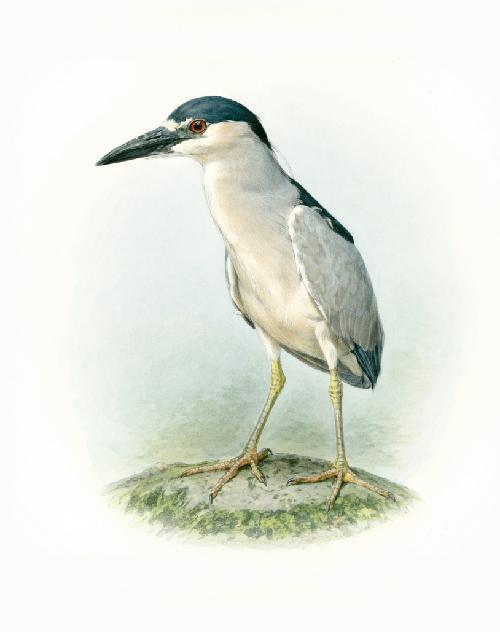
- black-crowned night heron
- Turkey
- Blanc de l'Ouest Pig
- somali ostrich
- common european toad
- Cockroach (domestic, red)
- wild boar
Find your most suitable archetypes
Archetypes are facets of personality and behaviour: sometimes a hamster, sometimes a lion. Take a test for yourself, a friend or a pet.