
























The “Beluga whale” archetype
Cultural context
Among the Inuit and the peoples of the Russian North, the beluga is remembered as a thinker who happens to love company. Those who lived beside these pale whales saw them wintering in the ice, keeping to their pods, calling across dark water and still finding something to play with. From that grew the image of a teacher: a creature that shows people how to get through a hard season, how to stay loyal to a group, and how to keep a sense of fun when the cold presses in. Told as a children's story or as practical lore, the beluga stands for wisdom that has not forgotten how to laugh.
Scales
In that tradition the beluga reads as a creature of two poles. On one side stand its depth of thought, its taste for turning a problem over until the heart of it shows, and its sense of belonging to something larger than itself. On the other is a bright, outgoing energy: the beluga seems at its best in a crowd, curious about the unfamiliar, quick to joke and gentle with whoever swims alongside. What it lacks is hardness. Cold calculation is not its gift, and its feelings sit on the surface instead of being kept behind ice. That is why the old stories trust it: it is wise because it is warm.
Strong traits
Wisdom and playfulness form the core of the beluga character. The wise half learns from what has happened, waits out difficult moments with patience and sees what lies beneath the surface of a situation, though it can grow so careful that a decision drags and a risk goes untaken. The playful half is its match: it finds delight in small things, invents odd solutions when everyone else is stuck, and can melt a tense room with one well-timed joke. The price is occasional frivolity, a joke told when the long task needed attention.
Noticeable traits
Loyalty to the group and a love of company sit just behind. A beluga builds teams almost without trying, keeps trust alive when times are hard and stands up for shared interests. Taken too far, that loyalty turns into leaning on the pod and giving up personal needs for its sake. Sociability brings the same double gift: conversation charges the beluga like a battery and ties people together, yet after enough of it comes a weariness with company, and the quiet hours it truly requires get skipped for one more gathering.
Muted traits
Noisiness is present but not at the top of the scale. A beluga announces itself readily, and its voice pulls a scattered crowd into one mood, a real strength in a cold, dark place. The shadow is volume: now and then the whistles and chatter run over someone who needed silence, and the beluga does not always notice the damage.
How to be around
How do you get along with a beluga? Treat it as a good listener with a loud laugh. Let it talk, joke and call out to friends, and ask for its opinion when something truly matters, since its answers tend to be well considered. Invite its energy toward a shared project rather than ordering it, and it will carry the project farther than you hoped.
With a woman
A woman-beluga lights up when you bring her into the middle of things, so invite her to the table, the choir or the kitchen where everyone talks at once. Ask what she makes of a tangled situation and then actually use her answer; her reading of people is usually sound. Thank her for it out loud, in front of the others, because praise from the group matters to her more than a private compliment.
With a man
Find a man-beluga a job that needs a crew: a boat to repaint, a team to coach, a party to organize. He gives his best when he is part of something and knows it. When his chatter starts to eat the afternoon, bring him back with a light question about the next step instead of a reprimand, and he will laugh and get on with it.
With a teenage boy
A teenage boy-beluga often looks fearless in company and hesitant alone. When a new challenge arrives, tell him you have seen how he works things out, then offer the first small step and stand back while he takes it. If he admits he is afraid, answer with your own story of a time you hesitated; a joke at his expense will close him up for weeks.
With a teenage girl
A teenage girl-beluga keeps a wide circle and may run herself ragged inside it. Make sure she owns a corner and an excuse to retreat there without explaining, whether headphones or an errand. Notice when the laughter around her thins out, and sit nearby with tea, ready to listen, because she rarely announces that the crowd has worn her out.
With a child
A child-beluga learns best through noise and play. Turn the shouting into a game with rules: a song, a drum, a call-and-answer round. Laugh when he spills or breaks something and let him help clean up, so mistakes become part of the fun rather than shame. Count the days when he makes someone else laugh as good ones.
With an animal
An animal-beluga answers sound with sound, so whistle, hum and talk to it, then watch it respond. Keep it among company, another animal or a regular human voice, because a lone beluga goes quiet fast. Offer a floating ring or a ball in place of commands, and let it decide when a game is over; it usually knows better than you when it has had enough.
After a quarrel
To quarrel with a beluga or get under its skin, treat its cheerfulness as shallow and its judgment as a joke. A woman-beluga bristles when her advice is brushed off in front of an audience, and still more when she is cut off mid-sentence. A man-beluga is wounded if you pull him from a shared project and leave him to work alone. A teenage boy shuts down when his fear is mocked, a teenage girl when she is cut off from her friends as a punishment. A child turns sullen if told to be quiet again and again with no outlet for the noise, and an animal-beluga grows tense when it is separated from its pod-mates or ignored while it calls. In every case the offense is the same: pretending the whale is only loud, when it is wise as well.
How to befriend
To befriend a beluga or win it over, join its circle and bring laughter. Ask a woman-beluga for her view and a man-beluga for a hand with something shared; believe in a teenage boy's ability, hand a teenage girl a place among friends, play with a child without keeping score, and let an animal-beluga hear a friendly voice answering its own. Belugas remember who was warm with them, and they return it in loyalty.
Similar archetypes
Close facets: images with a similar set of qualities.
- Common Brown Lemur
- Porpoise / Dolphin
- glow-worm
- canis lupus dingo
- Fur seal
- Dog
- Reindeer
- yellow-naped amazon
Complete opposite
The opposite facet: images whose qualities point the other way.
- Cockroach (domestic, red)
- Human Flea
- Dog Flea
- Oriental Rat Flea
- Hen Flea
- Northern Rat Flea
- chigoe flea
- Hedgehog Flea
- new zealand bat flea
- Martin Flea
- cat flea
- Ceratophyllus farreni
- Chaffinch Flea
- Rabbit Flea
- Mouse Flea
- sticktight flea
- Squirrel Flea
- Sparrow Flea
- Amalaraeus dissimilis
- Northern Flea
- Ceratophyllus chasteli
- Golden Jackal
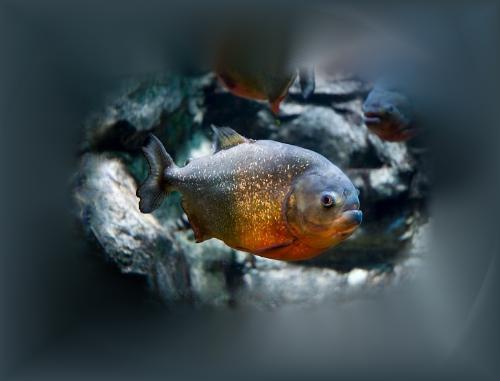
- Piranha
- common european toad
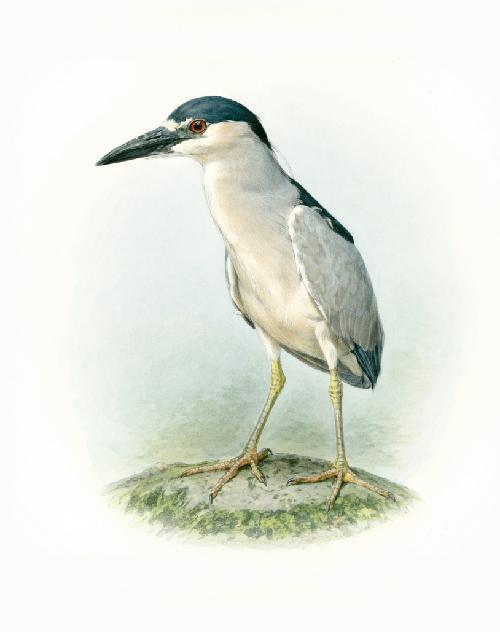
- black-crowned night heron
- Fly
- somali ostrich
- Horsefly
- Blackfly
- Bed bug
Find your most suitable archetypes
Archetypes are facets of personality and behaviour: sometimes a hamster, sometimes a lion. Take a test for yourself, a friend or a pet.