




















The “queen of spain fritillary” archetype
Cultural context
Issoria lathonia crosses continents and centuries like sunlight on a meadow of thistles, its bright wings read everywhere as a sign of grace under change. European villagers once watched the orange flash between rye stalks and whispered of souls returning from the other side; steppe nomads saw the same glint against the horizon and called it a promise that spring would follow frost. In both worlds the insect’s quick, silent arrival suggested a life that bends with wind yet never loses its colour, a pattern stitched through every local tale of renewal and quiet endurance.
Scales
Wherever Issoria lathonia is noticed, the eye lingers on its ordered wing-spots and its long, unhurried flight across open ground. That flight hints at eternity: the butterfly seems to measure distance in seasons rather than minutes. It meets the new with a dancer’s curiosity, turning suddenly toward a strange flower, yet it rarely stays long enough to disturb the balance already in place. Tradition and novelty meet in its wing-beat; the insect keeps both without choosing between them.
Core traits
Adaptability moves through Issoria lathonia like a breeze that lifts every wing at once. The butterfly can turn mid-air when the wind shifts, settle on a nettle or a clover, and leave again without hesitation. Beauty walks with it in the same instant: orange-black patterns flash like polished coins among dry stems, drawing eyes even from a distance. Both qualities together keep the insect alive and admired, though the same quick change can leave it exposed when the meadow is cut.
Strong traits
Lightness lets Issoria lathonia rise above sudden shadow, riding an updraft instead of folding its wings in alarm. Spirituality adds a quiet depth: each brief landing seems chosen, as though the insect listens for something beneath the grass. Sensitivity keeps its antennae trembling at every shift of scent or temperature, while hope keeps it circling a patch of thistle even after rain has beaten the flowers flat. These four notes sound together whenever the butterfly crosses an open field.
Noticeable traits
Stupidity appears in Issoria lathonia only as a brief, sunlit distraction. The butterfly may rise straight toward a hawk’s shadow, then drop away at the last instant, learning the difference between light and danger only after the mistake is made. The same wandering instinct sometimes steers it into nets or traffic, yet the next generation still hatches from eggs laid on the wrong leaf, and the species continues its uncertain, glittering course.
How to be around
To move well beside an Issoria lathonia person is to match rhythm rather than set pace. Watch where the light falls and let conversation follow the same shifting brightness; never fix the talk to one flower when the whole meadow is in bloom.
With a woman
When a woman who carries the Issoria lathonia pattern speaks, give her room to turn the subject as the breeze turns a leaf. She may begin with yesterday’s meeting and end in next year’s plan without warning, yet each turn carries its own light. Let her finish; the long view she sketches often resolves what shorter talk would have left tangled.
With a man
A man who moves like Issoria lathonia draws notice the way sunlight draws it across open ground. He likes his surroundings ordered, his collar straight, his words measured. Offer a clear, well-lit space for his work and a quiet nod when the result pleases the eye; criticism aimed at the surface will bruise more deeply than any flaw in the work itself.
With a teenage boy
A teenage boy of the Issoria lathonia kind keeps his balance by staying slightly above the ground. He laughs at small disasters, shrugs off yesterday’s quarrel, yet will spend an hour helping a younger child carry books if the need appears suddenly. Leave him the freedom to drift between tasks; the help he gives arrives without being asked and vanishes again just as lightly.
With a teenage girl
A teenage girl who shares the Issoria lathonia flight seems to listen for something the rest of the room cannot hear. She may sit through a noisy meal and still catch the one unspoken tension at the table. When she withdraws to sketch or write, do not call her back; the quiet page is where she steadies the weight she has gathered.
With a child
A child of the Issoria lathonia sort notices the smallest change in a room: a lamp moved two inches, a voice grown softer. They will rearrange blocks until the pattern satisfies some private rule of symmetry. Sit nearby and watch without comment; the order they build is their way of making sense of what they have felt but cannot yet name.
With an animal
An animal that carries the Issoria lathonia temper keeps returning to the same high shelf even after the furniture is moved. It will explore a new box only after the box has been left open and still for a full day. Place the box where the light falls longest and leave the decision to it; once the place feels chosen, the animal settles as though the room had always been arranged for its arrival.
After a quarrel
Issoria lathonia people lose their footing when talk turns sudden and loud. A woman may close like a wing when her long plan is cut short by an order given in public. A man draws back if his careful arrangement of objects is brushed aside without apology. A teenage boy drifts into stubborn silence when his joke is treated as waste of time. A teenage girl turns away when a private sorrow is named too quickly. A child drops the toy whose pattern has just been completed. An animal startles and hides when the door slams.
How to befriend
Friendship with an Issoria lathonia person grows from shared attention to small, lasting things. Sit with a woman while she finishes the embroidery she began last spring; the patience you show beside her needlework tells her you understand the reach of her plans. Walk with a man through the garden he tends, noticing which stems he has tied again this week; your quiet recognition of order becomes a bond. A teenage boy remembers the one afternoon you helped carry his project without asking why it mattered. A teenage girl keeps the postcard you sent after a difficult month. A child shows you the drawer where every shell has its place. An animal learns your step on the stair and meets you at the top without being called.
Similar archetypes
Close facets: images with a similar set of qualities.
- black-fronted white-eye
- duke of burgundy fritillary
- marbled white
- scarce fritillary
- small white
- mourning cloak
- map
- wood white
Complete opposite
The opposite facet: images whose qualities point the other way.
- Bed bug
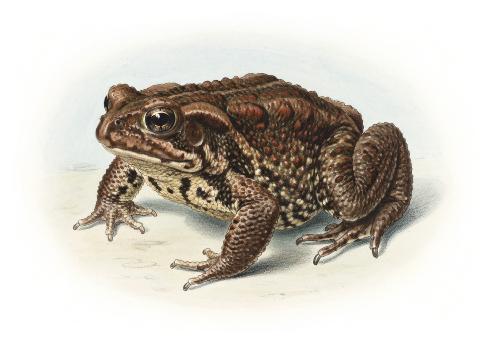
- European toad
- African Owl
- common european toad
- Human Flea
- Dog Flea
- Oriental Rat Flea
- Hen Flea
- Northern Rat Flea
- chigoe flea
- Hedgehog Flea
- new zealand bat flea
- Martin Flea
- cat flea
- Ceratophyllus farreni
- Chaffinch Flea
- Rabbit Flea
- Mouse Flea
- sticktight flea
- Squirrel Flea
- Sparrow Flea
- Amalaraeus dissimilis
- Northern Flea
- Ceratophyllus chasteli
- Cockroach (domestic, red)
Traits and their opposites
Each trait of this archetype — and what is opposite to it.
- Spirituality ↔ Pragmatism
- Sensitivity ↔ Callousness
Find your most suitable archetypes
Archetypes are facets of personality and behaviour: sometimes a hamster, sometimes a lion. Take a test for yourself, a friend or a pet.