


















The “savi's pipistrelle” archetype
Cultural context
Across the river valleys and tiled rooftops of old China, small wings thread the air after dusk like quick needles pulling threads of unseen luck. People long noticed how the Hypsugo savii slips between roof beams and city eaves, gathering crumbs of fortune from the night air while the day sleeps. Its tiny shadow over a threshold was read as a sign that hidden stores would last and that years would stretch quietly forward. Villagers watched it bank and turn without sound, tracing paths no daylight traveller could follow, and they began to speak of it as the keeper of wealth that does not show itself until the right moment arrives.
Scales
In the old gaze the Hypsugo savii moves inside a circle of measured endurance and steady order, its flight tracing lines that hold the hours in place rather than scatter them. The creature leans toward long arcs of time, favouring what lasts over what flashes once and fades. It builds its roost in the same hollow year after year, yet now and then slips its course to test a new gap in the tiles. Custom guides its return, yet a private resistance to crowded roosts keeps it from joining the larger flock when evening light still hangs. The small body carries both a readiness to give its own warmth to the young and a habit of withdrawing into solitary flight when the air grows thick with others.
Core traits
The Hypsugo savii meets each insect as a fresh chance and shares the catch with its roost-mates, yet keeps hunting past its own strength until wings tremble. It finds promise in the dimmest crack of light and brings the bounty back without counting the cost to itself, sometimes circling until the night empties and the body can give no more.
Strong traits
Luck rides beside the Hypsugo savii like an unseen tailwind; the creature turns toward a stray moth and finds a swarm, rides a sudden gust and reaches a safer ledge. Patience lets it cling to the same beam through storms that strip leaves from the trees, while its night eyes stay clear when the rest of the world grows dull. Still, it may wait too long for another lucky turn and forget the slow work of widening its own crack in the plaster.
How to be around
Approach the Hypsugo savii the way one approaches a night garden: let your step fall softly on dew-glistened stones and your voice stay low until it shows you where the path lies, perhaps by the faint metallic tap of wings brushing against a lantern’s rim.
With a woman
A woman whose temper follows the Hypsugo savii will keep searching for small openings others miss, offering the finds to anyone nearby until her own hands shake with weariness. She may keep stitching a torn sleeve long after the hour for rest has come. Give her an earlier light to work by and notice when her shoulders begin to stoop; that is the moment to place a warm drink beside her and say nothing more.
With a man
A man cut from the same night pattern will read a chance meeting as the start of a larger pattern and step into it with quick certainty, trusting the air will hold him. He arranges tools and plans so that every shelf sits level, yet may leave the final bolt half-turned because the next wind feels lucky. Stand with him while he straightens the last shelf and hand him the missing screw without comment; the finished line will tell him the order was worth the wait.
With a teenage boy
A teenage boy carrying the Hypsugo savii’s slow patience will stay at a single problem until the page grows dark, unwilling to leave a line half-drawn even when the clock has already moved on. He measures today against the year ahead and rarely against the hour. Offer him a second lamp and a quiet corner; let the lamp burn until the line is whole, then walk with him to the door without asking how much remains.
With a teenage girl
A teenage girl whose blood keeps the bat’s timetable will think most clearly once the house has gone quiet and the streetlamps have dimmed. She may slip into the garden after others have closed their shutters, letting the cool air settle her thoughts. Leave the back door unlatched and the porch light low; when she returns she will carry whatever she has untangled and set it on the table without needing to name the hour.
With a child
A child who shares the Hypsugo savii’s instinct will hand half a biscuit to a smaller playmate before tasting the first crumb, then sit on the cold step until everyone else has gone inside. The gift costs the child its own warmth, yet the child stays until the step grows warm again from the smaller body beside it. Keep an extra blanket on the step rail; when the child finally rises, fold the blanket around both shoulders without asking why it waited.
With an animal
An animal Hypsugo savii will leave the shared perch the moment too many wings crowd the beam, choosing instead a narrow crack that only its own shoulders can enter. It returns to the same ledge each dusk, testing the wind with quick flicks of its ears. Place a shallow box lined with clean cloth high on the wall where no other creature can reach; the animal will claim the space and leave the crowded beam to others.
After a quarrel
The Hypsugo savii answers pressure with a sudden change of course, banking toward whatever gap the light has not yet reached. A woman will turn her back if you insist she rest before the task is finished; a man will close his ledger if you question the lucky coincidence he counted on. A teenage boy will fold the unfinished page and leave the room if you demand he hurry the line; a teenage girl will draw the curtain and stay behind it if you ask her to speak while the house is still loud. A child will drop the half-given biscuit and retreat to the corner if you press another gift into its hands; an animal will abandon the box you offered if you add a second perch beside it.
How to befriend
The Hypsugo savii draws near when its own path remains its own and when the space it chooses is left untouched. A woman accepts a single practical tool placed within reach and no further comment; a man stays if you stand beside the half-finished shelf and simply hold the lamp steady. A teenage boy keeps returning to the same table once you have left the second lamp burning; a teenage girl opens the garden door again when you keep the porch light low and do not call her name. A child will sit on the step once more if the blanket is already folded and waiting; an animal will re-enter the box each evening if nothing else has been added to its wall.
Similar archetypes
Close facets: images with a similar set of qualities.
- brown big-eared bat
- particolored bat
- whiskered bat
- noctule
- daubentons bat
- greater horseshoe bat
- pond bat
- lesser horseshoe bat
Complete opposite
The opposite facet: images whose qualities point the other way.
- Human Flea
- Dog Flea
- Oriental Rat Flea
- Hen Flea
- Northern Rat Flea
- chigoe flea
- Hedgehog Flea
- new zealand bat flea
- Martin Flea
- cat flea
- Ceratophyllus farreni
- Chaffinch Flea
- Rabbit Flea
- Mouse Flea
- sticktight flea
- Squirrel Flea
- Sparrow Flea
- Amalaraeus dissimilis
- Northern Flea
- Ceratophyllus chasteli
- Bed bug
- Turkey
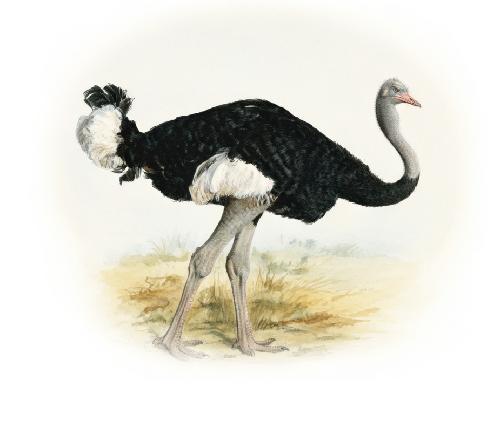
- somali ostrich
Traits and their opposites
Each trait of this archetype — and what is opposite to it.
- Resilience ↔ Fragility
- Nocturnal Essence ↔ Diurnal Essence
Find your most suitable archetypes
Archetypes are facets of personality and behaviour: sometimes a hamster, sometimes a lion. Take a test for yourself, a friend or a pet.