




















The “blue-and-yellow macaw” archetype
Cultural context
Across South American riverbanks, African savannas and the dry heart of Australia, the blue-and-yellow macaw moves like sunlight caught on a turning leaf. Its feathers flash the same gold as the grain that feeds village stories, and the bird’s voice carries farther than the thunder that rattles red earth. Where feathers adorn a dancer’s brow, the macaw stands for voices that refuse to be silenced, for eyes that notice the smallest shift in weather and mood alike. Its presence lingers like the scent of rain on warm bark, binding distant peoples who share only the habit of looking upward when a sudden cry splits the air.
Scales
The blue-and-yellow macaw is read as a creature whose senses drink in every gleam of river light and every flash of wing colour, yet it also steps into new clearings without hesitation. Around a fire its speech can hold a circle spellbound, though it prefers to shape its own path rather than follow every custom. It weighs matters carefully, never rushing, and finds strength in measured movement rather than sudden bursts. Loyalty to its own circle runs steady, tempered by a willingness to defend its own quiet corner when the group presses too closely.
Strong traits
Brightness makes the blue-and-yellow macaw the spark that turns a still afternoon into a festival of calls and wing-beats, drawing every nearby eye until the air itself seems to hum. Eloquence lets it mimic laughter, warnings and lullabies with equal ease, shaping the mood of an entire flock in the space of a single phrase. Sociability keeps it darting from branch to branch, weaving quick alliances that dissolve again as suddenly as they formed, leaving both the bird and its companions pleasantly exhausted.
Noticeable traits
Wisdom sits behind the bright mask, letting the macaw remember which fruit ripens first and which branch bends too far; when danger gathers, it waits a heartbeat longer than its neighbours. Noisiness, meanwhile, rolls through the canopy like distant drums, pulling scattered birds together in sudden chorus yet occasionally drowning the softer rustle of smaller creatures that prefer the shade.
How to be around
To live near a blue-and-yellow macaw is to keep one ear open for sudden bursts of colour and sound, and to know that the same bird will later sit motionless, watching a single shaft of light slide across the leaves.
With a woman
A woman who carries the blue-and-yellow macaw’s brightness will turn an ordinary market errand into a vivid story told with both hands; when the light begins to fade from her eyes, step back and let the silence settle like dust after wings have passed. Offer no extra lamps or louder talk; instead set a single perfect flower on the table so her gaze can rest on beauty without being asked to explain why she needs it.
With a man
A man marked by the blue-and-yellow macaw’s eloquence will argue a plan into sudden life with a few swift sentences, yet he may twist the same gift to win an argument he privately doubts. Match his pace with equal frankness, but remind him, quietly and only once, of the old path his grandparents walked; the faint pull of loyalty to custom steadies the flight of his words.
With a teenage boy
A teenage boy alive with the macaw’s sociability will collect friends the way a branch collects wind, yet the constant company can leave him hollow by dusk. Let him bring the group to your door, then suggest a single errand that needs only two pairs of hands; the small act of shared work answers his hunger for connection while protecting the silence he is too proud to name. If the task asks something of his own comfort, he will give it without complaint.
With a teenage girl
A teenage girl who listens with the macaw’s noticeable wisdom will weigh every offer twice before she answers; do not hurry her. When she finally speaks, answer with the same measured tone she used, leaving room for her to revise her thought aloud. Her quiet patience is the gift she offers; treat it as carefully as you would a half-finished carving still warm from the knife.
With a child
A child who inherits the blue-and-yellow macaw’s noisiness will fill a room with sudden trills and invented songs; when the sound grows too bright, tap twice on the table rather than raising your voice. The child will recognise the signal, drop the volume like a feather, and return to play with the same unbroken energy, the way a macaw pauses only long enough to choose a riper fruit.
With an animal
An animal blue-and-yellow macaw seeks its own high perch at dusk, turning its face toward the last light as though listening for a voice the rest of us cannot hear. It will resist any hand that tries to move it before it is ready; give it the branch it has already claimed and the freedom to leave it when the inner call changes.
After a quarrel
The blue-and-yellow macaw keeps its word even when the wind changes; to quarrel with it, break that unspoken contract of fairness. A woman will flare if you praise her only for the brightness she gives and never for the truth she keeps. A man will bristle when his spoken plan is mocked in front of the very people he hoped to lead. A teenage boy turns sharp if you laugh at the effort he offered without being asked. A teenage girl withdraws when her careful judgment is brushed aside as mere delay. A child stamps when a promised story is replaced by a quicker errand. An animal will strike the perch with its beak if its chosen branch is taken without warning.
How to befriend
The blue-and-yellow macaw trusts those who can stand alone yet still return at the agreed hour. A woman warms when you remember the small detail she mentioned once and never ask her to repeat it. A man stays close if you hand him a task that needs only his own eye and let him finish it without an audience. A teenage boy answers an invitation to walk rather than sit; the movement itself becomes the conversation. A teenage girl values the gift of an empty hour and the certainty that no one will fill it for her. A child draws nearer when you keep the toy exactly where the game left it. An animal settles on your shoulder only after you have shown you can wait without reaching.
Similar archetypes
Close facets: images with a similar set of qualities.
- yellow-naped amazon
- ring-necked parakeet
- galah
- monk parakeet
- alexandrine parakeet
- chattering lory
- coconut lorikeet
- slaty-headed parakeet
Complete opposite
The opposite facet: images whose qualities point the other way.
- Cockroach (domestic, red)
- somali ostrich
- common european toad
- Bed bug
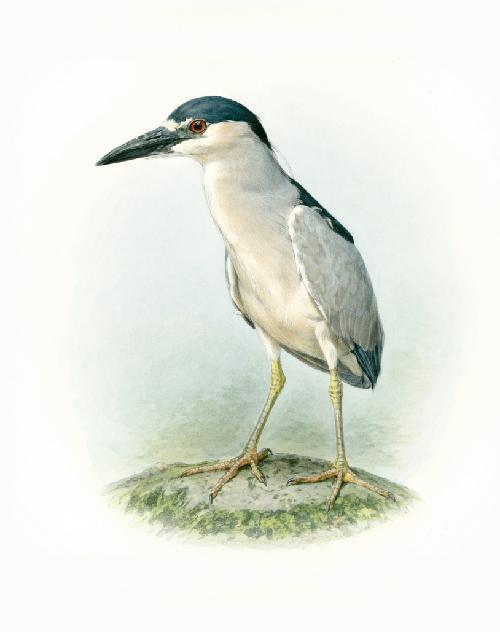
- black-crowned night heron
- Human Flea
- Dog Flea
- Oriental Rat Flea
- Hen Flea
- Northern Rat Flea
- chigoe flea
- Hedgehog Flea
- new zealand bat flea
- Martin Flea
- cat flea
- Ceratophyllus farreni
- Chaffinch Flea
- Rabbit Flea
- Mouse Flea
- sticktight flea
- Squirrel Flea
- Sparrow Flea
- Amalaraeus dissimilis
- Northern Flea
- Ceratophyllus chasteli
Find your most suitable archetypes
Archetypes are facets of personality and behaviour: sometimes a hamster, sometimes a lion. Take a test for yourself, a friend or a pet.