




















The “Cheetah” archetype
Cultural context
Nobody has handed the cheetah a ritual calendar or a founding legend, and it would be wrong to invent one. What survives is simpler: people everywhere have watched a cat cross a field in a few heartbeats and then stop as if nothing had happened, and they took it for the picture of grace under pressure. Names such as hunting leopard, or the old Russian pardus, show how long humans have been trying to pin the animal down. As an archetype, the cheetah stands for a person who wastes nothing: no words, no motion, no show. Such people are admired from a distance and understood late. They keep their own counsel, move when the moment is ripe, and leave behind the memory of a single clean line drawn across the grass.
Scales
Taken as a whole, the cheetah is a body first and a temperament second. Strength and athleticism sit at the centre of the character, with endurance close beside them: this is a cat that can sustain a chase far longer than its slender look suggests, and a person who bounces back from effort faster than anyone expects. An eye for beauty runs through everything, but it is the beauty of a clean line, a well-timed gesture, a room with nothing superfluous in it. Closeness to the body matters too, so these people think through muscle, appetite and skin. Self-reliance follows, together with a quiet hunger to have achievements noticed. Further down come a taste for romance and pairing, a streak of resistance to group pressure, a love of play and dry jokes, a quick analytical mind, and a feeling that certain things are not to be touched. Fainter still are a search for meaning, readiness to help at a cost, social boldness, curiosity about the unknown and a long view of time. Over it all lies a cool emotional register and some stubbornness in disputes, held in check by plain honesty and a measure of discipline.
Core traits
Power and stamina make the cheetah what it is. The power is not brute weight but a coiled spring, released in a single sprint that leaves onlookers blinking. Beneath it lies a reserve of vitality that refills quickly after a hard day, so a cheetah person can look tired at noon and be flying by dusk. Even the senses obey this body: movement registers at a great distance, and a shift in the wind is noticed before it is understood. Beauty matters here as well, but of a specific sort. It is a hawk gliding without a wingbeat, the curve of a stride, a surface with every needless thing removed. Elaborate display leaves a cheetah unmoved; simplicity, done perfectly, wins its respect.
Faint traits
The quieter traits sit like weather in the background. Spirituality shows up as a felt sense of belonging to something larger, never as a creed: a cheetah person goes silent at dawn on an empty plain and says nothing about it afterwards. Self-sacrifice surfaces rarely and in disguise, as a bag of groceries left on a neighbour's step or a task finished for someone else without a word. Sociability is low, though there is a glow under the reserve that warms those who earn it slowly. Newness appeals more as terrain to cross than as an idea to discuss. And a faint feeling for the long haul, for what outlasts a single season, gives the restless sprints a hidden direction.
Play and wit are the cheetah's soft side. The humour is light and sudden, a remark dropped in passing, a chase begun for the fun of it. Attraction runs warm and physical: touch, shared meals, a hand on the shoulder say more than speeches do. Rebellion is the third strand. Told to fall in with the group, a cheetah drifts to the edge, then quietly takes another path, and sparks fly only when somebody tries to drag it back.
Behind the athletic surface works a mind that likes to take a puzzle apart, test each piece and set it down again, preferring a neat solution to a long discussion. Alongside this runs a feeling for the untouchable: a certain hill, an old watch or the ritual of the morning coffee is simply not to be joked about. That feeling sits oddly beside the dry banter, yet both belong to the same character.
Curiosity pulls the cheetah toward the unmapped corner of the town or the map, usually on its own. Wishes to try, taste and cross something new arrive in sudden bursts and are acted on rather than discussed. Autonomy governs the rest. Rules are accepted when they seem sensible and dropped when they merely confine. After days among people, these characters retreat for a while, and it is a mistake to take that as a slight. They simply refuel in silence, the way the animal rests in the shade between hunts.
Custom is honoured here for its use rather than its charm. A cheetah person keeps the family recipes and the habits that work, and drops those that only slow things down. Honesty comes naturally and often bluntly, delivered as a short sentence, and it is meant to clear the air rather than wound. Orderliness shows in small things: a tidy kit bag, a promise kept to the hour. Vanity bores them, and boasting makes them leave the room.
Status matters to the cheetah more than it admits. Respect earned by results, the sort measured in medals, finished projects or a reputation for being first, warms it deeply. Praise is welcome when it names a real achievement and is wasted when it is generic. Rank works as a spur: a rival's good time on the track brings out the best sprint. Yet the recognition must come freely, because a title gained through flattery feels like a cage with a gold label.
How to be around
Living well beside a cheetah is mostly a matter of how you wait. Keep a door open and a table laid, and never ask how long it plans to stay. It decides on its own when to come closer, and it remembers who held still while it chose, and who asked nothing of it at the threshold.
With a woman
With a woman-cheetah, plan the route instead of the schedule: suggest a long walk, a train ride to somewhere unfamiliar, or a run along a river, and let her set the tempo. If she pulls ahead, wave her on. She comes back to the person who never counted the minutes, and she often brings a story or a find from the road.
With a man
Credit given with precision works on a man-cheetah. Tell him which move in the project was the cleverest, in front of colleagues if possible, and name the result aloud, because ambition feeds on being seen. Hold your suggestions until the run is over; advice shouted mid-stride sounds to him like doubt, and he will answer it by speeding up out of spite.
With a teenage boy
Try a teenage boy-cub with a bicycle, a sports club or a patch of open ground, because he burns fuel faster than a household can supply it. Agree on the rules calmly once, then simply turn up at the finish line and clap, commenting on the time only if he asks. Pride grows quietly in him this way.
With a teenage girl
Your teenage girl-cub trusts people who share her sense of style and humour. Take her to a dance class, a gallery or a fabric market, and trade jokes on the way home. Ask what caught her eye there, and listen to the answer without turning it into a lesson. Curiosity from you reads as respect.
With a child
For a child-cub, learning happens through legs and lungs. Chalk a course on the pavement, play tag at the park, race to the second lamppost and lose on purpose now and then. Afterwards hand over water, towel off the sweat and retell the story of that last dash, with a flourish, as if it had been a legend.
With an animal
Height and a long line of sight are what an animal-cheetah needs, whether that means a rock, a platform or a fence post. Feed it away from the household bustle, and treat a toy as prey it should be allowed to finish. Never grab it mid-pounce; a hunter that has been interrupted sulks for days.
After a quarrel
To quarrel with a cheetah or get under its skin, shut it in, correct it in public and demand an account of every step. Men flare up when a win goes unremarked, women when somebody else's route and deadlines are forced on them. Teenage boys bristle at orders to march in line, girls at mockery of their taste, and little ones at a ban on running. The animal snarls the moment its path is blocked, and an animal that snarls rarely forgets.
How to befriend
To befriend a cheetah or win it over, travel light and keep no leash in your pocket or your plans. A woman will enjoy unplanned trips, a man an argument in which you freely concede his point. Shared training sessions suit a teenage boy, a sincere compliment on style suits a teenage girl, and a noisy game of tag suits a child, and a small private joke suits all of them. The animal gets used to whoever brings a treat and then sits perfectly still, looking elsewhere, like an unremarkable rock.
Similar archetypes
Close facets: images with a similar set of qualities.
Complete opposite
The opposite facet: images whose qualities point the other way.
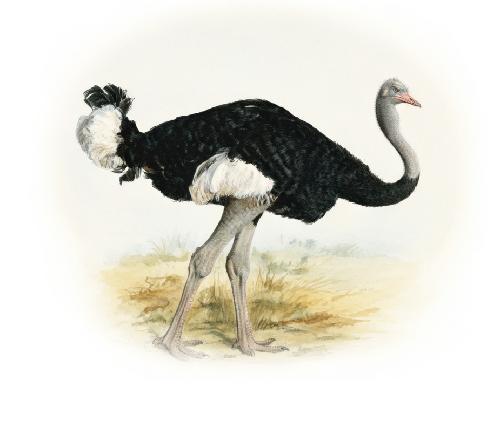
- somali ostrich
- wild boar
- mallard
- Human Flea
- Dog Flea
- Oriental Rat Flea
- Hen Flea
- Northern Rat Flea
- chigoe flea
- Hedgehog Flea
- new zealand bat flea
- Martin Flea
- cat flea
- Ceratophyllus farreni
- Chaffinch Flea
- Rabbit Flea
- Mouse Flea
- sticktight flea
- Squirrel Flea
- Sparrow Flea
- Amalaraeus dissimilis
- Northern Flea
- Ceratophyllus chasteli
- Bed bug
- Turkey
Traits and their opposites
Each trait of this archetype — and what is opposite to it.
- Agility ↔ Clumsiness
Find your most suitable archetypes
Archetypes are facets of personality and behaviour: sometimes a hamster, sometimes a lion. Take a test for yourself, a friend or a pet.