








The “Cockatoo” archetype
Cultural context
Cacatua galerita carries a sun-bright crest through the open canopies of Australia, where every sudden flap of white wings turns the morning air into a moving banner. The bird’s white plumage catches light like a signal cloth, while its piercing call slices through the foliage with the clarity of a bell struck in mist. People watching the flocks see them crowd branch after branch, tossing torn bark and feathers in brief, riotous showers, until the whole stand seems to pulse with laughter and shared urgency. Such gatherings are remembered less for any single bird than for the way their noise lifts the heart of the entire clearing.
Scales
Tradition reads the cockatoo as a creature of wide-open curiosity and restless motion, always alert to new sounds and sights. Its energy swells in company, when groups wheel and call together, yet it also turns a keen eye on the shape of each leaf and the scent of each flower, as though the world itself were an unfinished story it must finish reading. It questions the weight of old paths, slipping sideways through the canopy rather than following any straight trail, yet it rarely wanders far without returning to the same high perch at dusk, carrying something new back to the flock. Endurance and a quiet respect for hidden things keep it in motion even when the day grows heavy.
Strong traits
A sulfur-crested cockatoo turns every dull branch into a stage, its crest rising and falling like a quick white flame whenever an audience appears. It leans forward, beak half-open, to taste whatever new scent rides the breeze, then darts away before the moment can settle. Its playfulness is a constant ripple through the leaves, a tossing of husks and twigs that ends in sudden laughter-like calls. The same brightness that draws others close can tire the bird itself, leaving it perched alone, crest lowered, until the next spark returns.
Noticeable traits
In flocks the cockatoo moves easily from one voice to another, its feathers brushing shoulders in passing, yet after long hours it slips aside to rest in quieter shade. It does not push itself forward when the group already shines; instead it softens its own brightness, letting the moment belong to the many. This balance between nearness and distance keeps its presence welcome without ever becoming a burden.
How to be around
To walk beside a sulfur-crested cockatoo is to keep one hand ready to catch the next tossed seed and the other free to give the bird room when its crest begins to droop. Watch the quick turns of its head, listen for the moment its calls grow shorter, and know that its joy lasts longer when it is not asked to shine without pause.
With a woman
A woman who carries the cockatoo’s crest in her bearing wakes a room simply by entering it, her laughter turning ordinary tasks into shared games. She will stay until the last cup is cleared, yet her eyes may begin to search for a quiet doorway once the light outside lengthens. Give her the chance to slip away for an hour without explanation, and she returns with fresh stories instead of tired smiles. In the longer run, she values those who remember that her light needs both fuel and shade.
With a man
A man with the cockatoo’s quick glance learns a new route through the city each week, stopping to ask strangers about the hidden garden behind the market wall. He will join any circle that is already talking, yet he grows restless if the talk never moves. Offer him the lead on a small shared project that ends with something visible, then step back so the result feels like his own discovery. When he tires of company he will still return, carrying a fresh observation for the next gathering.
With a teenage boy
A teenage boy whose spirit matches the cockatoo’s white crest turns every spare hour into an experiment, whether it is building a makeshift catapult from garden stakes or teaching himself three chords on a borrowed guitar. He listens when the story is told sideways, through a shared mistake rather than a lecture, and his quick anger fades if the joke lands first. Let him test the new path, even when it looks crooked from the porch; the crooked line is where he learns the shape of his own curiosity.
With a teenage girl
A teenage girl whose presence carries the cockatoo’s brightness gathers friends around her desk to rearrange the seating chart into a living map of alliances and colors. She feels the weight of every glance and chooses her scarf that morning to answer some unspoken question in the hallway light. Stand beside her while she experiments with a new line of lipstick or a different way of knotting her hair, and do not hurry her decision; the mirror is also a conversation she is still finishing with herself.
With a child
A child who moves like a young cockatoo fills the kitchen with questions about why the kettle sings and whether the steam can be caught in a jar. When the answer arrives the child is already halfway to the next question, crest of hair rising with each new thought. Offer a low shelf where the child can keep the jar, the string, the feather found on the walk; the quiet work of arranging these small treasures steadies the same energy that sent the questions flying.
With an animal
An animal Cacatua galerita watches the room from its highest perch, turning its head in small precise arcs that miss nothing. It studies the pattern of light across the floor before choosing where to land, and once settled it stays until the pattern changes again. Keep its favorite branch free of sudden hands; the bird will repay the courtesy by offering its own small observations in the form of a soft, questioning whistle each time you enter.
After a quarrel
A quarrel with Cacatua galerita begins when its rhythm is broken mid-flight or when its chosen perch is claimed without invitation. A woman feels the interruption most sharply when new tasks are added to an already full morning, each added note crowding the clear line of her own plans. A man hears criticism of his latest discovery as an attempt to clip his wings before he has tested the air. A teenage boy takes a challenge to his quick choice as a direct strike at his right to decide. A teenage girl reads an unasked opinion about her appearance as a sudden shadow across the mirror she was still studying. A child loses patience when a half-built tower of blocks is swept aside before the last block is placed. An animal flares when its daily circuit of sun-warmed branches is crossed by an unfamiliar hand.
How to befriend
To stand near Cacatua galerita is to notice what it has already noticed and to speak of it before the moment passes. A woman remembers the friend who brings a single bright ribbon for her hair after weeks of plain mornings. A man stays close to the companion who asks, without prompting, to hear the end of the story begun the week before. A teenage boy returns to the person who watched the whole experiment without offering a single correction until the last wire was soldered. A teenage girl keeps the seat beside her for the one who noticed the new line of her scarf and said nothing until she brought the subject up herself. A child trusts the adult who keeps the low shelf clear and never moves the jar without asking. An animal settles on the offered branch when the hand that offers it stays still long enough for the bird to finish its own inspection.
Similar archetypes
Close facets: images with a similar set of qualities.
Complete opposite
The opposite facet: images whose qualities point the other way.
- Bed bug
- Mole
- Cockroach (domestic, red)
- common european toad
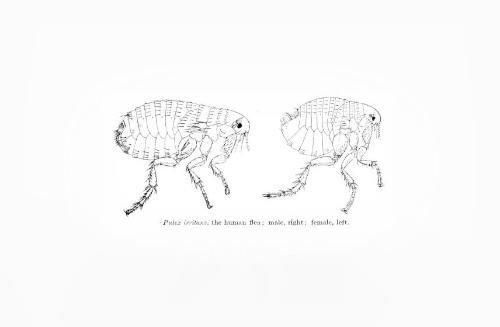
- Human Flea
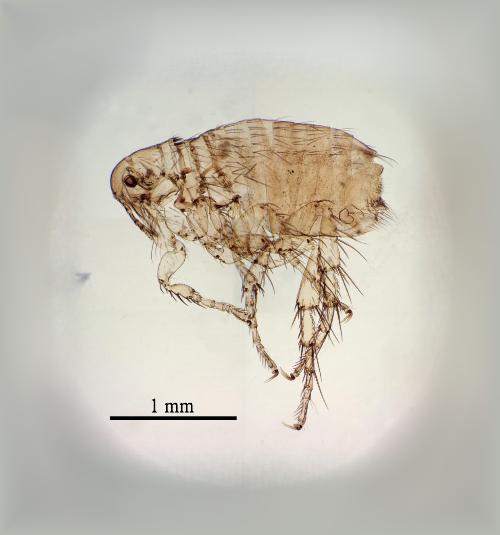
- Dog Flea
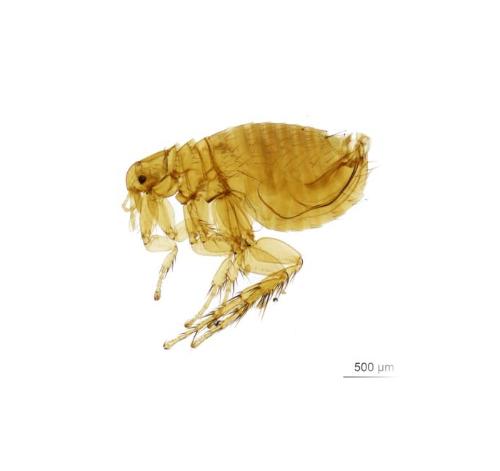
- Oriental Rat Flea
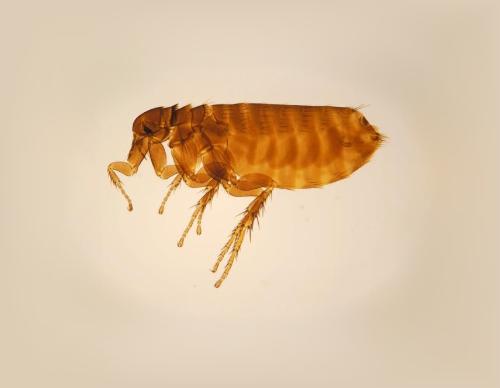
- Hen Flea
- Northern Rat Flea
- chigoe flea
- Hedgehog Flea
- new zealand bat flea
- Martin Flea
- cat flea
- Ceratophyllus farreni
- Chaffinch Flea
- Rabbit Flea
- Mouse Flea
- sticktight flea
- Squirrel Flea
- Sparrow Flea
- Amalaraeus dissimilis
- Northern Flea
- Ceratophyllus chasteli
- Piranha
Find your most suitable archetypes
Archetypes are facets of personality and behaviour: sometimes a hamster, sometimes a lion. Take a test for yourself, a friend or a pet.