




















The “Killer whale” archetype
Cultural context
From the pack ice of the north to the long houses of the north-west Pacific, the killer whale moves through memory like a black sail that never needs wind. Eskimo hunters still speak of the creature that clears the breathing holes before the village starves and drives seals onto the floe like sheep into a pen. In Europe the same silhouette appears on the prow of a Viking longship or in the margin of a medieval map, the sea’s own executioner, feared yet respected. Japanese woodblock prints show it as a living banner, white patches flashing against the night of the water, the emblem of a warrior clan that never breaks formation.
Scales
Within those stories the killer whale rides the heaviest poles: every stroke of its fluke carries the weight of muscle and the certainty of purpose, while the pulse of its heart seems endless. Its presence feels marked, set apart, as if the ocean itself has drawn a boundary around it. Rank clings to it like salt spray; wherever it rises the lesser waves give way. Thought runs deep beneath the surface, weighing currents and prey alike, yet the eye also lingers on the clean arc of a breach, the sudden geometry of spray and light.
Strong traits
Family is the fortress the killer whale never leaves unguarded; it circles the young, steers the old, and meets every threat with the whole pod shoulder-to-shoulder. Cunning rides beside that loyalty, reading the drift of ice and the hesitation of a seal, then choosing the silent approach rather than the obvious charge. The same mind that plans a hunt also claims the surface of the water as its own, ordering the pod’s ranks so that every whale knows its place and keeps it.
How to be around
To stand beside a killer whale is to accept that every move carries the weight of the whole pod; speak plainly, keep promises, and remember that its first loyalty is always to the circle already formed.
With a woman
A woman whose temper carries the killer whale’s stamp will close the door behind her own before the rest of the world is allowed across the threshold. She feels the water’s temperature on her skin and the tension in every shoulder around the table; when the household rhythm falters she straightens it with the same quiet discipline that once guided a hunt. She welcomes a fresh idea if it fits the pattern already laid, yet she will test its edges before letting it near the young. Leave her to set the boundaries; only then will the warmth inside the circle reach you.
With a man
A man who moves like the killer whale reads the tilt of a shoulder or the pause between words long before any open challenge appears. He answers pressure with an unexpected angle, slipping past it rather than meeting it head-on, and the same stealth that evades a rival can also shield those who rely on him. His body answers every demand without complaint, yet he will not be pushed into a straight line if the current runs another way. Offer help only when the cost is already shared; anything less feels like charity he refuses.
With a teenage boy
A teenage boy who carries the killer whale’s dominance will take the centre of any game and arrange the rules so the play runs through him. He can keep going long after others tire, and he prefers to finish what he starts without an audience of advisers. When the group drifts he draws it back into order, though the order is his own. Stand where he can still see the horizon; if you crowd the line he will simply redraw it farther out.
With a teenage girl
A teenage girl whose presence recalls the killer whale treats the ordinary day as a stage on which something rarer might appear. She jokes to keep the air light, yet behind the laughter runs a private ledger that measures what is owed and what is taken. When the joke lands she smiles; when the debt is ignored her silence cools the room like a sudden shadow across the water. Let the laughter reach you first; the reckoning will follow only if the balance feels wrong.
With a child
A child who shares the killer whale’s mind watches the pieces of a game the way a hunter watches the tide, looking for the pattern that will let the whole thing move. Affection arrives in sudden, close bursts, then the child steps back to measure the result. If the pattern breaks the child will argue, not loudly but steadily, until the pieces line up again. Offer the next move only after the last one has settled; the child will accept it when the logic feels complete.
With an animal
An animal bearing the killer whale’s mark claims the highest point of the enclosure and the longest stretch of open water. It keeps the same circuit day after day, the same resting ledge, the same order of patrol, as though the pattern itself were a covenant with time. Its eye may rest on you for a moment longer than habit allows, yet the glance carries no invitation. Meet that look with stillness; anything more will be read as an attempt to rearrange the map it has already drawn.
After a quarrel
The killer whale answers an offence the way it answers a seal that breaks formation: with one clean turn that leaves little room for reply. A woman whose customs have been slighted will withdraw the warmth of her circle without announcement, leaving the offender outside the line she once drew. A man whose chosen path is questioned will slip the argument sideways until the challenger stands alone on unfamiliar ground. A teenage boy whose rule is mocked will simply redraw the game so the mocker has no piece left to play. A teenage girl whose sense of fairness is brushed aside will answer with a single, perfectly placed remark that leaves the air colder than before. A child whose careful arrangement is scattered will gather the pieces in silence and begin again elsewhere. An animal whose daily circuit is broken will charge the intruder once, then resume its round as though nothing had ever stood in its path.
How to befriend
The killer whale opens its world only to those who can swim in its wake without trying to lead. A woman will let you inside the circle once you have stood watch at the boundary without asking to be thanked. A man will share the next hunt if you match his pace and do not call attention to the help you gave. A teenage boy will count you among the pod when you follow his signal without needing the reason explained. A teenage girl will keep a place for you in her laughter if you notice the quiet debt she never names. A child will show you the hidden pattern if you wait for the invitation rather than guessing at it. An animal will accept your presence at the edge of its circuit when your stillness matches the rhythm it has already set.
Similar archetypes
Close facets: images with a similar set of qualities.
Complete opposite
The opposite facet: images whose qualities point the other way.
- wild boar
- Bed bug
- Black widow spider
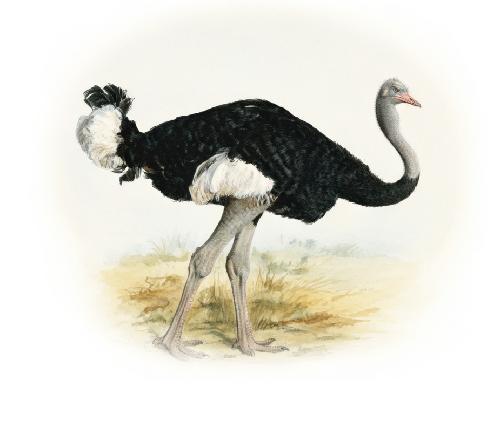
- somali ostrich
- Human Flea
- Dog Flea
- Oriental Rat Flea
- Hen Flea
- Northern Rat Flea
- chigoe flea
- Hedgehog Flea
- new zealand bat flea
- Martin Flea
- cat flea
- Ceratophyllus farreni
- Chaffinch Flea
- Rabbit Flea
- Mouse Flea
- sticktight flea
- Squirrel Flea
- Sparrow Flea
- Amalaraeus dissimilis
- Northern Flea
- Ceratophyllus chasteli
- Cockroach (domestic, red)
Find your most suitable archetypes
Archetypes are facets of personality and behaviour: sometimes a hamster, sometimes a lion. Take a test for yourself, a friend or a pet.