

















The “Saltwater crocodile” archetype
Cultural context
Along mangrove creeks and sun-beaten river mouths the estuarine crocodile has long been regarded as the river’s living ledger, a creature whose slow passage records every shift in tide and season. Coastal communities once left gifts of fish heads on platforms raised above the waterline, not to summon rain or fortune, but simply to mark that the river’s oldest tenant had passed undisturbed. No masks or chants accompanied the gesture; the crocodile’s presence itself declared the boundary between daily shallows and the deeper, hidden current where human words lose weight.
Scales
Tradition reads the estuarine crocodile as the embodiment of massive physical presence and an unflagging current of life-force, the very image of power that can roll a log beneath the surface or hold still for hours without a ripple. It carries the weight of long cycles, the kind that outlast villages and tides alike, while still registering the faint tremor of an approaching dugout. Its mind works like the water it inhabits: slow to rise, slow to settle, yet capable of sudden clarity once the silt drifts away.
Core traits
Resilience runs through the estuarine crocodile like the grain in river timber, letting it wait out monsoons and dry seasons alike without changing its course. The animal absorbs years of scarcity and flood, storing strength for the single, decisive lunge that ends a hunt or settles a dispute over a basking bank. Its patience is not stillness but stored momentum, ready to move only when the moment carries the certainty of success.
Strong traits
Wisdom shows itself in the estuarine crocodile’s habit of circling a problem until every current has been tested, never striking until the right angle appears. Territoriality keeps it patrolling the same stretch of mud and reed, expelling intruders with a low rumble that travels through water and bone. Aquaticness lets the animal slip between fresh and salt without hesitation, turning the changing chemistry of each tide into another route rather than an obstacle.
Noticeable traits
The estuarine crocodile dives into the silt of its own territory the way a reader follows a half-hidden footnote, lingering until every detail surfaces. When another of its kind drifts near, the same animal may rest side by side on a shared log, the brief truce marked only by the slow lift of a scaled eyelid. Such moments of easy company remain short, yet they prove that even this solitary hunter knows how to share warmth without surrendering ground.
How to be around
Approach the estuarine crocodile by letting time stretch between each step you take. Wait for the surface to settle before you speak; any sudden movement only tightens the coils of suspicion already wound around its stillness.
With a woman
A woman who carries the estuarine crocodile’s patience will test a plan by living inside it for weeks before she speaks of change. She notices the brush of fabric against skin and the exact angle of light across a table, reading these small signals as maps of larger weather. Offer her facts that match what her body already registers, and she will weigh them without hurry; press for an instant answer and the same body will close around the decision like river clay sealing a burrow.
With a man
A man shaped by the estuarine crocodile draws conclusions the way the animal draws breath after a long submersion, surfacing only when the lungs are full. He keeps the customs of his household the way a crocodile keeps the same stretch of bank, returning each evening to the same warm mud. When he pauses before a polished shell or the grain of an old oar, the pause itself is the compliment; do not fill it with chatter.
With a teenage boy
A teenage boy who moves like the estuarine crocodile measures every room by the distance he can cross without touching another person. He will lift weights until the veins stand out, yet he meets an unexpected hug with the same flat stare he gives a drifting log. If you want him to listen, place the conversation beside a physical task and let the rhythm of work loosen the stiffness in his shoulders.
With a teenage girl
A teenage girl who shares the estuarine crocodile’s current can change direction mid-stroke without a splash, yet she resents any hand that tries to steer. She will argue against a curfew by pointing out the exact gap between two mangroves where the tide still runs free. Give her the key to the gate and she may return at the hour she chose; lock it and she will find another channel before morning.
With a child
A child who watches like the estuarine crocodile will study a beetle’s path across the floor long after the rest of the room has moved on. The same child may ask, years later, why the beetle turned left instead of right. Keep the old questions safe; they surface again when the child is ready to build something that lasts longer than a single afternoon.
With an animal
An estuarine crocodile kept in a sanctuary will accept a keeper who arrives at the same minute each day and never varies the route along the fence. It will lift its head at the sound of that particular footfall, not because it seeks company, but because the pattern itself has become part of its territory. Break the pattern once and weeks of careful distance must be rebuilt from the beginning.
After a quarrel
The estuarine crocodile treats any trespass on its chosen stretch of water as an offence against the order it has spent years carving into mud and root. A woman answers such an offence with a silence that lasts until the offender has left the room and the building. A man meets it by planting his feet and refusing to shift even when the floor tilts. A teenage boy turns his back and stays turned until the air grows cold. A teenage girl answers with precise, cutting remarks that leave no visible wound yet draw blood. A child simply stops answering and retreats to the farthest corner. An animal, finally, sinks until only the eyes remain above the surface, promising that the next move will not be its own.
How to befriend
The estuarine crocodile grants trust the way a river grants passage: only after the channel has been sounded at every depth. A woman accepts company when the other person arrives with the same tools and the same measured pace she uses herself. A man lets someone stand beside him once that person has kept a promise made months earlier without reminder. A teenage boy warms when another shares the work of hauling a log without being asked to speak. A teenage girl draws nearer when her private joke is remembered days later and repeated exactly. A child stays close if the adult simply sits on the same bank without filling the quiet. An animal tolerates a hand on its back only after the hand has rested on the same spot for many slow afternoons without expectation.
Similar archetypes
Close facets: images with a similar set of qualities.
Complete opposite
The opposite facet: images whose qualities point the other way.
- wild boar
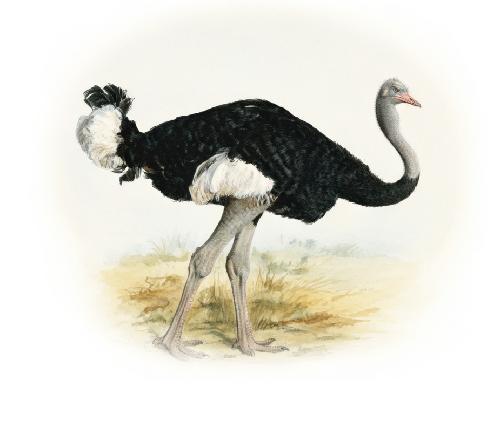
- somali ostrich
- Human Flea
- Dog Flea
- Oriental Rat Flea
- Hen Flea
- Northern Rat Flea
- chigoe flea
- Hedgehog Flea
- new zealand bat flea
- Martin Flea
- cat flea
- Ceratophyllus farreni
- Chaffinch Flea
- Rabbit Flea
- Mouse Flea
- sticktight flea
- Squirrel Flea
- Sparrow Flea
- Amalaraeus dissimilis
- Northern Flea
- Ceratophyllus chasteli
Traits and their opposites
Each trait of this archetype — and what is opposite to it.
- Resilience ↔ Fragility
Find your most suitable archetypes
Archetypes are facets of personality and behaviour: sometimes a hamster, sometimes a lion. Take a test for yourself, a friend or a pet.