








The “Poison dart frog” archetype
Cultural context
In the rainforests of Central and South America, a bright little frog on a leaf is a warning that needs no translation. The peoples who share these forests read poison frogs as emblems of danger, wisdom and protection, and see their vivid colouring as a sign of something uncanny at work. Meeting one is a reminder that the forest asks for respect and that beauty can carry real weight. The golden poison frog, Phyllobates terribilis, is the archetype's standard-bearer: tiny, dazzling and best admired from a careful distance. Its image holds life and death, fear and trust in a single balanced pose, and people who carry this archetype tend to hold themselves the same way.
Scales
Seen through its poles, this frog cares a great deal how it stands in the world. Status matters to it, and it carries a sense of the special, even the forbidden, that makes others hesitate before reaching out. It is hardy and physically strong, with a mind that likes to take things apart and ask what they mean, and a lively curiosity about anything new. In company it is bold, energetic and quick to joke. Gentleness is the weak pole: agreeableness runs low, so stubbornness and friction come easily, it resists simply following others, and it can be shrewd or grabby about what it feels is owed. Yet a fine sensitivity to other people's moods still shows through the armour.
Strong traits
Menace and dominance form the core. Someone with this archetype does not need to raise a voice; others sense the bright colours and step carefully, and that wariness sharpens their instincts while also chilling the room. Dominance lets them take the lead and arrange things around them, which can rescue a crisis and can also flatten opinions and ignore what the team needs. Spite works as a fence: it guards personal territory and can force overdue change, but it pushes people away and starts fights nobody required. Courage runs beside it, the readiness to act when things get hard and to shield loved ones, though it sometimes undervalues the danger and turns into stubborn impulse.
Noticeable traits
Purity and kindness sound softer but keep their place. Purity keeps thinking and conduct clean, with no taste for intrigue, which also makes these people easy targets for a smooth manipulator. Kindness hands out help generously and forgives mistakes quickly, while the helper forgets personal limits and ends up used or burnt out. Both build an atmosphere of trust, and both bring disappointment when someone abuses it.
How to be around
How should you act around a golden poison frog? Think of how you would treat a rare, gorgeous frog on a rainforest trail: look closely, keep your hands to yourself, and speak plainly. Flattery and schemes get you nowhere. Behind the vivid skin lies a loyalty that is rare and deep, and it goes to whoever stayed calm in front of the poison.
With a woman
A woman-poison frog thrives when her standing is acknowledged out loud, so hand her the hardest assignment in the group and say plainly that you chose her for it. Ask her to run the meeting, to settle the dispute nobody else will touch, to name the new project. Raise your objections afterwards, in private, over tea. Praise delivered before an audience works like a medal on her; criticism delivered there feels like a slap, and the chill that follows can last for weeks.
With a man
With a man-poison frog, pose a puzzle instead of an order. Hand him a tangled schedule or a stalled plan and let him draw the map himself; his analytical streak and his love of command meet in that job. When you disagree, phrase it as a question, 'What if we went around?', because a flat verdict will only harden him. Credit him afterwards in front of colleagues, naming the exact decision that worked.
With a teenage boy
A teenage boy-poison frog needs somewhere to burn off strength. Sign him up for climbing, wrestling or a long night hike, anything where his body and nerve can be tested against something real. Afterward, when he is tired and talkative, mention the day he stood up for a younger kid, and say that you noticed. Specific praise about courage lands deeper than any lecture about caution.
With a teenage girl
With a teenage girl-poison frog, ask rather than advise. Tell her about a person who was tricked or let down, and ask what she would have done; her sense of what is clean and what is crooked is sharp, and she values being treated as a judge of such matters. Sit with the answer to the end. If she snaps at you, treat the barb as armour rather than aim, and come back later with something ordinary, a snack, a song, a joke.
With a child
A child-poison frog is an explorer with a sense of humour, so build games around hidden things: a treasure hunt through the garden, a riddle taped under the table, a box with a false bottom. Let the little one win some rounds and lose others with a loud groan. When a sharp word slips out, name it calmly, say that it stings, and offer a better one to try.
With an animal
An animal-poison frog is a creature of display and warning, so approach it slowly and handle it as little as possible; those bright colours are a message, and the sensible answer is to read it. Furnish its enclosure with damp moss, broad leaves and one covered nook, and let it claim that corner as a throne. Feed it at the same hour every day and it will start to watch for you.
After a quarrel
To quarrel with one of these frogs or get under its skin, question its right to lead and wander uninvited into the corner it has marked as its own. Condescension is the surest spark. The woman bristles when her rank is brushed aside, the man when he is talked down to, a teenage boy when his nerve is mocked, a teenage girl when she catches a lie, a child when his games are laughed at, and an animal when strange hands lift it from its perch. Expect sharp words, then a long cold silence.
How to befriend
To befriend this frog, or win it over, show that you see the poison and are not frightened of it, only respectful. Argue with a man as an equal, trust a woman with something that matters, share a secret hideout with a child, and offer the animal a patient hand and a regular meal. Be honest, even when it is awkward. Whoever passes the test of the warning colours earns a devotion that few people ever see.
Similar archetypes
Close facets: images with a similar set of qualities.
Complete opposite
The opposite facet: images whose qualities point the other way.
- wild boar
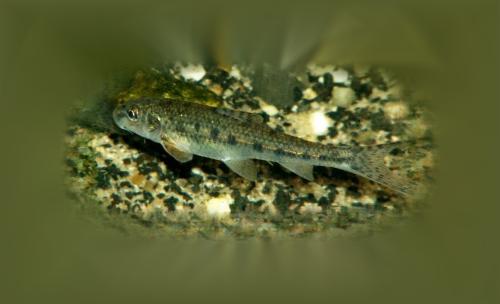
- Gudgeon
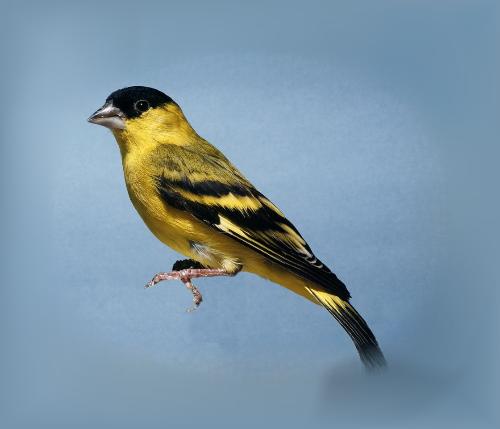
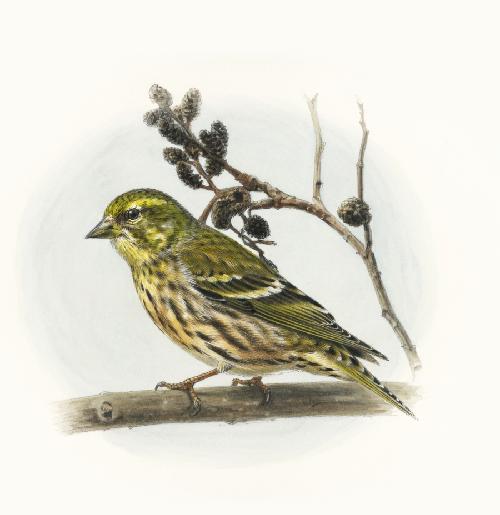
- eurasian siskin
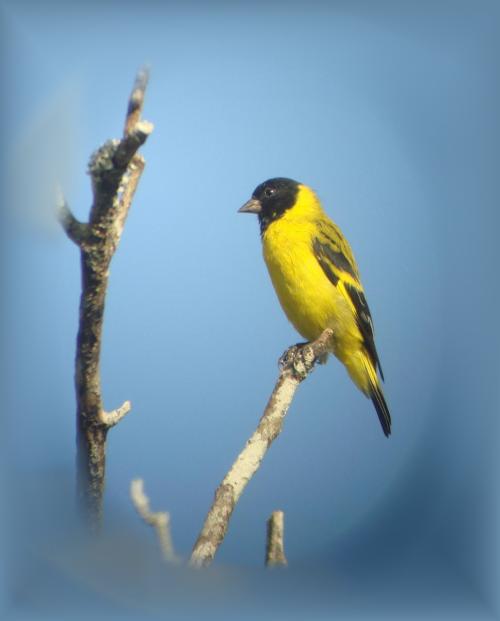
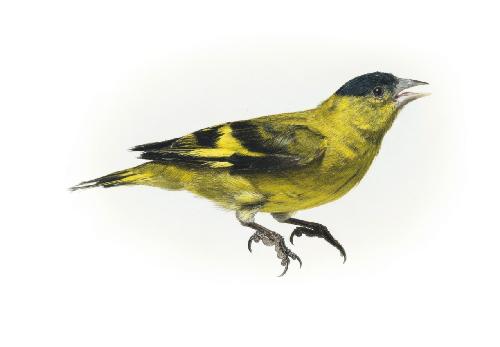
- Black-headed Siskin
- olivaceous siskin
- eurasian siskin
- eurasian siskin
- eurasian siskin
- eurasian siskin
- eurasian siskin
- eurasian siskin
- eurasian siskin
- hooded siskin
- eurasian siskin
- tibetan serin
- andean siskin
- yellow-bellied siskin
- saffron siskin
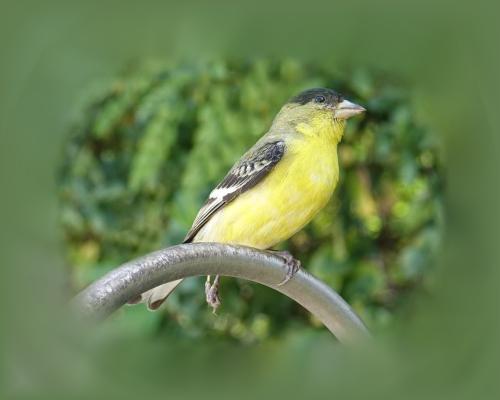
- lawrence's goldfinch
Traits and their opposites
Each trait of this archetype — and what is opposite to it.
- Harmfulness ↔ Benevolence
Find your most suitable archetypes
Archetypes are facets of personality and behaviour: sometimes a hamster, sometimes a lion. Take a test for yourself, a friend or a pet.