





















The “East Asian Deer” archetype
Cultural context
In East Asian tradition the deer has long stood for longevity and purity, and the brow-antlered deer, or thamin, carries those meanings with particular grace. Chinese and Korean traditions give the deer a place among the symbols of a long, clean life, and the thamin's calm bearing seems to bear that out. Where other animals announce themselves, this one simply arrives, and the air around it settles. People read abundance in it: the sense that life keeps giving to those who live honestly and take only what they need. Haste and noise are the opposite of everything it represents; patience, measured steps and respect for the turning seasons are its virtues. Watching a thamin at the edge of a clearing, you tend to lower your voice without deciding to. It reminds us that wisdom rarely shouts and that harmony is built out of many small, unforced gestures. To keep company with such an animal, or with a person who shares its nature, is to be invited into a slower and cleaner way of living.
Scales
Seen through East Asian tradition and the IPIP+22 scales, the thamin is an animal of depth. Its mind runs deep and likes to take things apart patiently, and its stamina is considerable. Honesty and modesty sit side by side in it: it takes no more than its share and will often give up part of that share for someone else, sometimes at real cost. Spirit matters to it, and so does whatever feels set apart or sacred; there is a quiet inwardness about it, as if it listened to something others cannot hear. It is warm and cooperative, curious about the unfamiliar, yet that curiosity never costs it its respect for custom and for the order of things. Closeness and pairing matter to it, play comes easily, and under all of it runs a long view of time, a preference for what lasts over what merely dazzles. That mix makes the thamin hard to hurry and easy to trust, and it explains why people so often come to it for counsel and leave feeling lighter.
Core traits
Endurance is the bedrock of the thamin. It takes up a long task and keeps walking when everyone else has stopped to rest, and no crisis seems to knock it off its line for long. The price is caution, and it is paid in hesitation. A decision ripens slowly, and a change that is needed today may only be welcomed next season. At its best this is staying power; at its worst it is a habit of clinging to the old path after the ground has shifted beneath it. Friends learn to admire the first and to nudge, gently and with evidence, against the second.
Strong traits
Honesty, fertility, wisdom and gentleness are woven through the thamin like branches in a single crown of antlers. Its honesty is straightforward and dependable, which is why people trust it, though it can hand over a hard truth without wrapping, and someone is bound to wince. Its fertility shows in generosity: it gives energy away and opens new possibilities for those nearby, yet it often takes on far more than it can carry. Wisdom lets it see the heart of a matter and sit through difficult hours, and it also makes it wary of risk. Gentleness cools quarrels and makes the thamin pleasant company; the danger is that it becomes a convenient companion for anyone accustomed to taking.
Noticeable traits
Purity and abundance are quieter notes in the thamin, though still audible. A clear head keeps it out of intrigue and petty scheming, but the same clarity can turn into naivety, and a clever manipulator may find it an easy mark, and disappointment in people lands on it hard. It spots resources where others see emptiness and hands them out freely, sometimes until nothing is left for itself. That openhandedness is lovely to be near, and it needs a friend who notices when the stores run low and says so before the well is dry. Without such a friend, the thamin can wake up one morning spent, with no one around to blame but its own good heart.
How to be around
Dealing with a thamin starts with meeting it on its own ground. Arrive with plain intentions and no angle, because it senses cunning from far off. Take its unhurried pace as a feature of character rather than stubbornness, and look after what it holds clean in its life: a promise, a word given, a familiar routine, a favourite path. Do that, and you will find a creature whose steadiness is a gift to those around it, whether you meet it in family life, at work or across a field.
With a woman
A woman-thamin is likely to be carrying more than anyone has noticed, so ask which of her tasks matters most this week and quietly take a few of the others off her plate. Say thank you for something specific she did, and mean it. Her generosity is real, but it runs best when someone else keeps the accounts, and she will not ask for that help by herself. If she waves you off, offer again a day later, in a different form, and keep the offer concrete: dinner cooked, a call made, a form filled in.
With a man
Tell a man-thamin the truth briefly and plainly, and he will answer in kind; he has little patience for flattery or hints. When he goes silent over a decision, wait for his word instead of finishing his sentences, since what he says after that pause is usually worth hearing. Invite him to a walk or a job where the work itself does the talking, and give him the afternoon to turn things over before you ask what he thinks. His considered answer will be the better for it, and he will remember who let him arrive at it.
With a teenage boy
A teenage boy-thamin gains most from a long project that is truly his, such as a garden bed, a sport, a collection or a model that takes months to build. Check in on it now and then, and praise him for finishing rather than for brilliance. Once he sees that steady effort counts, he stops measuring himself against louder, faster boys, and the quiet pride that grows in him will serve far beyond the project itself.
With a teenage girl
A teenage girl-thamin is so agreeable that she can slide into doing what everybody else wants. Show her by your own example how to refuse politely, and let her rehearse it with you on small things like a borrowed jacket or an unwanted invitation. Celebrate her first clear no as loudly as you would a win, because for her it is one. Afterwards, ask what she would like to say yes to, so refusing never feels like the end of being kind.
With a child
A child-thamin learns best through games with give and take: swapping toys, drawing one picture together, sharing out sweets fairly. Describe how an action lands on other people, in plain words, and the little one soon grasps where kindness ends and being used begins. Let him or her win a round occasionally, since that teaches taking as well as giving. Praise the moment he stops to check on a sulking friend, and he will do it again.
With an animal
An animal-thamin is sensitive, and tension shows first in its stance and its attention. Choose a fixed cue, a particular corner or a soft call, that means quiet time, and answer it the same way every time. Feed at regular hours, move slowly around it and let a new person approach by degrees. Predictability is the language it understands best, and a rhythm of small, repeated courtesies will buy you more trust than any treat.
After a quarrel
To quarrel with a thamin or get under its skin, tell it a small lie, hurry it while it is weighing something, and treat its kindness as a free resource. A woman-thamin is wounded when her generosity is taken for granted. A man-thamin bristles if his plain words are mocked as tactless. A teenage boy shuts down when months of work are called a waste of time, while a teenage girl dims under any hint that her softness is weakness. A child feels cheated by a rigged game, and the animal itself simply loses its footing when its quiet corner is taken away.
How to befriend
To befriend a thamin or win it over, be honest and be around for the long haul, because it prizes whoever stays. A woman-thamin warms to care returned in the same coin. A man-thamin warms to a shared job in which both keep their word. A teenage boy wants a conversation held on equal terms, and a teenage girl wants a friend beside whom she may stay entirely herself. A child will open up through patient play, and an animal through feeding at the same hour and a calm, steady hand held out for it to sniff.
Similar archetypes
Close facets: images with a similar set of qualities.
- Stork
- Bottlenose dolphin
- wild cat
- Reindeer
- Sumatran orangutan
- 13-spot ladybird
- Bentheim Black Pied Pig
- Orangutan
Complete opposite
The opposite facet: images whose qualities point the other way.
- Human Flea
- Dog Flea
- Oriental Rat Flea
- Hen Flea
- Northern Rat Flea
- chigoe flea
- Hedgehog Flea
- new zealand bat flea
- Martin Flea
- cat flea
- Ceratophyllus farreni
- Chaffinch Flea
- Rabbit Flea
- Mouse Flea
- sticktight flea
- Squirrel Flea
- Sparrow Flea
- Amalaraeus dissimilis
- Northern Flea
- Ceratophyllus chasteli
- Bed bug
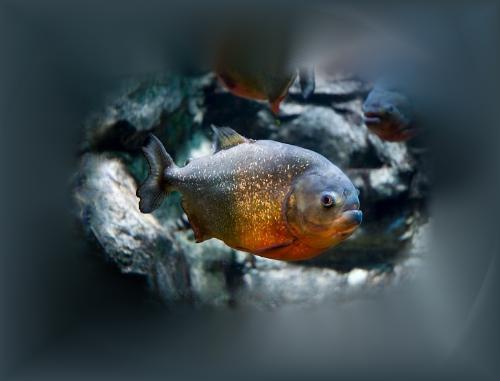
- Piranha
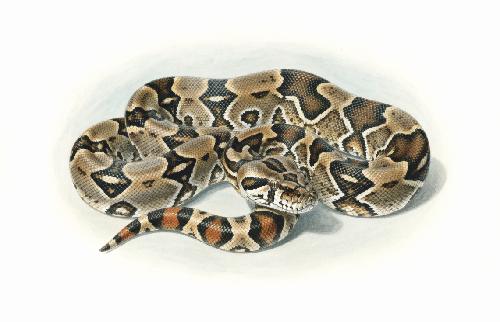
- Boa
- Horsefly
- Golden Jackal
- laced moray
- eel
- dark moray
- giant moray
- congo
Traits and their opposites
Each trait of this archetype — and what is opposite to it.
- Resilience ↔ Fragility
Find your most suitable archetypes
Archetypes are facets of personality and behaviour: sometimes a hamster, sometimes a lion. Take a test for yourself, a friend or a pet.