




















The “peacock” archetype
Cultural context
From the chalk cliffs of Europe to the garden paths of Asia, the European peacock butterfly has long been noticed whenever light falls on its four crimson eyespots. Folk tales picture the insect as a messenger whose wing-beat carries a promise of change, while painters copied its scarlet-and-black flare onto banners and bridal veils. Walkers in orchard dusk still pause when a sudden shimmer crosses the grass, reading in that flash the same promise of renewal that older villagers once stitched into harvest cloth.
Scales
Tradition holds the European peacock butterfly as an emblem of the long cycle, its brief summer read as a bright stitch in a fabric that outlives any single summer. Colour and pattern speak of an eye that seeks harmony wherever sunlight touches leaf or stone. Yet the same creature will rise from a winter crevice to test new blossoms, playful in its wanderings and mindful of what must remain untouched. Its flight moves through company or solitude alike, carrying both a quiet loyalty to ancient routes and a readiness to leave them when the air grows still.
Core traits
The European peacock butterfly meets every shift of breeze and blossom by folding its wings into shadow or flaring them in sudden colour. Its adaptability is visible in the way it settles on nettles one hour and on garden marigolds the next, never clinging to yesterday’s perch. Beauty travels with it: the eye-spots open like small suns, drawing attention before the insect folds them shut again, a living proof that grace can appear and vanish without warning.
Strong traits
Lightness shows when the same insect lifts from a nettle stem without lingering on the shadow of a passing cloud. Spirituality surfaces in its search for nectar at dusk, when colours deepen and the garden grows still. Sensitivity keeps its antennae turning toward every change of light and scent, while hope keeps its flight steady even as evenings shorten and frost creeps nearer.
Noticeable traits
A streak of folly appears when the European peacock butterfly mistakes a painted shutter for living petals and circles it until dusk. The misstep is brief; the creature rights itself, returns to real flowers, and carries the lesson into the next morning’s flight.
How to be around
To meet a European peacock butterfly temperament is to notice its need for both open air and a place to rest its wings. Offer silence when colours close, and a fresh surface when they open again.
With a woman
A woman who carries the European peacock butterfly spirit will turn from one plan to another when the light changes, yet she keeps an inner compass pointed toward what lasts. Let her rearrange the day without argument; the same restlessness that unsettles schedules also keeps her from repeating yesterday’s mistake. Respect the quiet line she draws around certain memories; asking her to defend it only tightens the boundary. When she speaks of future hopes, answer with one honest sentence rather than a list of precautions, for fairness in small replies keeps trust alive.
With a man
A man who moves like the European peacock butterfly draws glances without effort; his carriage itself is an argument. Praise arrives best through shared work rather than spoken admiration, because he reads admiration in the steadiness of a hand beside his own. He notices disorder the way an insect senses a shift in wind, and a tidy workspace will earn more gratitude than any compliment. If he hesitates, one quiet question about what he sees ahead will steady him faster than any push, for his own eye for proportion guides him once the horizon is named.
With a teenage boy
A teenage boy whose temper follows the European peacock butterfly will laugh at the same joke three days running, then fall silent if the joke turns sharp. Let the laughter run its course; the silence afterward is not sulking but a private reset. Offer him a shared task that can be dropped and picked up again, and praise the way he returns to it rather than the speed of completion. When he offers help at his own expense, accept it without fanfare; the gesture costs him little in words yet means the day has found its balance.
With a teenage girl
A teenage girl who holds the European peacock butterfly’s mark will turn an ordinary afternoon into a small ceremony, placing a stone or a ribbon where the light falls. Ask what the arrangement means only after she has stepped back; the question too soon breaks the spell she is casting. She keeps an inner ledger of what must not be touched, and a single broken rule can darken an hour. Yet the same attention that guards the forbidden also fuels long hours at a canvas or a melody, strength that needs no audience to stay bright.
With a child
A child with the European peacock butterfly in its nature will notice the change in a friend’s voice before the friend has finished speaking. Sit nearby while the noticing happens; your steady presence keeps the observation from becoming a storm. When the child builds a row of leaves into a careful pattern, do not ask its purpose until the last leaf is placed. Later, a short question about the order of colours will invite the child to explain without fear that the pattern might be swept away.
With an animal
An animal that carries the European peacock butterfly’s temper will choose its own perch and leave it without announcement. Place food and water where it can reach them without crossing another creature’s path; the choice itself matters more than the distance. If the animal lingers near a window at dusk, leave the curtain half-drawn so the view remains its own. The same independence that keeps it from following every call also lets it return, unafraid, once the light has changed.
After a quarrel
A quarrel with the European peacock butterfly spirit begins when movement is mistaken for flightiness and the creature is pressed to explain every turn. A woman will close her colours if her changing plans are treated as broken promises. A man will fold his wings if his eye for proportion is called vanity. A teenage boy will vanish from the circle if his laughter is cut short by an order to be serious. A teenage girl will withdraw if a private boundary is crossed in public. A child will grow still if a half-finished pattern is cleared before its last piece is set. An animal will leave the room if its chosen corner is entered without invitation.
How to befriend
Friendship with the European peacock butterfly spirit grows when each new meeting is allowed to find its own shape. A woman will stay near if her quiet return is met with simple welcome rather than questions about where she has been. A man will share a task if his sense of order is met with matching care. A teenage boy will linger if the next plan is left open until the present one has run its course. A teenage girl will speak of what matters if the listener waits until the ribbon or the stone has been placed. A child will offer a leaf from the pattern if the gesture is received without being turned into a lesson. An animal will rest on the offered ledge if the hand that placed it does not reach again too soon.
Similar archetypes
Close facets: images with a similar set of qualities.
- black-fronted white-eye
- duke of burgundy fritillary
- marbled white
- scarce fritillary
- small white
- mourning cloak
- queen of spain fritillary
- map
Complete opposite
The opposite facet: images whose qualities point the other way.
- Bed bug
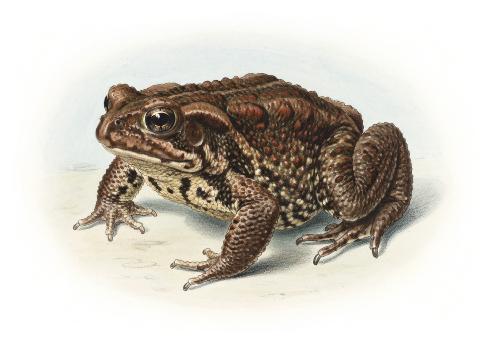
- European toad
- African Owl
- common european toad
- Human Flea
- Dog Flea
- Oriental Rat Flea
- Hen Flea
- Northern Rat Flea
- chigoe flea
- Hedgehog Flea
- new zealand bat flea
- Martin Flea
- cat flea
- Ceratophyllus farreni
- Chaffinch Flea
- Rabbit Flea
- Mouse Flea
- sticktight flea
- Squirrel Flea
- Sparrow Flea
- Amalaraeus dissimilis
- Northern Flea
- Ceratophyllus chasteli
- Cockroach (domestic, red)
Traits and their opposites
Each trait of this archetype — and what is opposite to it.
- Spirituality ↔ Pragmatism
- Sensitivity ↔ Callousness
Find your most suitable archetypes
Archetypes are facets of personality and behaviour: sometimes a hamster, sometimes a lion. Take a test for yourself, a friend or a pet.