




















The “swallowtail” archetype
Cultural context
The common yellow swallowtail drifts through nearly every human story like sunlight flickering across meadow grass. Its wings carry the same hush that follows the last note of a flute, and people across lands have read that hush as a promise that change need not sting. Where grain fields give way to pine shade, the insect lingers at each border, a living brush-stroke between one colour and the next. Its slow, deliberate flight has been taken as proof that grace survives upheaval, and that even brief lives can leave lasting colour on memory.
Scales
Tradition sees in the common yellow swallowtail an outlook wider than any single season. The insect measures its path against the slow arc of hills and rivers, not the quick flash of passing clouds. Its eye for colour makes every landing a small composition of light and petal. Yet it never lingers so long that curiosity dies; each new breeze can turn its route without breaking the pattern already traced. In company it adds quiet brightness, in solitude it keeps the same measured pulse, as though the meadow itself were listening.
Core traits
Adaptability lets the common yellow swallowtail revise its course the moment a gust shifts, never clinging to yesterday’s route while today’s flowers open elsewhere. Beauty travels with it in the precise geometry of its wings, an elegance that draws the eye even when the insect pauses only an instant before the next blossom. These two gifts move together: the power to change without losing the quiet harmony that first caught attention, so that every new setting still feels like a place prepared for wings.
Strong traits
Lightness keeps the common yellow swallowtail from sinking into the heavy air that gathers before storms; it rides each shift of wind as though weight were only a rumour. Spirituality turns every sip of nectar into a small act of attention, a way of tasting the hidden order inside ordinary light. Sensitivity reads the tremor in a leaf before the breeze reaches it, and hope answers that tremor with steady, unhurried wing-beats that persuade others the day will hold.
Noticeable traits
A thread of absent-mindedness sometimes carries the common yellow swallowtail past the very flower it meant to visit, yet the detour often uncovers a brighter patch no straight line would have found. The same wandering that scatters its attention can also scatter seeds of surprise, turning small errors into unexpected discoveries along the meadow’s edge.
How to be around
Approach the common yellow swallowtail with a steady hand and an unhurried voice; sudden movements scatter its focus the way a shadow scatters pollen. Give it time to settle on the offered branch before you speak again.
With a woman
A woman of this temper will test a new path as soon as the old one narrows, yet she keeps an eye on the far ridge where her plans still point. Let her weigh two routes rather than one, and she will choose without feeling steered; mention a distant horizon now and then, and the choice gains depth instead of hurry. When the group leans one way, a quiet counter-suggestion from her carries its own weight because it is offered without demand. Her words stay measured, never dressed to impress, so the simplest statement lands with quiet authority.
With a man
A man who carries this pattern keeps his workspace arranged so that light falls evenly on every surface; disorder in the room jars the order he carries inside. Comment first on the clean line of a shelf or the balance of a tool rack, and the conversation begins on ground he already trusts. When the day’s tasks press, he meets them in careful sequence rather than flurry, and a brief, exact word of appreciation steadies his pace more than any flourish. If tension rises, a single measured observation from him can restore calm without raising his voice.
With a teenage boy
A teenage boy of this kind drifts through a crowded room with the same light step he uses on a windy slope, never letting the noise pin him down. Suggest a quick game of balance or timing, and his laughter surfaces before the next round begins; if the score slips he shrugs and tries again without brooding. When someone needs an errand run at an awkward hour, he volunteers first and returns with the task done, the cost to his own evening already accepted and forgotten.
With a teenage girl
A teenage girl here listens for the quiet between spoken words, and a single shared silence beside an open window can steady her more than any cheerful speech. She will notice when a piece of music ends on an unresolved note and will wait for the next phrase as though it carried news meant only for her. Offer her a place where the afternoon light lies unbroken across a table, and she returns to practical questions with clearer eyes and a steadier hand.
With a child
A child of this pattern will line up pebbles in careful rows before the game begins, and the rows themselves become part of the play. When voices rise around them, they step back rather than join the rush, watching until the pattern of the quarrel shows itself. Ask what the rows mean and they answer in a sentence that already holds the next idea, turning a simple game into a small map of order they can carry forward.
With an animal
An animal of this kind will test each new corner of the room at its own pace, returning to the same patch of sun until the warmth feels familiar. Leave a shallow dish of water near the window and a folded cloth in the opposite shadow; both will be visited in turn without any call or gesture. Once the circuit is set, the animal keeps to it, needing only the certainty that the route remains open and undisturbed.
After a quarrel
The common yellow swallowtail meets conflict the way it meets a sudden cross-wind: it lifts, circles once, and settles elsewhere rather than fight the gust directly. A woman draws back when her private sequence of tasks is scattered by an unplanned demand. A man turns silent if his careful arrangement of objects is handled without notice. A teenage boy laughs off the clash at first, then drifts toward another circle of friends before anyone notices the distance. A teenage girl folds inward when a conversation presses for an immediate answer she has not yet formed. A child stops mid-game if the rules shift without warning, and the pebbles stay where they lie. An animal simply leaves the room if voices rise above the level it has already accepted as safe.
How to befriend
Friendship with the common yellow swallowtail grows where meaning can be shared without being announced. Sit with a woman while she rearranges a shelf of books; the order she chooses already says what she values. Walk beside a man while he points out the slant of light across a wall; agreement comes in the shared glance rather than in words. Join a teenage boy in a short, repeated task whose rhythm matters more than its result. Listen to a teenage girl describe the chord that refuses to resolve; your silence beside her becomes the missing note. Watch a child finish a line of stones and add one of your own only when invited. Let an animal choose its own corner first, then place a familiar object nearby so the next circuit can include you without effort.
Similar archetypes
Close facets: images with a similar set of qualities.
- black-fronted white-eye
- duke of burgundy fritillary
- marbled white
- scarce fritillary
- small white
- mourning cloak
- queen of spain fritillary
- map
Complete opposite
The opposite facet: images whose qualities point the other way.
- Bed bug
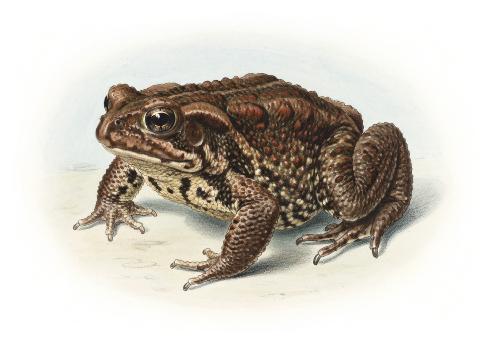
- European toad
- African Owl
- common european toad
- Human Flea
- Dog Flea
- Oriental Rat Flea
- Hen Flea
- Northern Rat Flea
- chigoe flea
- Hedgehog Flea
- new zealand bat flea
- Martin Flea
- cat flea
- Ceratophyllus farreni
- Chaffinch Flea
- Rabbit Flea
- Mouse Flea
- sticktight flea
- Squirrel Flea
- Sparrow Flea
- Amalaraeus dissimilis
- Northern Flea
- Ceratophyllus chasteli
- Cockroach (domestic, red)
Traits and their opposites
Each trait of this archetype — and what is opposite to it.
- Spirituality ↔ Pragmatism
- Sensitivity ↔ Callousness
Find your most suitable archetypes
Archetypes are facets of personality and behaviour: sometimes a hamster, sometimes a lion. Take a test for yourself, a friend or a pet.