





The “Thick-tailed midge” archetype
Cultural context
Wherever swamp mists rise and night air rings with high, thin song, the Chironomus crassicaudatus has left its tiny footprint on human imagination. Fisher-folk see it as the living ledger of spring floods, carrying silt from one bank to the next; townsfolk remember its swarms as living dust veils that turn lantern light into gold. In every telling the same note sounds: an insect that gives the evening a voice, yet never lingers long enough for thanks. Its brief flight is treated like a loan whose interest is paid only in memory, reminding listeners that comfort always arrives with a bill.
Scales
Across these stories the midge reads as a creature of clever calculation rather than open hand. It clings to whatever light is nearest, turning its back on ancient river lore in favour of whatever warmth appears tonight. Thought runs deep and narrow, sifting each ripple for advantage, while the will to stand apart yields place to the safety of the swarm. The same quick mind that charts the best drift rarely pauses to weigh another’s hunger, and its loyalty stays tethered to whatever current keeps its wings dry.
Core traits
Greed supplies the single steady current beneath every wing-beat. The midge gathers floating specks of algae the way a miser gathers coins, banking each particle against the next dry spell. That foresight lets it ride out lean nights, yet the hoard is never opened; even a neighbour’s need meets only the sealed surface of its mouthparts. The store grows, the circle narrows, and generosity remains a word the species never learned to pronounce.
Strong traits
Beneath the waterline of behaviour run darker threads: baseness, manipulativeness, pettiness and rudeness braided tight. The midge senses every shift in another’s hunger and steers the current so that crumbs drift its way. It keeps count of every slight, answers with a sting delivered behind the knee where no one sees the hand. Words are clipped to the shortest edge, trust is spent like breath, and the swarm learns quickly that nearness carries its own quiet cost.
How to be around
Approach the Chironomus as you would a ledger left open on a windy desk: read the columns before you sign. Watch where its attention drifts, note the small stores it guards, and offer only what you can afford to lose. The surface may ripple with apparent welcome, yet the true measure lies in what stays untouched beneath.
With a woman
A woman who carries the midge’s temper keeps an exact inventory of every favour given and received. Ask what practical resource she lacks today, then place it in her hand without ceremony; the gesture registers as foresight rather than charity. Do not linger for thanks or attempt to rearrange her careful stacks, for any hint of oversight stirs the same quick tally that first counted your arrival. Her gratitude surfaces later, folded inside the next measured exchange.
With a man
When a man moves with the midge’s caution, fear of shortfall colours every conversation. Speak plainly about shared advantage, yet leave room for him to steer the terms; any suggestion of charity pricks the old wound of low regard. Offer the next step as a mutual calculation, never as rescue, and the barbed edge of stubborn pride may soften into wary partnership. Trust arrives only after the numbers balance in his private book.
With a teenage boy
A teenage boy who shares the midge’s gaze notices every unspoken motive before the sentence finishes. Let him name the hidden cost first; the admission itself becomes the lever he needs to feel in charge. Suggest the next move as his own discovery rather than your direction, and the impulse to steer others yields, briefly, to the rarer pleasure of guiding well. His approval shows in the slight dip of wings that once beat only for advantage.
With a teenage girl
A teenage girl who keeps the midge’s ledger measures every glance for hidden subtraction. Notice the small detail she has already weighed—the chipped cup, the uneven seam—and name it without fixing it; recognition counts more than repair. Resist the urge to enlarge the view to grand plans, for her attention tightens around the single loose thread until it either frays or holds. When the thread stays in place, she may allow one further inch of company.
With a child
A child who stores like the midge lines pockets with found objects whose value only the finder can see. Give each treasure its own labelled corner rather than urging immediate sharing; the order itself teaches the boundary between keeping and taking. Speak the plain fact that tomorrow’s game needs today’s piece returned, and the directness bypasses the usual skirmish of feelings. The collection loosens by a single marble, then two, without ever naming generosity aloud.
With an animal
An animal that carries the midge’s wariness circles once, twice, before settling on the warmest patch of leaf. Place food at the edge of its chosen square and step back; the distance itself becomes the first line of trust. It will study your stillness the way it studies current, looking for the smallest sign that advantage has shifted. When the offering remains untouched by any other claim, the animal may shorten the circle by a single body-length.
After a quarrel
A quarrel with the Chironomus begins the moment an old pattern is questioned; the species treats change the way a still pool treats a thrown stone. A woman answers with an extra line added to the evening’s account, each item placed just beyond reach. A man plants his feet where the current is strongest and refuses to shift for any voice but his own. A teenage boy withholds the single fact the group needs, letting silence do the work of protest. A teenage girl collects three earlier slights and presents them as one fresh offence. A child hides the needed piece under yesterday’s leaf and waits for the question that never comes. An animal raises its wings and holds them there, a living fence no foot crosses without cost.
How to befriend
Friendship with the Chironomus forms where curiosity meets a new current worth testing. A woman offers the next small task as an experiment whose outcome she cannot yet predict. A man accepts company on the far bank only after the route has been walked twice alone. A teenage boy shows the hidden inlet he found last week, measuring whether the visitor’s eyes widen at the right moment. A teenage girl brings a single altered detail—an added stitch, a changed note—and watches whether the change is noticed before it is named. A child places one saved object in the visitor’s palm, not to give it away but to see whether the weight is understood. An animal settles on the same leaf twice in succession, each time a fraction closer, provided the air stays still and the hand stays open.
Similar archetypes
Close facets: images with a similar set of qualities.
- Black midge
- New Zealand midge
- Yoshimatsu's midge
- Dorsal midge
- Serres' midge
- Stream mosquito
- southern house mosquito
- western encephalitis mosquito
Complete opposite
The opposite facet: images whose qualities point the other way.
- wild boar
- mallard
- american bighorn
- fischer's lovebird
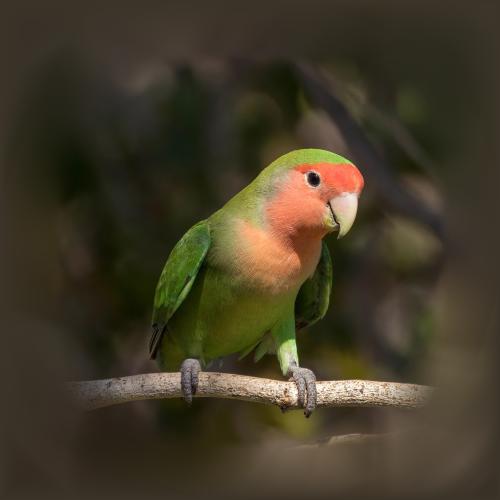
- rosy-faced lovebird
- black-winged lovebird
- yellow-collared lovebird
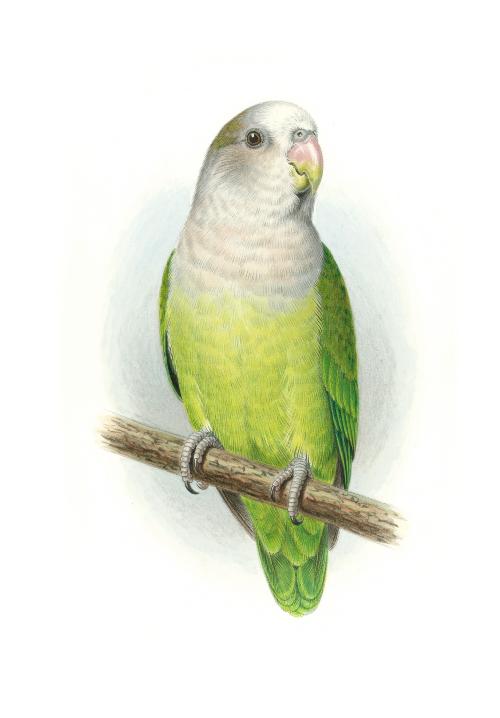
- grey-headed lovebird
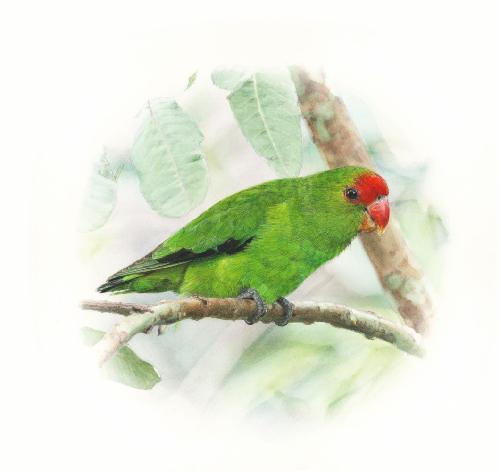
- red-headed lovebird
- black-collared lovebird
- rosy-faced lovebird
- black-cheeked lovebird
- nyasa lovebird
- Pelican
Find your most suitable archetypes
Archetypes are facets of personality and behaviour: sometimes a hamster, sometimes a lion. Take a test for yourself, a friend or a pet.