





















The “Greek tortoise” archetype
Cultural context
In Japanese gardens the common tortoise moves like a slow-moving shadow across moss, its carapace the colour of old stone. Ancient Greek thinkers watched the same creature inching across marble floors and read it as the living measure of time itself. Indian sculptors placed tortoises beneath the world-bearing elephants so that mountains and rivers would not tremble. Chinese painters set the animal beside pine and crane, its shell a compact circle that outlasts storms. Across all four traditions the common tortoise becomes the visible proof that patience can outlive every tempest.
Scales
Tradition sees the common tortoise steeped in Intellect, turning every pebble and shadow into a slow, deliberate study. Its gaze reaches toward the unknown, yet it steps only after long appraisal, so Openness to experience appears as a cautious tasting of new ground. Spirituality shows itself in the creature’s silent communion with sun-warmed earth and seasonal change. Vitality lies in the steady heartbeat that outlasts drought and winter sleep. Playfulness is almost absent; the animal treats each motion as serious work. Honesty-Humility keeps its shell plain and its movements modest. Conscientiousness is visible in the straight, methodical furrow it leaves across sand. Agreeableness appears when two tortoises share a single basking stone without contest. Self-sacrifice shows in the female that remains motionless over her eggs through long hours of heat. Physicality is modest yet sufficient, the strength to carry its own fortress. Extraversion is only a slight lean: the animal prefers its own quiet company. Rebelliousness surfaces now and then when a fence blocks the accustomed path. Autonomy guides solitary foraging. Traditionalism shows a faint tug toward the same routes year after year, though never strong enough to bind.
Core traits
Resilience sits at the centre of the common tortoise’s life. When summer scorches the scrub or winter seals the burrow, the animal simply folds its limbs and waits, heartbeat slowed to a thread. The same endurance lets it return to the same feeding ground decade after decade, undisturbed by drought or flood. Yet the very steadiness that carries it through catastrophe can turn into prolonged hesitation when a new path opens; the tortoise may study the ground for an entire afternoon before shifting a single claw forward.
Strong traits
Wisdom accumulates the way lichen grows on the shell: grain by grain, season after season. The common tortoise remembers where the sweetest clover appears after the first autumn rain and which slope catches the longest afternoon light. Calmness keeps its head level even when dogs bark or children prod; the eyes remain half-closed, the pulse unchanged. This quiet clarity steadies those who watch, yet it can also leave the animal too detached when a sudden choice between two safe routes must be made.
Noticeable traits
Protection draws the common tortoise into a low, watchful circle whenever hatchlings scatter across open ground; any shadow overhead brings the head up at once. Honesty shows in the direct line the animal travels between burrow and water, never feinting or circling to mislead a follower. Both traits serve the same end: clarity and safety. Still, the shell that shields can also shut out any hand that reaches too quickly, and the straightforward path sometimes leaves no room for softer detours.
Muted traits
Cowardice appears only as a faint tremor at the edge of motion: a pause longer than necessary before crossing a patch of bare sand, a quick withdrawal at the rustle of dry leaves. The instinct preserves the animal through centuries of predators, yet it can also keep the tortoise inside its burrow on a perfectly safe morning when the sun is already high and the grass sweet.
How to be around
A person shaped like the common tortoise reveals strength through measured steps rather than sudden leaps. Offer steady company, clear facts, and time to weigh each choice; the reward is loyalty that does not waver once the mind is made.
With a woman
A woman of this temper will linger over a map or a ledger long after others have chosen. Sit beside her with yesterday’s notes and today’s light; do not press for the next page until her pen has rested. When the decision finally arrives it will be exact, because her analysis has already traced every hidden contour of the problem.
With a man
A man who carries the same deliberate mind may stand at the edge of unfamiliar ground, tasting the air. Mention one fresh detail—an opening in the hedge, a change in the wind—and then step back. He will test the new scent himself, and once he has turned it over he rarely needs a second telling.
With a teenage boy
A teenage boy of this cast may sit motionless on the garden wall while the others race. Ask him, quietly, what the clouds remind him of today; the answer often carries more weight than the game below. Let the talk remain between the two of you; he keeps his meanings close and resents being hurried into the circle of louder voices.
With a teenage girl
A teenage girl will fold her arms across her books when the group grows loud. Offer her the far corner of the table and a single clear question about her own plan; she will guard that plan like a small fortress. Once she trusts the space she may extend one fact at a time, each one placed exactly where she intends it to stand.
With a child
A child of this nature lines pebbles in perfect rows before building anything higher. Place one new pebble beside the row and wait; if the child moves it into place the structure has already begun. Praise the straightness of the line rather than the height of the tower, and the next morning the rows will have grown longer without any urging.
With an animal
An animal of this kind will freeze at the scrape of a new shoe on gravel. Speak its name once, then stay still; the shell remains closed until the scent is judged harmless. When the head finally lifts again, the trust is small but exact, and it lasts longer than any sudden gesture could have earned.
After a quarrel
Disorder and sudden force disturb the common tortoise more than open conflict. A woman feels the fracture when her careful lists are scattered mid-sentence; a man withdraws when his measured route is blocked without notice; a teenage boy turns his shoulder when laughter breaks across his still concentration; a teenage girl seals her notebook when her carefully spaced notes are brushed aside; a child goes rigid when toys are tipped from their ordered line; an animal pulls every limb inside the shell the moment a hand reaches without first being seen.
How to befriend
Gentle repetition and shared silence open the way to the common tortoise’s regard. A woman accepts a second cup of tea offered without comment; a man remembers the one who waited at the gate until his own pace brought him there; a teenage boy keeps the pebble you placed beside his row; a teenage girl lets you see the corner of a new sketch once the page is turned; a child adds your pebble to the line without being asked; an animal stretches its neck a fraction farther when your shadow falls in the same place each afternoon.
Similar archetypes
Close facets: images with a similar set of qualities.
- greek tortoise
- Greek Tortoise
- afghan tortoise
- leith's tortoise
- margined tortoise
- mediterranean spur-thighed tortoise
- western hermann's tortoise
- hermann's tortoise
Complete opposite
The opposite facet: images whose qualities point the other way.
- Turkey
- Human Flea
- Dog Flea
- Oriental Rat Flea
- Hen Flea
- Northern Rat Flea
- chigoe flea
- Hedgehog Flea
- new zealand bat flea
- Martin Flea
- cat flea
- Ceratophyllus farreni
- Chaffinch Flea
- Rabbit Flea
- Mouse Flea
- sticktight flea
- Squirrel Flea
- Sparrow Flea
- Amalaraeus dissimilis
- Northern Flea
- Ceratophyllus chasteli
- Bed bug
- Blanc de l'Ouest Pig
- Golden Jackal
- common european toad
- laced moray
- eel
- dark moray
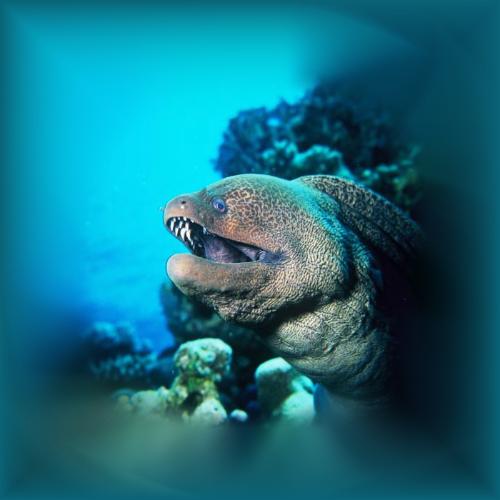
- giant moray
- congo
Traits and their opposites
Each trait of this archetype — and what is opposite to it.
- Resilience ↔ Fragility
Find your most suitable archetypes
Archetypes are facets of personality and behaviour: sometimes a hamster, sometimes a lion. Take a test for yourself, a friend or a pet.