









The “Caiman” archetype
Cultural context
Spectacled caimans slide through dark, tannin-stained waters where roots knot like old ropes and light never reaches the bottom. Their days pass in deliberate silence, each movement measured against the rustle of reeds, the tremor of prey, the slow tilt of shadow across the bank. Where other creatures race or scatter, the caiman waits until opportunity glides within range, then surges forward with a single, soundless lunge. The stillness itself feels like accumulated time, a patience that outlasts floods and droughts alike.
Scales
Within the same traditions, the caiman’s body is felt as something heavy, enduring, and bound to the present moment. Its long life in sun-warmed mud and night-black water carries a sense of what lasts beyond any single season. Physical strength and the capacity to endure hardship appear as natural extensions of its surroundings, while a desire for standing shows in the way it claims a stretch of riverbank and keeps it free of intruders. Yet this drive toward rank rarely disturbs its outer calm; feeling runs deep and cool, rarely breaking the surface.
Core traits
Survivability threads through every motion of the spectacled caiman. It changes course the instant the current shifts, finds a hidden inlet when the main channel dries, and lies motionless until danger passes. The same instinct, however, leaves little room for long-range precautions; the caiman repairs its nest after the rains have already risen, never before.
Strong traits
Resilience shows in the caiman’s refusal to be hurried. It will remain beneath the surface for hours if needed, surfacing only when the moment is right. Territoriality appears in the way it patrols the same stretch of bank, its tail carving a visible groove in the mud. Aquaticness lets it slip between sudden floods and falling water levels without alarm. The diver’s habit of lingering below the surface reveals hidden fish and the precise angle of a submerged branch, yet it sometimes forgets the passing of daylight above.
Noticeable traits
Dominance is felt rather than declared. A single spectacled caiman will push others from the warmest basking log until only its own length fits. Stealth keeps its intentions hidden: it drifts with floating leaves, eyes barely above water, until the exact second it strikes.
How to be around
To read a spectacled caiman’s intentions, watch how it claims space and how long it remains still. Quick gestures alarm it; slow, predictable ones let it decide whether to approach.
With a woman
When speaking with a woman whose temperament recalls the caiman’s, notice how quickly she rearranges plans the moment an obstacle appears, guided more by present sensation than distant strategy. She values the weight and texture of well-made objects, and a single misplaced chair can unsettle her for the rest of the day. Offer her a tangible task rather than abstract comfort, yet remember that her sense of order sometimes gives way to sudden, almost playful dismantling of what she herself arranged.
With a man
A man of the same cast will stay with a project long after others have tired, his endurance visible in the set of his shoulders and the even rhythm of his breath. He rarely names his feelings, and an appeal to shared excitement may meet only a measured nod. Still, when pressed too hard by a committee decision, he may quietly withdraw his support without announcement.
With a teenage boy
A teenage boy draws an invisible line around his desk and his time. He studies a single diagram for an hour, tracing each connection as though the paper itself were territory. Family traditions matter to him, yet he also enjoys the brief brightness of being noticed when he returns from a solitary walk with an unexpected observation.
With a teenage girl
A teenage girl moves between one current of conversation and the next without visible effort, adjusting tone before anyone notices the shift. Her strength appears in the straight line of her back when she lifts a heavy box no one asked her to carry. She watches closely before answering questions about affection, and new ideas interest her only after she has tested them against what already feels safe.
With a child
A child will spend an entire afternoon following the path of a single beetle across the kitchen floor, naming each crack it crosses. They prefer to solve the puzzle of a locked drawer themselves, yet they sometimes miss the simpler solution of asking for the key that lies in plain sight. Laughter, when it comes, is brief and quickly replaced by renewed concentration.
With an animal
An animal claims the warmest corner of its enclosure and rearranges the substrate until the slope suits its taste. It will accept food from one keeper’s hand while ignoring another, its choice guided by remembered rank rather than hunger alone. The same creature may guard a favoured stone with quiet insistence, permitting no other animal to rest there.
After a quarrel
A dispute with any spectacled caiman begins when its private calculations are dragged into daylight. A woman answers with a sudden rearrangement of alliances that leaves the challenger without support. A man meets every question with patient repetition of the original plan until the asker grows weary. A teenage boy withdraws behind a closed door and offers only the sound of pages turning. A teenage girl replies with a single precise observation that undercuts the other’s certainty. A child plants their feet and refuses to move until the matter is dropped. An animal slips beneath the waterline and watches from a distance until the intruder leaves.
How to befriend
Friendship grows when the caiman’s sense of the untouchable is honoured and daily order is kept intact. A woman warms to the quiet placement of a favourite tool exactly where she last set it. A man stays near the person who arrives at the agreed hour without reminder. A teenage boy shares an observation only after the listener has waited in silence. A teenage girl trusts the one who never asks why she changed direction mid-sentence. A child lets another watch the beetle’s path without interruption. An animal accepts an extra portion of food left at the edge of its chosen patch, provided no hand reaches closer.
Similar archetypes
Close facets: images with a similar set of qualities.
- Saltwater crocodile
- Nile crocodile
- Komodo dragon
- porbeagle
- African Spurred Tortoise
- Cassowary
- Rapana
- Sea bass
Complete opposite
The opposite facet: images whose qualities point the other way.
- mallard
- wild boar
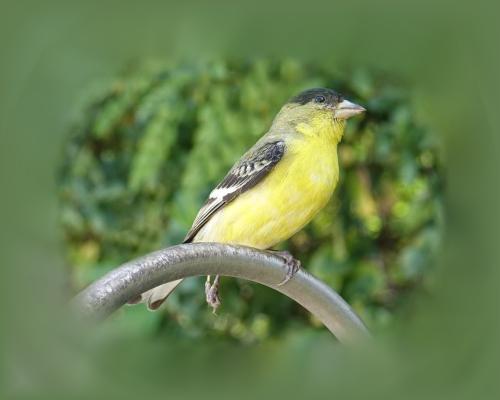
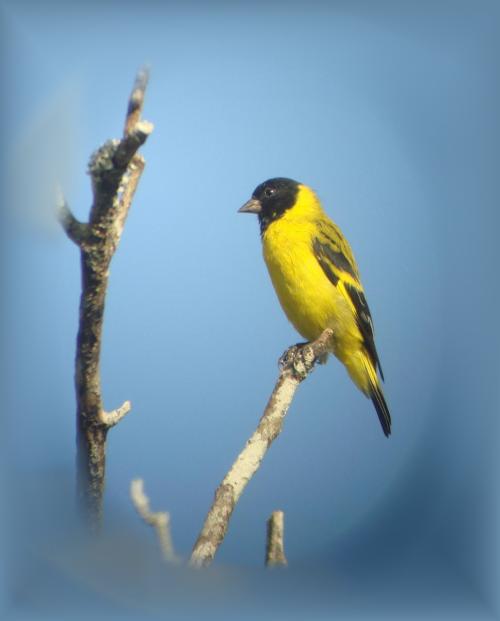
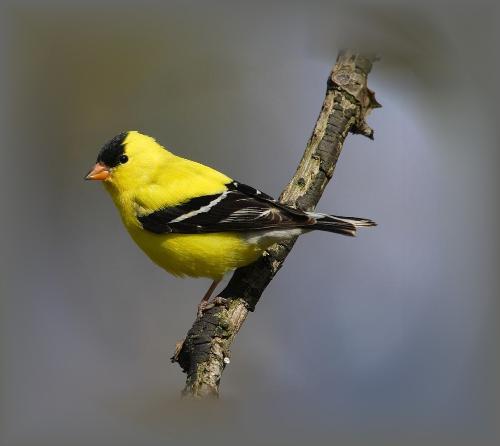
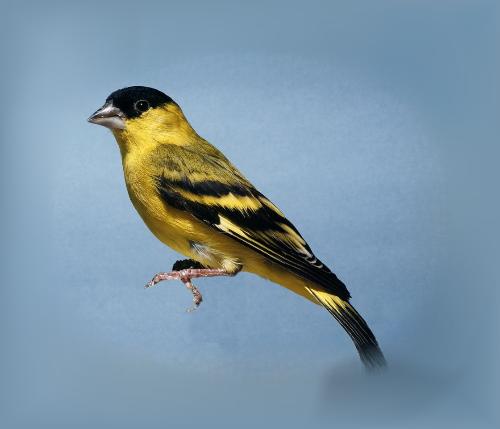
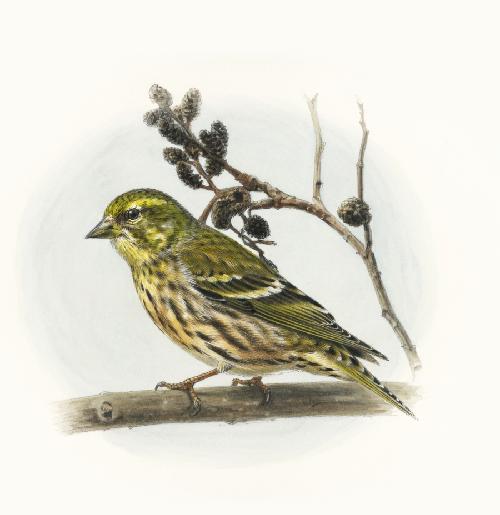
- eurasian siskin
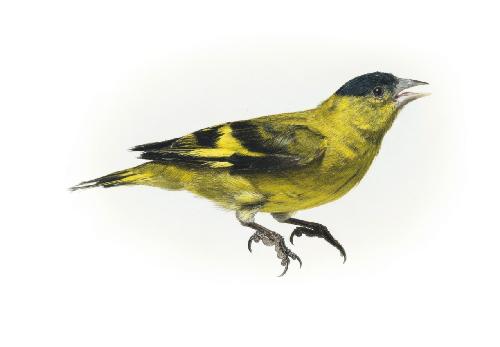
- Black-headed Siskin
- olivaceous siskin
- eurasian siskin
- eurasian siskin
- eurasian siskin
- eurasian siskin
- eurasian siskin
- eurasian siskin
- eurasian siskin
- hooded siskin
- eurasian siskin
- tibetan serin
- andean siskin
- yellow-bellied siskin
- saffron siskin
- lawrence's goldfinch
- Japanese Firefly
Traits and their opposites
Each trait of this archetype — and what is opposite to it.
- Resilience ↔ Fragility
Find your most suitable archetypes
Archetypes are facets of personality and behaviour: sometimes a hamster, sometimes a lion. Take a test for yourself, a friend or a pet.