


















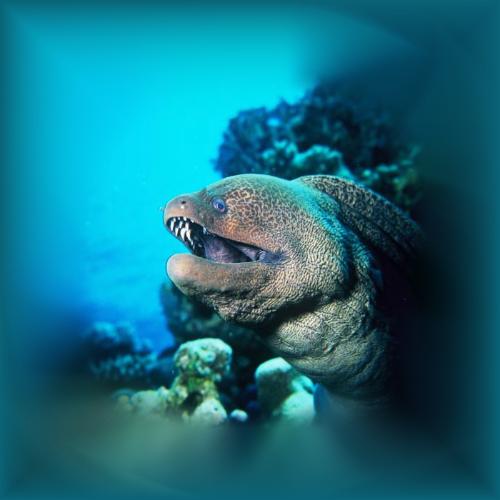

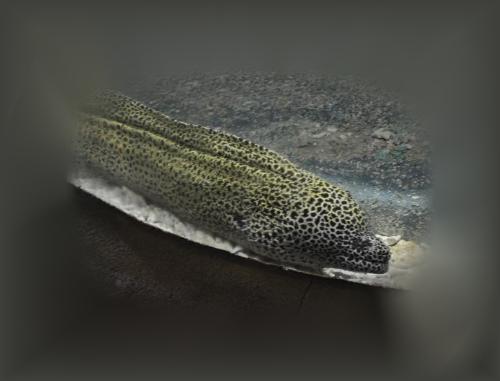


The “Chinese giant salamander” archetype
Cultural context
Across the damp limestone caves of southern Europe, beneath the mists of the Japanese archipelago, and on the wind-scoured tundra where Inuit hunters once watched, the Chinese giant salamander has long served as a living fragment of time itself. Folk stories speak of it crouching beneath hidden springs, guarding memories that predate any written record. In the north it appears as a survivor of frost, a creature whose slow pulse matches the long freeze and thaw of seasons. Its dark, wrinkled skin, cold as river stones, is said to hold the weight of centuries, a stillness that never asks to be noticed yet refuses to be forgotten.
Scales
Within these traditions the salamander carries its bulk like a submerged boulder, heavy with the scent of wet moss and mineral silt, an unmistakable reminder of earth’s solid weight. It moves with the certainty of someone who has already measured the length of a river and found it short. Its endurance is not shouted but felt in the way it remains when floods pass and droughts crack the streambed. Autonomy shows in its refusal to seek company; it prefers the single, echoing tunnel to the crowded surface. Yet beneath this solitude lies a quiet reverence for what has already been decided by water, rock, and season, an acceptance that new choices are unnecessary when the old ones have already proved sufficient.
Core traits
The Chinese giant salamander survives every shift in temperature and current by slipping deeper into the stone rather than fighting the surface. It waits out scarcity without complaint, its body tightening around stored reserves while others scatter. This same capacity lets it reappear when conditions ease, unmarked by panic and ready to resume its slow patrol of the river floor. Yet the habit of enduring without complaint can leave it carrying the strain of many winters at once, tension coiled beneath its skin until the next freshet loosens it again.
Strong traits
The salamander plans its route across decades rather than seasons, tracing the same submerged ledge until the ledge itself erodes. It learns the precise moment when winter ice will lift, never rushing the thaw or forcing the current. Its decisions are made alone; even when a second salamander shares the pool, each keeps to its own crevice. Still, when two meet at a narrow passage they yield without struggle, each giving way so that both may pass, preserving an order older than either of them.
Noticeable traits
It spends its days beneath layers of silt and fallen leaves, reading the faint vibrations that travel through water and stone. From this hidden vantage it can judge the approach of a predator or the rise of the water table long before either reaches the surface. Its knowledge stays within its own skin; it offers no signal to others and accepts none in return. The same silence that shields it also keeps it from forming the small alliances that might ease its solitary labor.
How to be around
Approach the Chinese giant salamander by moving as slowly as the water that shaped it. Let your presence settle like sediment before you speak. Any sudden current of words or gesture will send it back into the shadows it trusts more than daylight.
With a woman
A woman shaped by the Chinese giant salamander will turn a crisis into a new route before anyone else has named the danger. She feels the shift in temperature through her skin and answers with whatever the moment requires, rarely pausing to chart the months ahead. If you wish to stay beside her, learn to read the same subtle change in light across the water’s surface and meet her there without demanding explanations she has not yet formed.
With a man
A man formed by the Chinese giant salamander will stay with a single task until the rock itself changes shape. He trusts the slow accumulation of effort over any sudden revision of plan. Offer him the steadiness of continued presence rather than suggestions for shortcuts; he will notice if you remove an obstacle only when the work is finished and the water runs clear again.
With a teenage boy
A teenage boy who carries the Chinese giant salamander’s memory will test a theory by repeating it until the pattern reveals itself. He measures risk against the length of the season rather than the heat of the hour. Give him time to finish the repetition before you ask what he has learned; the answer will arrive only after the last ripple has settled.
With a teenage girl
A teenage girl who holds the Chinese giant salamander’s independence will choose her own current even when the group moves together. She can remain apart without resentment, yet the distance sometimes leaves useful counsel unheard. Ask once, then let the question drift; she will return to it when the water has carried away whatever noise first surrounded it.
With a child
A child bearing the Chinese giant salamander’s sense of balance will notice when two playmates are about to collide and will shift position before the collision occurs. They prefer to keep the game moving rather than name the disagreement. Arrange the space so that separate paths remain open; the child will keep the peace without ever speaking of rules.
With an animal
An animal that shares the Chinese giant salamander’s patience will explore a new tank only after it has mapped every vibration through its skin. It will not hurry for food or for company. Place the next meal at the same hour each day and leave the rest of the water undisturbed; the animal will accept the routine as part of the stone itself.
After a quarrel
The Chinese giant salamander keeps its knowledge folded inside its own silence, and any attempt to unfold that silence by force will meet resistance that feels like the riverbed shifting underfoot. A woman will withdraw when her immediate adaptation is questioned before the crisis has passed. A man will harden when his long sequence of steps is interrupted mid-stride. A teenage boy will retreat when his careful repetition is laughed at before the pattern appears. A teenage girl will close herself when advice arrives uninvited across the distance she has chosen. A child will grow still when the familiar order of the day is broken without warning. An animal will sink deeper when sudden noise breaks the steady current it has learned to trust.
How to befriend
The Chinese giant salamander accepts company only when that company respects the same measured rhythm that orders its days. A woman will share her path if you adjust your stride to match the moment she senses rather than the calendar she has ignored. A man will keep you beside him if you simply continue the work he has already begun, adding your weight without rearranging his sequence. A teenage boy will let you watch his repetitions if you remain silent until the final repetition is complete. A teenage girl will allow your presence if you let the space between you stay as wide as she needs. A child will include you in the game if you accept the small shifts that keep the balance unbroken. An animal will rest near you if you place yourself where the current already flows and do not create new ripples.
Similar archetypes
Close facets: images with a similar set of qualities.
- Japanese giant salamander
- Hell Toad
- Oriental Toad
- Spotted salamander
- Tuatara
- Matamata
- Armadillo
- Giant Clam
Complete opposite
The opposite facet: images whose qualities point the other way.
- Turkey
- Human Flea
- Dog Flea
- Oriental Rat Flea
- Hen Flea
- Northern Rat Flea
- chigoe flea
- Hedgehog Flea
- new zealand bat flea
- Martin Flea
- cat flea
- Ceratophyllus farreni
- Chaffinch Flea
- Rabbit Flea
- Mouse Flea
- sticktight flea
- Squirrel Flea
- Sparrow Flea
- Amalaraeus dissimilis
- Northern Flea
- Ceratophyllus chasteli
- laced moray
- eel
- dark moray
- giant moray
- congo
- freshwater moray
- greek
- sharktooth moray
- conger
Traits and their opposites
Each trait of this archetype — and what is opposite to it.
- Resilience ↔ Fragility
Find your most suitable archetypes
Archetypes are facets of personality and behaviour: sometimes a hamster, sometimes a lion. Take a test for yourself, a friend or a pet.