




















The “Harlequin frog” archetype
Cultural context
Harlequin poison frogs glint like lapis and carnelian fragments scattered across a Chinese lacquer tray, their vivid skin echoing the painted birds and blossoms that once adorned imperial gardens. In ancient Egypt the frog’s leap between river mud and sunlit air mirrored the passage from death to rebirth, a small body carrying the weight of transformation. Russian tales speak of frogs that hide precious rings in their throats, creatures small yet laden with power, their colors bright warnings and their movements quick as a concealed spell.
Scales
These frogs read the world through an unerring eye for pattern and hue, the way a brushstroke of vermilion catches torchlight against lacquered wood. They resist any hand that tries to rearrange their territory, slipping through fingers with the ease of a minnow. The call to closeness is strong, yet they keep their own rhythm, approaching another only when the night and the air feel exactly right. Everything new is tasted first with the tongue, every obstacle turned over until its underside shows, every sacrifice offered with deliberate grace. Order matters, endurance matters, and beneath it all runs a thread of self-contained reserve, a creature that withdraws into its own bright silence after the work is done.
Core traits
Brightness lives in the frog as a living flame that draws eyes the way a lantern draws moths; its sudden leap across a leaf can turn an ordinary patch of forest into theater. Yet the same light that gathers admirers can scorch the bearer, leaving it panting in the shade while others whisper about its showy skin. Still the frog returns, unrepentant, ready to paint another leaf with motion and color.
Strong traits
Beauty wraps the harlequin poison frog in lacquer-red arabesques that stop a predator mid-step; the same lines that dazzle can become a mirror the frog cannot stop consulting. Family devotion shows when one frog carries its tadpoles on its back through dangerous leaf-litter, guarding each translucent burden as if the future itself rode there. Independence gleams when the frog turns away from the chorus and claims its own crevice of moss. Spirituality runs beneath the skin like the faint phosphorescence of fungi, a sense that every drop of rain carries a message if one only waits long enough to translate it.
Noticeable traits
Cunning lets the frog vanish between heartbeats, slipping under a curled leaf while danger passes, its route planned in the twitch of a toe. Jealousy tightens its throat when another singer claims the best perch; the bright body swells, the warning call sharpens, and the rival is driven off before the first note can echo twice.
How to be around
Approach the harlequin poison frog only when your own colors are steady. It will not follow a crowd, yet it will pause for a single clear note that matches its own.
With a woman
When a woman feels her energy drain from constant display, set a small shaded bowl of water where she can rest without losing her place in the light. Let her rearrange the room’s colors until the balance pleases her eye; praise the result once, quietly, and do not linger. Honor the small rituals she keeps from one season to the next, yet leave her the choice to sit apart when the gathering grows too loud.
With a man
A man will answer a question that tests the pattern he has already traced in his mind; offer one clean counter-thought and step back. If the light catches an imperfection on his skin, look elsewhere until he chooses to mention it. A single shared joke about the absurdity of rules can loosen the tight line of his shoulders more than any direct challenge.
With a teenage boy
A teenage boy may vanish for an afternoon and return with a single perfect leaf; ask nothing until he offers the story. When he argues, let the quarrel stay between the two of you; an audience turns every difference into a test of loyalty. Allow him his long silences after the others have gone, and he will remember the courtesy longer than any spoken permission.
With a teenage girl
A teenage girl will weigh every new path twice before she steps; give her the map and let her fold it herself. If someone claims she owes an explanation for her choices, stand where she can see you but say nothing; your silence is the only vote she needs. Years later she will still recall the day you trusted her to keep her own time.
With a child
A child may spend an hour watching an ant cross a single vein of a leaf; do not hurry the observation. When the child asks why the sky changes color, answer with the next small fact and wait for the next question. Keep one corner of the room dim and empty so the child can retreat without asking leave.
With an animal
An animal reads the angle of your shadow before it decides whether to stay; move as though you were already part of the leaf. Place the daily food at the same hour and in the same spot, then withdraw so the ritual remains unbroken. If it chooses to rest on your palm, do not close your fingers; the trust is measured in the seconds it remains.
After a quarrel
A harlequin poison frog flares when its private territory is crossed without invitation. A woman will turn cold if a rival’s voice replaces hers in the circle of light. A man will freeze if his carefully laid pattern is smeared by another’s haste. A teenage boy will slam the leaf aside if his claim on a perch is laughed at. A teenage girl will vanish for days if her private sorrow is dragged into daylight. A child will kick the bowl of water if playtime ends without warning. An animal will spit its warning call if a stranger’s hand reaches for its chosen stone.
How to befriend
The harlequin poison frog remembers the hand that waited. A woman softens when you notice the exact shade of dusk on her skin and say nothing more. A man stays near if you bring a single unsolved question and leave it between you like an untouched fruit. A teenage boy will share the next leap if you first match the rhythm of his silence. A teenage girl will linger if you let her set the hour of return. A child will show you the hidden pool if you never ask to be shown. An animal will rest its bright side against your wrist once the pattern of your breathing matches its own.
Similar archetypes
Close facets: images with a similar set of qualities.
- Arrow frog
- Dart frog
- Vampire squid
- marañón poison frog
- Panther chameleon
- Cuttlefish
- Blue-ringed Octopus
- Argonaut
Complete opposite
The opposite facet: images whose qualities point the other way.
- Turkey
- Bed bug
- wild boar
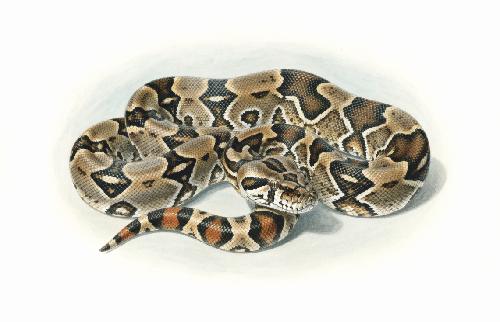
- Boa
- Human Flea
- Dog Flea
- Oriental Rat Flea
- Hen Flea
- Northern Rat Flea
- chigoe flea
- Hedgehog Flea
- new zealand bat flea
- Martin Flea
- cat flea
- Ceratophyllus farreni
- Chaffinch Flea
- Rabbit Flea
- Mouse Flea
- sticktight flea
- Squirrel Flea
- Sparrow Flea
- Amalaraeus dissimilis
- Northern Flea
- Ceratophyllus chasteli
- Cockroach (domestic, red)
Traits and their opposites
Each trait of this archetype — and what is opposite to it.
- Spirituality ↔ Pragmatism
Find your most suitable archetypes
Archetypes are facets of personality and behaviour: sometimes a hamster, sometimes a lion. Take a test for yourself, a friend or a pet.