



















The “Anteater” archetype
Cultural context
Myrmecophaga tridactyla has long lived in the grasslands and forests of Central and South America, where people noticed its solitary wanderings and the slow, rhythmic sweep of its long snout across the ground. In local stories the creature appears as a silent keeper of hidden paths, one who finds food and shelter without asking for help from any pack or flock. Its deliberate stride, the soft rustle of leaves under its heavy claws, and the faint musk it leaves on passing bushes mark the ground it claims, a private map read only by its own senses.
Scales
Tradition reads the species through a marked pole of autonomy that shines in its refusal to trail behind others, and a vivid physicality that shows in the powerful shoulders and muscled neck steadying the body over uneven earth. A strong bodily sense colours every step, turning the forest floor into a living surface felt through sensitive pads and keen smell. Vitality runs deep in its endurance on long nightly marches, while a gentle current of harmony guides its careful arrangement of feeding sites and resting hollows. A moderate sense of the sacred lingers in its quiet respect for remote thickets, and agreeableness appears in the way it steps aside rather than challenges rivals. Conscientiousness shows in the tidy furrows it leaves while digging, spirituality in its steady search for meaning along one chosen trail, rebelliousness in its quiet avoidance of human trails, self-sacrifice in sharing a meal with a passing youngster, honesty-humility in its plain appearance, a slight extraversion in its preference for dusk silence, openness to experience in tasting new termite mounds, intellect in the swift calculation of wind direction, aesthetic sense in its measured gait, sense of eternity in its lifelong attachment to one range, traditionalism in repeating the same route each season, sexuality in occasional brief meetings, modest status seeking in its lack of display, and playfulness in the sudden sideways hops that break a long walk.
Core traits
Resilience stands at the centre of Myrmecophaga tridactyla. It can walk the same winding trail for years, returning each night to the same hollow without hurry or complaint, and its body can endure weeks of scarce rain or sudden flood. When storms tear branches overhead the animal simply lowers its head, waits for the gust to pass, and continues its measured pace, proving that steady endurance outlasts sudden change.
Strong traits
Quickness appears when the snout meets an ant column; within heartbeats the tongue lashes out and vanishes again, a motion too fast for the eye. Independence colours every journey: once it leaves its mother the creature never seeks company again, trusting its own memory of fruiting trees and hidden nests. Curiosity shows in the way it pauses at each new mound, circles it twice, and samples the scent before deciding whether to dig. Resourcefulness keeps it alive when termites move deeper; then it scrapes away soil with curved claws, reaches sideways into side tunnels, and finds another entrance no other animal would notice.
Noticeable traits
Harmony shows when two animals meet at the same fallen log: each waits, steps back, then moves aside until both can feed without clash. Cunning appears in the silent detour around a sleeping jaguar; instead of fleeing, the animal freezes, reads the wind, then slips behind a curtain of vines no larger than its own shadow.
How to be around
To share space with Myrmecophaga tridactyla one must move at its pace and notice the small signs it leaves on bark and soil. Speak little, watch the direction of its ears, and let it finish whatever slow task it has begun before offering any change.
With a woman
A woman who carries the anteater’s rhythm keeps to long projects that others abandon; give her time to finish what she started and admire the quiet order she brings to scattered papers or tangled gardens. Notice the way her hands linger over textures of wood or fabric, and remember that she values a promise kept across years more than any quick compliment. When she hesitates, do not press; her caution protects the work she has already shaped into something lasting.
With a man
A man who moves like Myrmecophaga tridactyla decides in a single breath and acts before the moment cools; hand him the tool he reaches for and step back while he works out the next cut. He respects the grain of old wood and the weight of handed-down knives, yet he will pause mid-stroke if the balance feels wrong. Offer a single clear fact rather than a speech, then let him test it against his own quick judgement.
With a teenage boy
A teenage boy who shares the anteater’s independence will test a new route home simply because no one else has taken it; walk beside him without asking where it leads and let the rhythm of his stride set the conversation. He feels the ground through thin soles and notices every shift in temperature on his skin, so do not crowd his space or reach for his hand unless he offers first. When he stops to watch an unfamiliar bird, stay silent until he speaks.
With a teenage girl
A teenage girl who carries the anteater’s curiosity will read every label on a shelf and every plaque in a museum; answer one of her questions fully and wait for the next before offering more. She can walk for hours without tiring, yet she prefers the quiet corner of the room where no one watches her face. Praise the small discovery she brings back rather than the speed of her return.
With a child
A child who inherits the anteater’s resourcefulness will build a shelter from three sticks and a discarded box before any adult suggests a plan; hand the child another odd scrap and watch what appears. The same child likes to line pebbles in rows and will notice if one is moved, so keep the order and join the arrangement rather than tidy it away. Laughter comes easily when a pebble rolls like a beetle, and the game lasts as long as the pattern holds.
With an animal
An animal that carries Myrmecophaga tridactyla’s sense of balance will choose one corner of the enclosure and keep it free of stray leaves; place a shallow dish of water there each evening and never move the dish without warning. It will rest with its back to the wall, ears half-open, ready to rise if the air shifts; when it stretches one long limb across the threshold, leave the doorway clear and let it return on its own.
After a quarrel
Tension rises when someone steps across the invisible line the species draws around its chosen path. A woman withdraws her steady help the moment another voice questions the order she has already set. A man answers a sudden order with an even faster counter-move that leaves no room for discussion. A teenage boy slips out the back gate rather than argue about curfew. A teenage girl falls silent and lets the group talk around her until the pressure fades. A child knocks over the careful row of stones instead of explaining why it must stay. An animal turns its broad back and walks to the farthest fence post, refusing to return until the intruder has gone.
How to befriend
Trust grows when each small task is finished exactly as promised and the next meeting arrives at the same quiet hour. A woman remembers the extra thread left on the table and returns it without being asked. A man keeps the same route through the garden and nods once when he sees the same footprint beside his own. A teenage boy shows up with a single new leaf for the collection and waits for a nod before speaking. A teenage girl brings a question written on paper rather than spoken aloud. A child places one pebble exactly where the last row ended and smiles when the pattern continues. An animal accepts a piece of fruit left at the edge of its path and eats it only after the giver has stepped away.
Similar archetypes
Close facets: images with a similar set of qualities.
Complete opposite
The opposite facet: images whose qualities point the other way.
- Turkey
- Human Flea
- Dog Flea
- Oriental Rat Flea
- Hen Flea
- Northern Rat Flea
- chigoe flea
- Hedgehog Flea
- new zealand bat flea
- Martin Flea
- cat flea
- Ceratophyllus farreni
- Chaffinch Flea
- Rabbit Flea
- Mouse Flea
- sticktight flea
- Squirrel Flea
- Sparrow Flea
- Amalaraeus dissimilis
- Northern Flea
- Ceratophyllus chasteli
- Bed bug
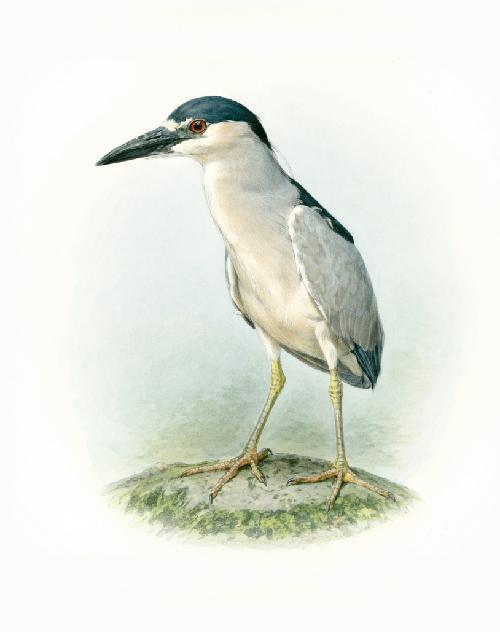
- black-crowned night heron
- Blanc de l'Ouest Pig
Traits and their opposites
Each trait of this archetype — and what is opposite to it.
- Resilience ↔ Fragility
Find your most suitable archetypes
Archetypes are facets of personality and behaviour: sometimes a hamster, sometimes a lion. Take a test for yourself, a friend or a pet.