



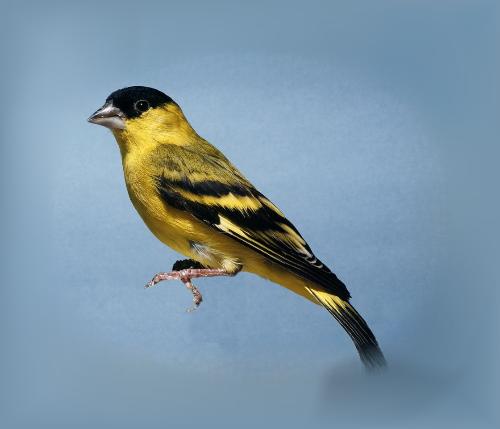


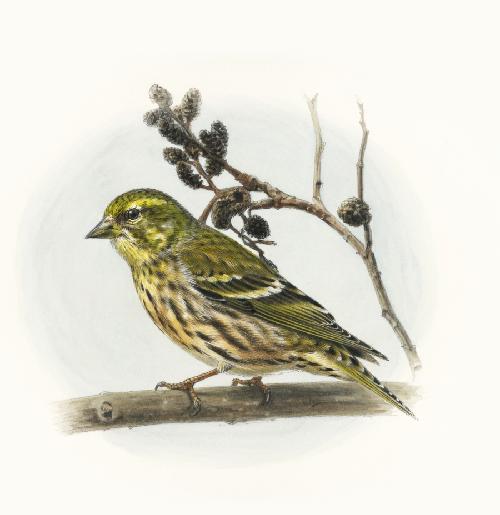
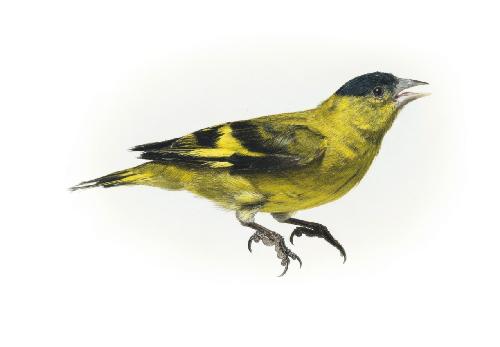


The “black-billed capercaillie” archetype
Cultural context
In Russian and Scandinavian traditions the black-billed capercaillie belongs to the deep forest, a bird heard long before it is seen. At mating time it struts and booms with a showman's abandon, and the image has stuck: the proud fellow who steps out in front of everyone and does not mind looking a little ridiculous. Yet the noise is only half the story. Behind that bright plumage sits a thin-skinned creature who takes a sneer to heart, who fears losing face more than any storm, and who would sooner be loud than be laughed at. That tension between swagger and soreness is what people recognise in him, and it is why the bird is both laughed at and quietly forgiven. Anyone who has watched a loud friend go silent after one cutting remark knows the type.
Scales
Seen through the scales, the capercaillie is built for company. It comes alive in a crowd, craves status and admiration, and loves play, jokes and a bit of fun. Stamina and physical strength let it keep its act going for hours without flagging. Modesty is another matter: cunning and a sense of entitlement creep in, agreeableness gives way to stubbornness, and the old ways of the community count for less than its own wishes. It is a character that would rather break with convention than blend in, and it makes no secret of the choice. Independence of mind, a little cunning and a taste for doing things its own way travel together here, which makes the bird lively company and an awkward subordinate.
Strong traits
Pride, boastfulness and self-assurance hold this character up like three posts. The capercaillie never hides a victory, never asks for leniency, and keeps its dignity even when help would be welcome. Bravery and noisiness join them: it charges into the thick of things first and announces the fact to the whole forest. Foolishness comes along as the price of all this. Risks get underestimated, stubbornness digs in, and impulse wins over thought, though the bird does learn from its blunders and sometimes stirs up a change nobody expected. Its strength is nerve and drive; its weakness is that it hears advice as an insult, and few things are as hard for it as admitting a mistake aloud.
Noticeable traits
Sensitivity is the quieter note, but it is there. Under the showy feathers the capercaillie picks up other people's moods with surprising delicacy, which is exactly why a jeer, a cold look or a heavy load of stress can knock it off balance faster than you would expect from such a fighter. The loud voice is partly a shield. Take it away too roughly, and what is left is a bird that suddenly looks small and rattled, and badly wants to be reassured. This is the side the capercaillie shows only to those it trusts, and rarely twice.
How to be around
How do you deal with a black-billed capercaillie? Picture a singer on stage who is secretly afraid nobody will clap. Listen to the performance without arguing over every brag, take the energy as a gift rather than a nuisance, and you will gain an ally who is loyal and ready to charge ahead for you.
With a woman
A woman-capercaillie knows her own worth and has no use for routine compliments, but she is hungry for precise attention. Name one specific thing she did and ask how she pulled it off. She will happily tell the whole story, and somewhere in it she may admit where she was frightened. Hear that part out without a joke, and she will remember for years who did not laugh, and who stayed in the room.
With a man
A man-capercaillie wants an audience, so be one: turn up to his contests, laugh at his jokes, cheer when he wins. Argue about his riskier plans in private and bring facts rather than doubts, because a challenge in front of other people will only make him dig in his heels, however shaky the plan really is. Once the crowd has gone home, he is far more willing to admit the flaws.
With a teenage boy
A teenage boy-capercaillie wants to be first and loudest, so steer that energy somewhere useful: a team, a tournament, a stage. When his latest scheme ends in bruises, skip the lecture and ask what he would change next time. That turns a blunder into experience instead of a quarrel, and he will come to you again after the next one, before the bruises, which is the real prize.
With a teenage girl
The teenage girl-capercaillie is loud, yet stung by laughter aimed at her. When she brags, laugh along with her rather than at her. Later, one to one, tell her about a failure of your own that still makes you wince; she needs to hear that slipping up is survivable, and that nobody stops liking you for it.
With a child
A child-capercaillie keeps making announcements: "I'm the fastest!" "I'll beat everybody!" Set up a contest where losing carries no shame, with races across the yard and silly prizes. His stamina will outlast yours, and you get to show him that a defeat is just one more round of a game, and tomorrow brings another with new rules he can invent himself.
With an animal
An animal-capercaillie is always hunting for a stage. It climbs up high, puffs its chest and calls out. Give it a perch, even an upturned crate, and reward each loud song with a treat. A sharp shout will send it into hiding for a long time, so keep your own voice low and cheerful while it performs.
After a quarrel
To quarrel with a capercaillie or get under its skin, laugh at it in front of others. A woman-capercaillie bristles when her achievements are written off as luck, while a man is stung when he is cut short in the middle of his grandest gesture. A teenage boy explodes when his plans are called stupid, a teenage girl when her hidden weak spot is exposed. A child flares up if you blame him for losing, and an animal if it is shut away where nobody can see or hear it.
How to befriend
To befriend a capercaillie or win it over, be a good audience and applaud at the right moment, sincerely. A woman-capercaillie warms up when you tell other people about her victory; a man, when he gets the seat beside you in the loudest argument. A teenage boy treasures a task entrusted to him, a teenage girl a joke she helped write. A child is won by games with a chase in them, an animal by roomy ground and a cheerful cry of bravo.
Similar archetypes
Close facets: images with a similar set of qualities.
Complete opposite
The opposite facet: images whose qualities point the other way.
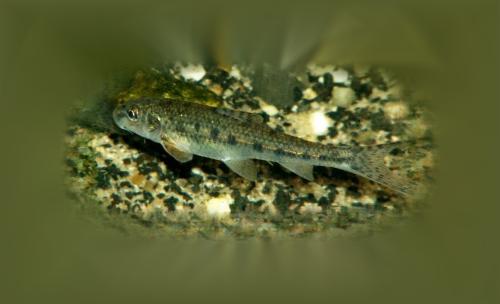
- Gudgeon
- eurasian siskin
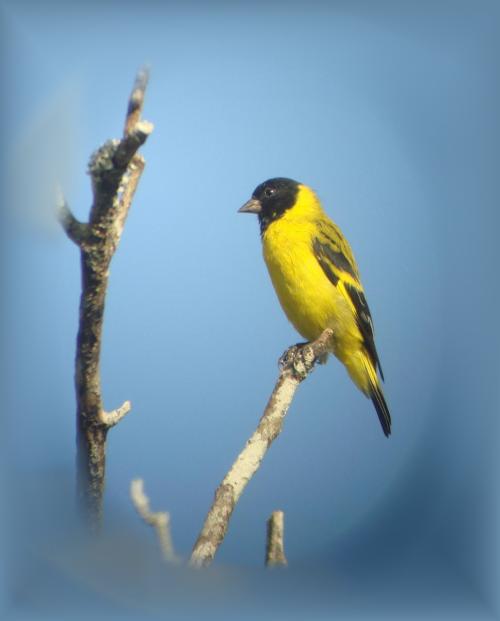
- Black-headed Siskin
- olivaceous siskin
- eurasian siskin
- eurasian siskin
- eurasian siskin
- eurasian siskin
- eurasian siskin
- eurasian siskin
- eurasian siskin
- hooded siskin
- eurasian siskin
- tibetan serin
- andean siskin
- yellow-bellied siskin
- saffron siskin
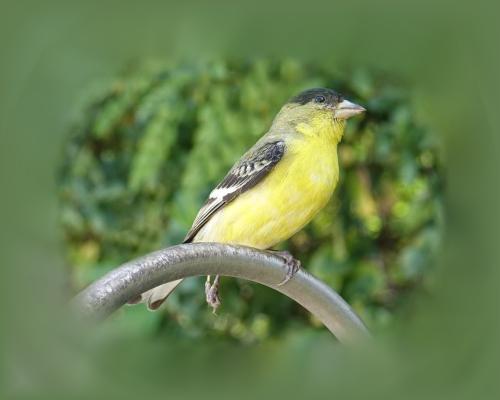
- lawrence's goldfinch
- Mole
- Sloth
- Caecilian
Traits and their opposites
Each trait of this archetype — and what is opposite to it.
- Sensitivity ↔ Callousness
Find your most suitable archetypes
Archetypes are facets of personality and behaviour: sometimes a hamster, sometimes a lion. Take a test for yourself, a friend or a pet.