









The “Capercaillie” archetype
Cultural context
The capercaillie is the great black grouse of the northern forests, and both Russian and Scandinavian tradition have made much of its spring display. At dawn the cock takes a branch or a clearing and clicks, pops and gurgles his song so absorbedly that he seems deaf to everything else, which is how the Russian word glukhar, the deaf one, came about. People admired him and smiled at him in the same breath: here was a bird of enormous presence, a lord of old pine and moss, brave to the point of foolishness and so wrapped up in his own performance that he forgot to listen. Village talk dwelt on his stubborn pride and his loud claim on a patch of forest, and the picture stuck. In the stories he is a ruler and a clown at once, a hermit who nonetheless needs an audience, big and dignified and surprisingly easy to hurt.
Scales
Read through its stories, the capercaillie turns out to be a bird of strong contrasts. It has stamina and muscle, an athlete's build and a taste for being seen, and it loves play almost as much as it loves rank; the display ground is part contest, part party. Yet the same bird is drawn to stillness, to moss and shade and a half-grasped sense of something larger than the forest. It thinks slowly but deeply, open to novelty even as it digs in its claws against being pushed around. Honesty and modesty are present only in moderate measure: this is a bird that wants to be noticed, and says so, and still, on the whole, plays fair.
Strong traits
Pride, wisdom and a big voice make up the heart of the capercaillie. Pride keeps its boundaries firm and its self-respect intact when things get hard, though it can harden into stubbornness and a refusal of help that would actually be welcome. Wisdom comes from experience; the capercaillie sees what matters in a situation and waits out trouble patiently, yet it can be so careful that decisions drag and chances pass. The voice gathers people and sets the mood of a room, and the same voice, too loud and too long, drowns out anyone who was hoping for quiet. Together the three make a person who is easy to spot, hard to move and, at best, worth listening to.
Noticeable traits
Bravery, foolishness and sensitivity sit a little deeper. The capercaillie charges in to protect the people it loves, often without counting the risk, and its courage has a reckless edge. Its mind gets lost in fog now and then, and instinct pushes past careful thought; still, those blunders teach it a lot and sometimes bring about changes nobody planned. Underneath all this runs a fine-tuned sense of mood. The capercaillie picks up atmosphere quickly, which is why a harsh word or a pile of stress can flatten it for days.
How to be around
How do you get along with a capercaillie? Remember that the loud voice and lifted head cover a thin skin. Let it have its boasts without mocking them, say out loud when it has been brave, and recognise that every capercaillie keeps a patch of ground, whether a chair, a desk or an opinion, which is not up for negotiation. Handle that patch carefully and you will rarely meet the thunder.
With a woman
A woman-capercaillie wants an ally, not a guardian. Stand beside her when she defends a view in front of others, and when she needs help, offer it as one equal to another, by asking what she would like you to take on. Her self-respect will not accept a rescue, but it will accept a hand extended across a table. Afterwards, say plainly what you admired in the way she held her ground; she remembers that sort of remark for a long time.
With a man
Give a man-capercaillie weight by handing him a task that visibly matters, such as the awkward negotiation or the dangerous repair. Praise him before others if he has earned it, and take any criticism aside, over a cup of tea, because mockery in front of an audience cuts into his sense of standing more deeply than any argument could. He will thank you by backing you in the next fight.
With a teenage boy
A teenage boy-capercaillie tests every rule just to see whether it holds. Offer him two real options instead of an order, and then let him carry out his choice to the end, even if it goes badly; he will take a lesson from his own mistake and refuse one from yours. Keep a practical job ready for his restlessness, such as splitting kindling or fixing a bike. If he storms off, leave the door open and the kettle warm.
With a teenage girl
Humour is the way into a teenage girl-capercaillie. Challenge her to a silly contest, trade jokes at the dinner table, and save the serious talk for a moment when you are walking side by side rather than facing each other. Be straight with her; she hears flattery at once and respects bluntness delivered quietly. Her sensitivity hides behind swagger, so notice the day the swagger gets louder.
With a child
A child-capercaillie needs a place to shout. Take him to a field, a stairwell or the shore, invent a game where he is the herald announcing the king, and cheer when he stands up for a smaller kid. Afterwards, ask him to tell you about his day at full volume, then teach the quiet voice as a second game, a whisper that is also a skill.
With an animal
For an animal-capercaillie, build the day around habit. Take it out at the same early hour, let it walk the same path, offer a high perch or a shelf from which it can survey the household, and follow every burst of noise with a spell of calm. Speak in an even voice and wait for it to come to you. It judges slowly, but once it has decided you are safe it will stay.
After a quarrel
To quarrel with a capercaillie or get under its skin, interrupt it at the loudest point of its performance, laugh at its courage, or demand silence just as it finds its voice. A woman-capercaillie blazes when her decisions are quietly overruled; a man, when his standing is cut down in front of strangers. A teenage boy hates being ordered about, a teenage girl cannot bear her feelings being made a joke, and a child turns sulky when hushed for the tenth time. An animal will bristle if it is driven off the spot it considers its own.
How to befriend
To befriend a capercaillie or win it over, honour its pride and hear out its whole story, even when it is told louder than necessary. Show a woman-capercaillie that you notice her strength before anyone else does. Ask a man what experience has taught him, and let the answer take its time. Shared work, without a supervisor, suits the teenage boy; laughter and a tactful silence when she hurts suit the teenage girl. With a child, make noise together; with an animal, simply turn up at the same hour every day.
Similar archetypes
Close facets: images with a similar set of qualities.
Complete opposite
The opposite facet: images whose qualities point the other way.
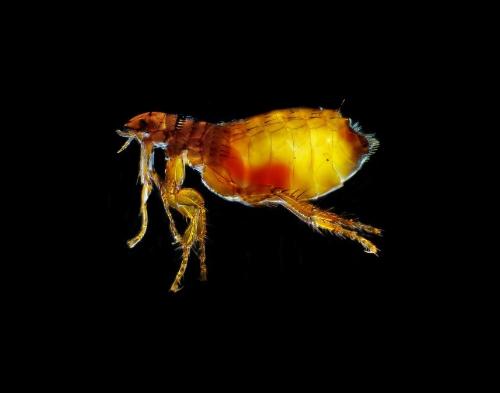
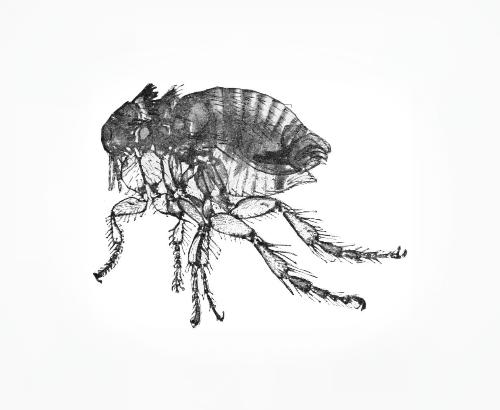
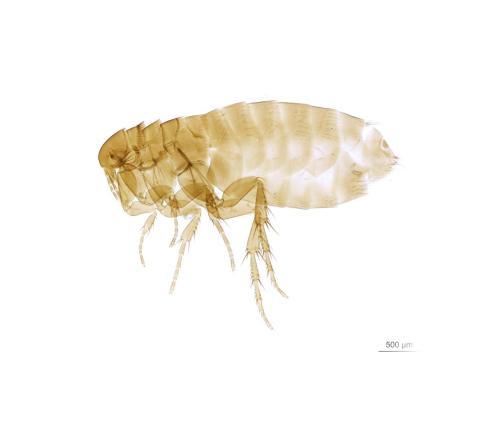
- Human Flea
- Dog Flea
- Oriental Rat Flea
- Hen Flea
- Northern Rat Flea
- chigoe flea
- Hedgehog Flea
- new zealand bat flea
- Martin Flea
- cat flea
- Ceratophyllus farreni
- Chaffinch Flea
- Rabbit Flea
- Mouse Flea
- sticktight flea
- Squirrel Flea
- Sparrow Flea
- Amalaraeus dissimilis
- Northern Flea
- Ceratophyllus chasteli
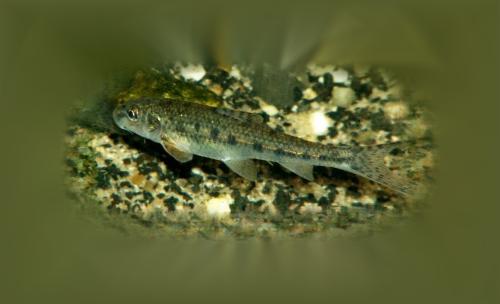
- Gudgeon
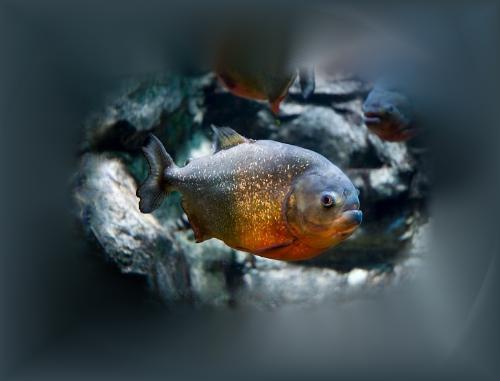
- Piranha
- Mole
- Bed bug
- Cockroach (domestic, red)
- Golden Jackal
- Black widow spider
Traits and their opposites
Each trait of this archetype — and what is opposite to it.
- Sensitivity ↔ Callousness
Find your most suitable archetypes
Archetypes are facets of personality and behaviour: sometimes a hamster, sometimes a lion. Take a test for yourself, a friend or a pet.