




















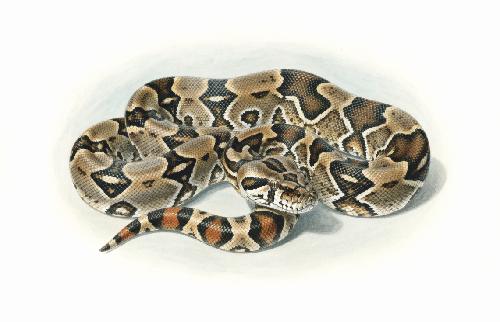


The “13-spot ladybird” archetype
Cultural context
In European folk belief the ladybug is a small herald of good fortune, a visitor that tends to turn up in homes where kind people live, and its arrival is welcomed rather than swatted. In Chinese tradition it stands for balance and harmony, the sense that order returns after hard times. The thirteen-spotted ladybug inherits both pictures: a lucky charm that never asks for anything in return, and a quiet reminder that things settle again, even after a long stretch of trouble. People of this archetype carry the same lightness, an openness of spirit that makes others feel a little luckier just for having them nearby.
Scales
Against that background, this ladybug has an air of the sacred about it: something faintly forbidden, never quite touchable, yet it hands out blessings freely. It leans toward the long view, toward bonds meant to last and questions that outlive today's errands. New things draw it rather than frighten it, and it looks for meaning and inner harmony in whatever it meets. Honesty and modesty run through its character, along with a readiness to give itself for others, a love of beauty, and a mind that enjoys getting to the bottom of things. Gentle on the surface, it is far tougher than it looks.
Core traits
Spirituality and good luck form the core of this archetype, and between them they give it an inner glow. These are people who seldom need many words; they calm a room simply by being in it, hunting for meaning in ordinary days and sensing what others feel before it is said. Opportunities find them rather than the other way around, and optimism survives even rough patches. The price is a certain carelessness: luck can stand in for planning, and a head full of higher things may let bills, errands and practical matters pile up in the corner.
Strong traits
Kindness and generosity make this archetype warm to the touch. A ladybug person forgives quickly, lends a hand without being asked twice, and shares time and belongings so freely that friendships deepen around them. The trouble starts where boundaries should be. Without them, the giving never stops, people with fewer scruples take advantage, and exhaustion arrives long before the giver admits to it. Warmth that has no edge eventually burns the one who offers it, and the kindest thing such a person can learn is to say that enough is enough.
Noticeable traits
Wisdom here is the learner's kind: knowledge drawn from experience, an eye for what really matters in a situation, and patience when things get complicated. Its shadow is caution. A ladybug will turn a decision over and over, weigh the risks twice, and sometimes let the moment pass while others move ahead. Yet the slow answer is usually the sound one, and people who are willing to wait for it seldom regret the delay, because it tends to hold up when quicker answers fall apart.
How to be around
How should you treat this particular ladybug? Start from the fact that its strength is quiet and its kindness is real, so loud insistence and bargaining both miss the mark. What works is attention to the person or creature in front of you, small gestures that show you noticed, and a willingness to let a good thing unfold at its own speed. The portraits below show how that looks at different ages.
With a woman
A woman-ladybug opens up over a long, slow conversation, so invite her for a walk or a pot of tea and ask what she has been turning over lately. Then listen all the way to the end, and repeat back the part that struck you; she often shares her conclusions only when she is sure they will be heard. If her days are crowded with other people's needs, offer one concrete evening off, with the phone switched off and nothing to organise. Her wisdom ripens in quiet, and hearing it out is the best compliment you can pay.
With a man
With a man-ladybug, example does more than argument. Do something kind in front of him without announcing it, and he will usually follow. When he mentions an idea, ask what the first small step would be, and offer to help with the dull part: the phone call, the form, the date in the diary. Credit his persistence rather than his results, since results are sometimes at the mercy of luck, and take issue with him one point at a time.
With a teenage boy
A teenage boy-ladybug often hands over his last sandwich and then sulks about it in silence. Teach him to say no by rehearsing it together: what to tell the friend who always copies his homework, how to leave a party early. Praise his kindness aloud, specifically, and in front of others now and then, because a sensitive boy like this can mistake silence for indifference. Give him one corner of the house that is entirely his.
With a teenage girl
A teenage girl-ladybug usually keeps a private stock of beliefs: a lucky pen, a number, a song for exams. Treat these with respect and she will trust you with bigger things. Give her something beautiful to keep her luck in, such as a small notebook, a ribbon or a pressed leaf, and find out what she is hoping for. She is full of ideas about how the world works, and she warms to the adult who asks to hear them.
With a child
With a child-ladybug, turn wonder into a game. Go outside and hunt for small things: spotted leaves, striped pebbles, an ant carrying a crumb. Tell the story of how a ladybug once brought luck to a family, or invent one together, so the little one learns that fortune favours those who notice. Let the child lead the way, and answer questions with a cheerful "let's find out."
With an animal
An animal-ladybug is happiest somewhere warm and quiet, so set aside a sunny windowsill, a patch of garden with tall grass, or a corner of a plant shelf. Sit near it without fiddling, and watch which way it climbs, where it pauses, what it avoids. Those small choices are its way of speaking. Offer water on a leaf and fresh greenery, then step back and let it rest after its busy spells.
After a quarrel
To quarrel with a thirteen-spotted ladybug or get under its skin, make noise where it needs silence, treat its generosity as an entitlement, and laugh at what it holds sacred. A woman bristles when her days are filled with errands and no pause. A man will not forgive being pulled away from a task he has only just begun to believe in. The teenage boy retreats if his tender side is teased, the teenage girl if her luck charms become a joke, and a child goes quiet when hurried along. An animal simply bolts when woken, grabbed or moved from its favourite spot.
How to befriend
To befriend one of these ladybugs and win it over, bring ease and a respect that does not need to be loud. A woman is won by someone who notices her inner life and asks about it. A man warms to steady company that stays in the room without asking for anything. The teenage boy draws near to whoever thanks him for his help, the teenage girl to a person who admires what she finds beautiful, the child to a storyteller who is also easily astonished. As for the animal, give it warmth, shelter and quiet, and before long it will crawl onto your hand by choice.
Similar archetypes
Close facets: images with a similar set of qualities.
- wild cat
- black-fronted white-eye
- duke of burgundy fritillary
- marbled white
- scarce fritillary
- small white
- mourning cloak
- queen of spain fritillary
Complete opposite
The opposite facet: images whose qualities point the other way.
- Bed bug
- Human Flea
- Dog Flea
- Oriental Rat Flea
- Hen Flea
- Northern Rat Flea
- chigoe flea
- Hedgehog Flea
- new zealand bat flea
- Martin Flea
- cat flea
- Ceratophyllus farreni
- Chaffinch Flea
- Rabbit Flea
- Mouse Flea
- sticktight flea
- Squirrel Flea
- Sparrow Flea
- Amalaraeus dissimilis
- Northern Flea
- Ceratophyllus chasteli
- Piranha
- Horsefly
- common european toad
- Boa
- Golden Jackal
- Cockroach (domestic, red)
Traits and their opposites
Each trait of this archetype — and what is opposite to it.
- Spirituality ↔ Pragmatism
Find your most suitable archetypes
Archetypes are facets of personality and behaviour: sometimes a hamster, sometimes a lion. Take a test for yourself, a friend or a pet.