





















The “Hell Toad” archetype
Cultural context
The hellbender surfaces in European, Chinese and Russian lore as a creature of the dark water: secretive, nocturnal, living far down where light barely reaches. Folk imagination credits it with a long life and a grim sort of wisdom, and it is admired for surviving conditions that would finish off most animals. Yet the old stories keep a certain unease around it. It is not a friendly spirit of the pond but a presence that prefers its own company, and people who come poking into its hiding places are expected to pay for the intrusion. What these traditions share is respect, mixed with fear, for whatever lives out of sight and does not need an audience. Nothing in them asks it to be sociable; its dignity lies in staying hidden and enduring, year after year, in the cold dark where it was always at home.
Scales
Picture the hellbender at the bottom of a cold stream, pressed against a flat stone. It reads the world through its skin, through current and temperature and the faint tremor of footsteps on the bank, and that bodily sense of things anchors everything else. It answers to no one. It would rather make its own mistakes than follow a leader, and it carries on through floods, droughts and hungry winters with a stubbornness that looks almost eternal. Time moves differently down there, and the hellbender seems to measure its life in something longer than seasons. Around it hangs an air of the set-apart and the faintly forbidden, the feeling that some places and some animals are best left alone. Warmth is not its strong suit. It is reserved, slow to open, and cool in its feelings, and it takes things seriously, with little room for play. It can be stubborn and quarrelsome when pushed, and it tends to think in blunt terms rather than subtle ones. It sticks to old habits and distrusts novelty. Beauty means little to it, since ornament does nothing for a creature that lives under a rock, and rank interests it even less. There is still some physical strength in it, a quiet appetite for closeness, a liking for order in its small corner of the riverbed, and an occasional readiness to help at its own cost. A touch of cunning and a sense of being owed its territory complete the picture of a character that is old, self-contained and hard to move. Seen from the bank, none of this looks dramatic. It is simply the steady character of an animal that has no wish to be noticed, and that has outlasted most of what once noticed it. When you do earn its trust, it is a slow gift, given once, and not easily taken back. Even then the hellbender will not chatter or cling. It will stay a little apart, near enough to be useful and far enough to remain itself, and for many people that distance is exactly what makes it so hard to forget.
Core traits
Hardiness is the first thing to know about a hellbender. It stays where others would flee, breathing through its folded skin and waiting out whatever the river brings. Beside that sits an independence so complete that advice, pressure and flattery all slide off it. There is a sense of the sacred about it too, an invisible boundary around its den that people feel without being told. Its attention rests on what lasts, on old stones, old routines, and the slow pace of years, which makes it patient to a degree that unsettles quicker creatures. And the body is never far from its thinking: it trusts what it can feel, whether that is cold current, warm sun on a rock, or a hand held steady beside it.
How to be around
How do you behave around a hellbender? Think of approaching dark water at dusk. Splashing and calling out only send it deeper under its stone. Sit down on the bank, busy yourself with something quiet, and let it decide whether to surface at all. What it values is not your chatter but the fact that you stay put, ask nothing, and keep your promises.
With a woman
A woman-hellbender thaws through the body rather than through talk, so offer a thick blanket, a hot cup of tea, a long walk where nobody has to speak, or a shared chore like drying dishes side by side. Skip the heart-to-heart interrogation. Leave a short note on her table or bring something good to eat, then go. Her fear of open conversation is armour, not whimsy, and mocking it will cost you months of trust. If she goes quiet for an evening, take it as weather, not as a verdict on you; she will come back to the table when she has finished thinking.
With a man
With a man-hellbender, ask for his opinion and then let him make the call, because he is used to answering for his own corner. A line like "Do it however you think best, I'm around" works better than any plan you could hand him. Arguing with him in the moment gets you nowhere, but a day later he often comes back on his own and says the one thing that matters.
With a teenage boy
A teenage boy-hellbender will dig in against whatever the crowd has decided, and it is not spite. Skip the lecture. Offer a debate between equals, or give him a job where his stubborn "no" turns out useful, like checking a plan for flaws. He can spend hours silent over a project of his own, which is something to respect rather than treat. When he finally speaks up, answer plainly and briefly, and he will keep talking longer than you expected. Admit when he has a point, even a small one: nothing wins over a young hellbender faster than being taken seriously.
With a teenage girl
A teenage girl-hellbender keeps a few things that are nearly sacred to her: an old notebook, a shell, a secret spot by the water. Ask about them lightly, and never touch them uninvited. If you show how you guard something of your own, she may eventually show you what she guards. She notices who handles private things with care, and she remembers it for years. Do not hurry her into confessions at the dinner table. A quiet walk, with no questions asked, tends to open more than a long speech.
With a child
A child-hellbender rarely laughs out loud or rushes into noisy games, but takes whatever he does very seriously. Praise him for finishing a task, not for obedience. When he goes quiet and retreats to a corner, set a favourite book or a box of blocks nearby and get on with your own business. Beside you, he calms down faster than he would alone. Let the end of the day be slow and predictable, with the same few words before bed, because routine is the thing that soothes him.
With an animal
An animal-hellbender lives by routine: the same hiding place, the same hour for food, the same path to the water. Treat these rituals as law, and change them in small steps instead of all at once. If you have moved its favourite rock or log, put it back, and the creature will start to trust you. Keep the lights low in the evening, since it is a night creature, and let it come out to feed when it chooses. Offer food from a distance, never by chasing it down. If it hides for a day or two, do not read that as illness; hiding is how it rests.
After a quarrel
To quarrel with a hellbender or get under its skin, charge into its hiding place, demand that it open up, and treat its silence as an insult. A woman-hellbender is infuriated when she is hauled out of the quiet and onto a stage, a man when others decide for him, a teenage boy when his principles are knocked down, a teenage girl when someone pries into her secrets, a child when he is hurried, and an animal when its shelter is shifted around. Because it has little patience for conflict and none for being cornered, the quarrel usually ends not with a shout but with a sudden vanishing, and the door stays shut far longer than you expect.
How to befriend
To befriend a hellbender or win it over, be like good still water: close at hand, unhurried, free of sudden outbursts. With a woman-hellbender, care for her body and your silent company go a long way. With a man, ask for advice he is free to ignore. With a teenage boy, hold a serious talk about what he believes in. With a teenage girl, treat her secrets gently. With a child, play patiently with no rules and no prizes. With an animal, keep a fixed routine and clean water. The more predictable you are, the more willingly the hellbender comes out to meet you. Do not expect gushing thanks; a lingering presence at the edge of your day is its way of saying yes.
Similar archetypes
Close facets: images with a similar set of qualities.
- Chinese giant salamander
- Nile crocodile
- Cassowary
- Caiman
- Electric ray
- Giant Squid
- Saltwater crocodile
- Armadillo
Complete opposite
The opposite facet: images whose qualities point the other way.
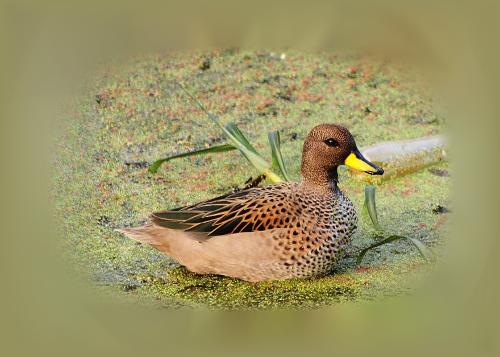
- mallard
- Human Flea
- Dog Flea
- Oriental Rat Flea
- Hen Flea
- Northern Rat Flea
- chigoe flea
- Hedgehog Flea
- new zealand bat flea
- Martin Flea
- cat flea
- Ceratophyllus farreni
- Chaffinch Flea
- Rabbit Flea
- Mouse Flea
- sticktight flea
- Squirrel Flea
- Sparrow Flea
- Amalaraeus dissimilis
- Northern Flea
- Ceratophyllus chasteli
- mallard
- broad-bodied chaser
- red-veined darter
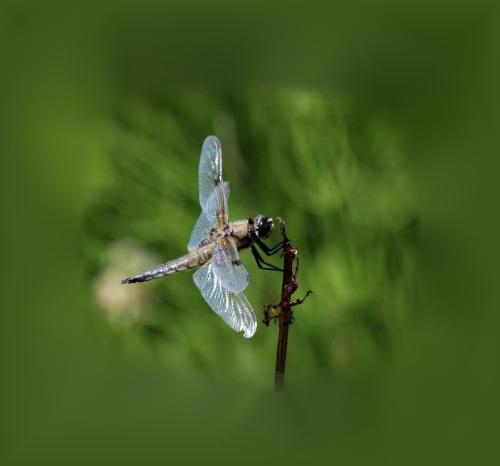
- four-spotted chaser
- sedge darner
- black darter
- hairy hawker
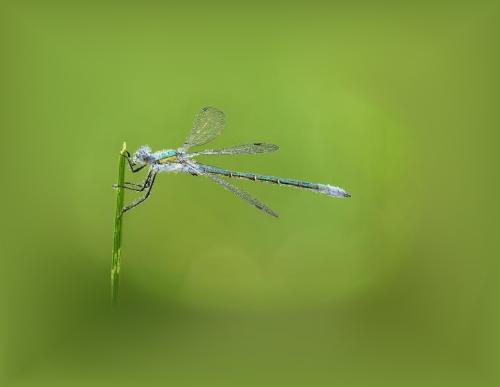
- robust spreadwing
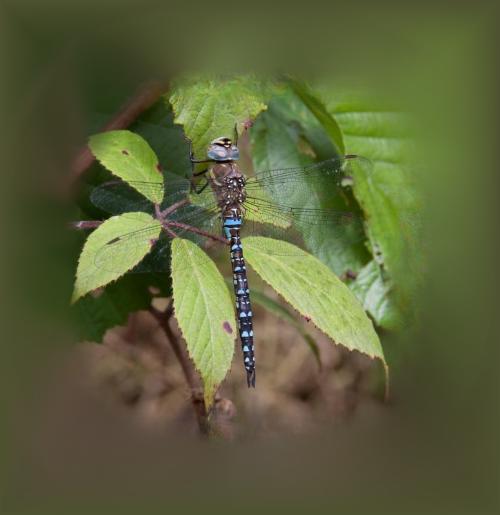
- blue hawker
Traits and their opposites
Each trait of this archetype — and what is opposite to it.
- Nocturnal Essence ↔ Diurnal Essence
- Resilience ↔ Fragility
Find your most suitable archetypes
Archetypes are facets of personality and behaviour: sometimes a hamster, sometimes a lion. Take a test for yourself, a friend or a pet.